If you’re Gen X (late 1960s–early 1980s), you’ve weathered dial-up to AI, cubicles to Zoom, and at least two major recessions. Gen X is pragmatic, resourceful, and ready to own our time. This guide is my full step-by-step for launching a business with Gen X realities in mind—mortgages, tuition, aging parents, and the desire for early independence.
Our Gen-X 20-Year Retirement Seriescontains much information about preparing for retirement. I suggest you read these articles. This Best Gex X Playbook for Building Your Second-Act business should give you some ideas on how to build a business after leaving your career but before retirement.
Many Gen Xers are facing a retirement crisis, even though it is down the road. I have written an article on this topic that you may find interesting.
Gen X Business Idea Generator
Gen X Business Idea Generator
Gen X Business Idea Generator
Answer a few quick questions and get tailored second‑act business ideas, plus next steps.
1) Weekly time you can dedicate
2) Your primary motivation
3) Your strongest skill set
4) Tech comfort level
5) Startup budget
Your top business matches
Why these fits:
:root. IDEAS below.
1) Set Up Your Gen X Business Command Center
A real workspace prevents chaos and protects momentum.
Maya (49) launched a design studio while leading a corporate team. She used a separate laptop and email domain for the studio, plus a “Friday 2-hour sprint” ritual. Result: no policy conflicts, and clean records for taxes and client audits.
Sidebar: Quick Tools That Save Hours
Tasks/projects: Trello / Asana
Scans→PDF: Adobe Scan / iOS Notes
Passwords: 1Password / LastPass
E-signatures: Adobe Acrobat Sign / DocuSign
2) Name Your Business for Staying Power
Run ideas through these 8 filters I use: purpose clarity, easy recall, uniqueness, legal fit, scalability, audience resonance, SEO potential, and longevity.
Mini Case Study — “Not Just ‘Side Hustle’”
Derrick (52) began as Derrick James Consulting. Three months in, corporate prospects asked for a “team,” not a solo. He rebranded to Northshore Revenue Group—kept his credibility, gained scale, and negotiated higher fees.
Sidebar: Fast Name Vet
Google + Google Maps (local conflicts)
Secretary of State name search (state conflicts)
USPTO TESS (federal trademark)
Exact-match .com or acceptable alt (.io, .co)
Social handles consistency
3) Should You Use Your Own Name?
It’s powerful for authority—but can limit resale.
Works well when: personal brand, no plan to sell, legacy focus. Less ideal when: you’ll hire a team, want transferable goodwill, or plan an exit.
Legal Nuance
If you use your name and later sell, the buyer may request non-use/non-disparagement clauses—restricting you from using your own name in a competing business.
If you keep your name, consider a house brand for offerings (e.g., “Smith Advisory” → productized “Smith Method™”).
Sidebar: Multi-Gen Signalers “& Co.”, “Group”, “Partners”, “Family” → sounds bigger than one person and helps with succession.
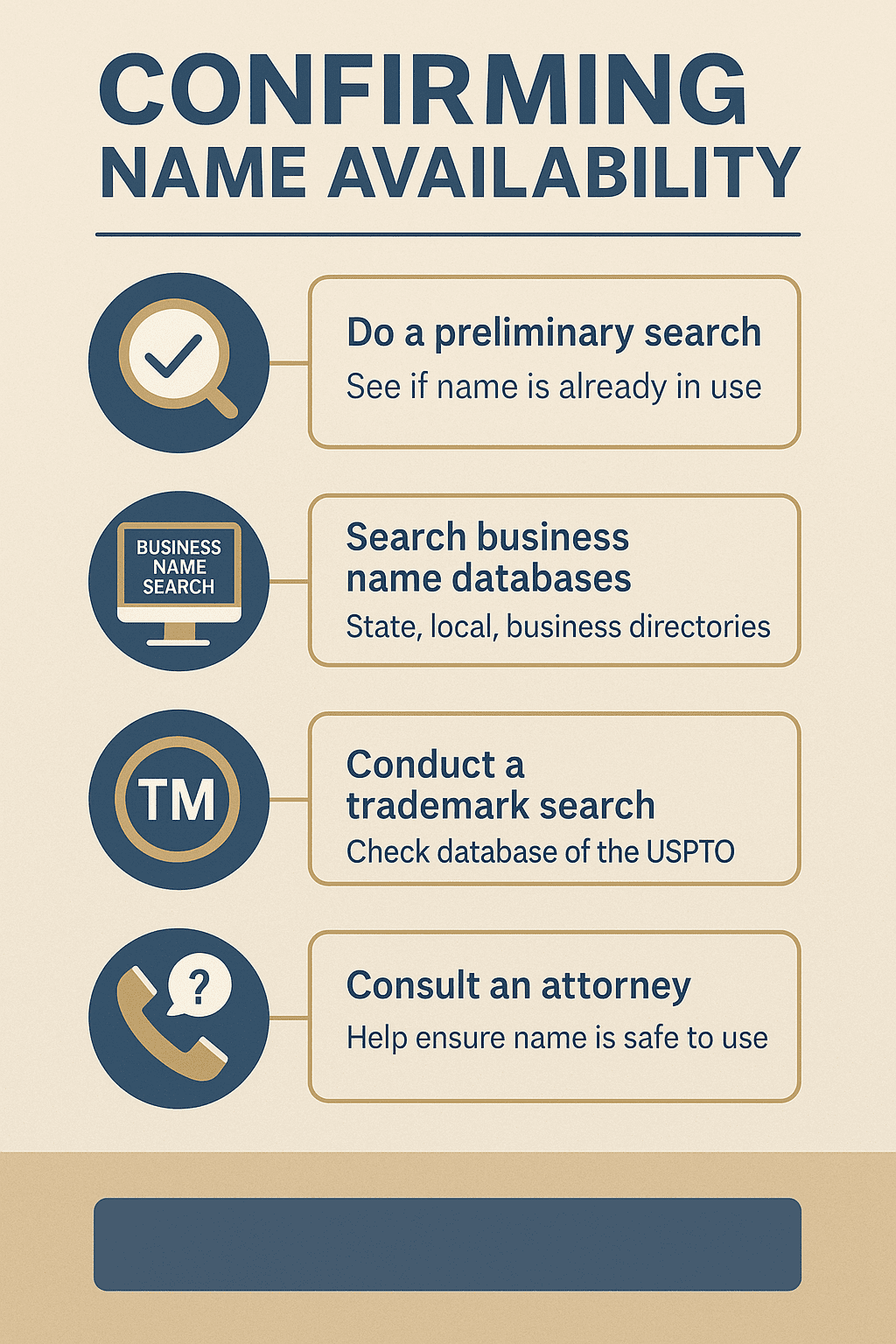
4) Confirm Name Availability (The Right Way)
Three tiers of clearance:
State corporate record (Secretary of State)
Domain + social handles (brand coherence)
USPTO (avoid national trademark conflicts)
Mini Case Study — “Same Name, Different States”
Janelle (50) found “Coastline Analytics LLC” available in her state, but a federal trademark existed for marketing analytics. She renamed to Coastline Insights Studio and registered a stylized logo mark—cleared risk, preserved concept.
Legal Nuance
State registration ≠ of trademark rights.
Common-law trademark can still bite you; document first use (dated screenshots, marketing proofs).
Consider a knockout search by counsel for higher-risk names.
5) Register Where You Operate
Home-state registration is usually simplest for Gen X builders.
Omar (54) formed in Delaware to “look sophisticated,” but operated in Illinois. He paid DE franchise tax and IL foreign registration + local licensing. After counsel reviewed, he re-domesticated to Illinois and cut annual admin costs by ~40%.
Sidebar: If You Truly Need Another State
VC-bound C-Corps (DE common), multi-state operations, or IP-heavy structures may justify it—get counsel to model fees + tax exposure first.
6) Entity Designators & What They Signal
Structure
Designators
What It Really Means
LLC
LLC / L.L.C. / Limited Liability Company
Liability shield + flexible tax treatment
Corporation
Inc. / Corp.
Formal governance; S-Corp/C-Corp tax paths
Partnership
LP / LLP
Contract-heavy; liability varies
Professional
PLLC / PC
Licensed fields (law, medicine, etc.)
Legal Nuance
Some states require designators in the legal name, some permit a fictitious name (DBA) for marketing without it.
Banks, title companies, and insurers often want the legal name on documents; align signatures and letterhead accordingly.
7) Filing & Renewal Fees (Reframed Snapshot)
State
Formation Fee
Ongoing Note
CA
~$70
$800 franchise tax (LLC/C-Corp minimums)
TX
~$300
Franchise tax thresholds; no annual fee if below
DE
~$90
Flat LLC franchise tax; corp calc by shares
NV
~$425
Initial/annual list + business license
NY
~$200
Publication requirement for some entities
(Verify current fees with your state; they change.)
Sidebar: Budget Guardrails
Formation fee + annual report/franchise tax
Registered agent (if required)
Publication costs (NY)
Foreign qualification (if multi-state)
8) The Paperwork You’ll Actually Need
LLC — What I prepare
Articles of Organization (filed with the state)
Operating Agreement (banks and partners expect it)
Clarify who can bind the partnership (authority matrix).
Spell out IP ownership of jointly created materials.
Sole Proprietor
DBA (if not using your legal name)
EIN only if hiring employees (or to avoid using SSN with vendors)
**Mini Case Study — “Handshake to Headache” Two friends started a landscaping company with a handshake. Year two, one wanted out; the other was left with equipment debt. We retrofitted an LLC with a buy-sell pegged to a simple valuation formula; next time, they were ready.
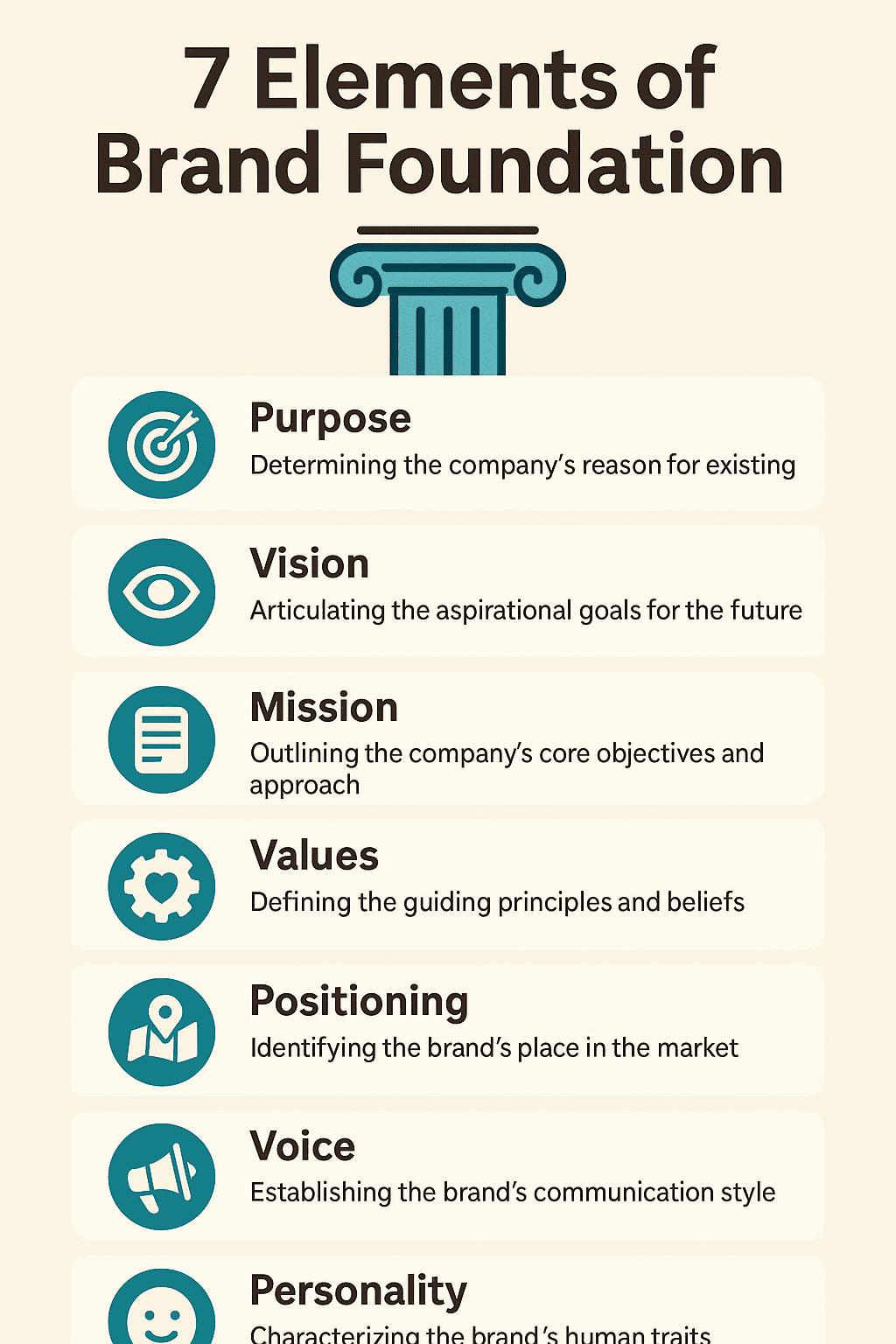
9) Brand Foundation: Logo, Website, Email
Non-negotiables on day one
Simple logo (works in one color and small sizes)
Website with services, credibility signals (about, reviews), and contact CTA
Prisha (47) switched from prisha@gmail to [email protected]. Her booked consults doubled within two months—same service, stronger perception.
Sidebar: Fast Site Architecture Home → Services → About/Team → Case Studies/Portfolio → Contact Add FAQs + lead magnet (one-page checklist) to build a list.
Signature blocks should match roles (“Jane Smith, Manager, Harbor Point LLC”).
Keep personal and business spending separate to protect the liability shield.
Sidebar: Bank Fit Factors
Free ACH limits, remote check deposit
QuickBooks/Xero integration
Business credit card with expense rules
11) Accounting—from Day One
My base workflow
Connect bank/credit card feeds
Weekly categorize; monthly reconcile
Track sales tax liabilities
Quarterly estimates (set calendar reminders)
**Mini Case Study — “Tuition + Business Cash Flow” Evan (50) uses classes in his accounting tool to separate college expenses, household expenses, and business expenses. He sees true available business cash and keeps family budgets honest.
Sidebar: Friendly Tools
Wave (free), QuickBooks Online, Xero
MileIQ / Everlance for mileage
Gusto for payroll (if hiring)
I started using WaveApps.com several years ago. It’s free. You can download data from your bank accounts, which saves time. You can grant your accountant access to it saving you money on your tax return preparation.
12) Licenses & Permits (Don’t Skip)
Check the city, county, and state. Some industries require professional or health permits; home businesses may need zoning clearance.
Legal Nuance
Local gross receipts or city “business tax” surprises new owners—ask your city finance office.
If you sell across states, monitor economic nexus thresholds for sales tax.
**Mini Case Study — “Home Bakery, Big Demand” Marisol (46) validated demand, then learned her state’s cottage food rules limited items and venues. She leased a shared commercial kitchen two days a week—compliant, profitable, and scalable.
Shareholder/Partnership/Operating agreements (the “constitution”)
Legal Nuance
IP ownership must be explicit (work-for-hire alone is often insufficient; include assignment).
Add limitation of liability and exclusive remedy clauses.
Pick a governing law/venue convenient to you.
Mini Case Study — “The Scope Creep Spiral”
Tanya (51) offered “unlimited revisions” to win early design clients. One client took 32 rounds. We updated her MSA to two revisions, then a fee, plus a change-order clause. Profitability returned immediately.
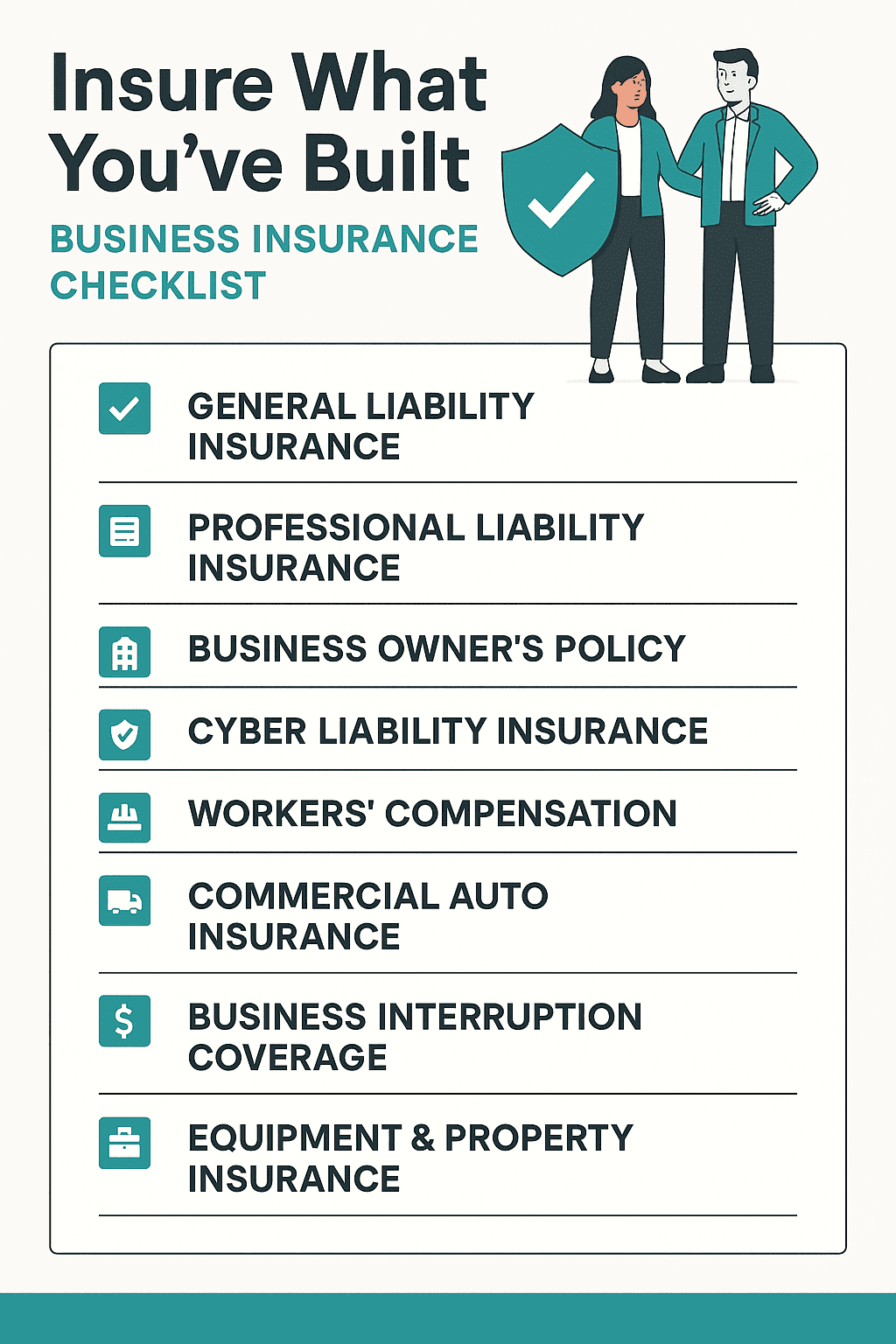
Professional Liability / E&O (bad advice, missed deliverables)
Business Owner’s Policy (BOP) (bundle: GL + property)
Cyber Liability (breach, ransomware)
Workers’ Comp (if employees; sometimes required for certain contracts)
Commercial Auto (if you drive for business)
Insurance by Example
Consulting/Advisory
E&O, Cyber, GL, BOP (if you have equipment/office)
Optional: Media Liability if publishing content/podcasts
Pet Services
GL, Animal Bailee (care/custody/control), Commercial Auto
Workers’ Comp if staff handle animals
Legal Nuance
Contracts often require additional insured status—request the endorsement.
Cyber policies can require MFA, backups, incident plan; set those up before applying.
Mini Case Study — “The USB Incident”
Greg (55) had a contractor plug an infected USB into his studio Mac. His cyber policy covered forensics and notification; his contractor agreement shifted costs to the contractor’s insurer. The business stayed solvent.
15) Build a Real Startup Budget (With a Cushion)
Line items I include
Name search + formation + registered agent
Annual report/franchise tax
Website + branding + email
Insurance premiums
Legal templates/counsel review
Software (accounting, e-sign, CRM)
Office equipment
Initial marketing (ads, printing, headshots)
Contingency (+15–20%)
Mini Case Study — “Hidden Annuals”
Nate (48) budgeted formation but forgot about annual franchise taxes and his registered agent fee. We added a recurring “compliance” bucket; no more surprise renewals.
Sidebar: CFO-Lite Habit
Monthly P&L review
90-day cash runway target
“Profit first” allocation for taxes/owner pay
Gen X Money Moves Before You Quit
Kill high-interest debt
Build 6–9 months of personal + business runway
Price for profit from day one (include owner pay, not just expenses)
Tech Stack for the 50-Something Owner
Google Workspace or Microsoft 365 (email/docs)
QuickBooks/Xero + bank feeds
Canva or Affinity for social/print
Squarespace/WordPress for site
Calendly for booking
Scope & Boundaries Cheat Sheet
Define “included” and “excluded” in proposals
Set response windows (e.g., 2 business days)
Change orders = new scope, new price
Family & Succession
The operating/Shareholder agreement should define transfer rights to the spouse/heirs
Key Person + Buy-Sell funded by insurance for multi-owner firms
Closing Thought for Gen X
Starting a business in your late 40s or 50s isn’t a pastime—it’s a strategy. Gen Xers bring judgment, resilience, and just enough skepticism to build durable companies. Set up clean systems, sign smart contracts, insure the right risks, and price like a pro. The sooner you start, the more optionality you’ll have—whether that’s early exit, a family legacy, or simply work you enjoy on your terms. It is multi-generational and easier to transfer.
I have started many successful businesses during my many decades in the business world. Some of them were accidents, some planned, and all were eventually put down into a business plan. I talk with many Gen Xers who want more out of life. They have been in the workforce for several decades and are not really satisfied with where they are.
Yes, they are earning a good living, but many are not satisfied. The idea of starting a business is intriguing to many; some have a passion for it. I hope that this article has helped move you along one way or another. I will add more articles to our blog on this topic. For now, I recommend that you read this good article about Gen-X retirement budget planning and other articles at RetireCoast.com about Gen-X 20 years to retirement.
FAQ: Gen X and Starting a Second-Act Business
1) Why should Gen X consider starting a second-act business?
Many Gen Xers have the experience, network, and financial stability to turn autonomy into income and impact—without waiting for traditional retirement.
2) What types of businesses fit Gen X best?
Consulting/advisory, bookkeeping, creative/digital services, real estate, franchises, e-commerce, specialty trades, and tutoring/coaching often align with Gen X skills and schedules.
3) Do I need to quit my job to start?
No. Many start part-time, validate demand, then transition. A side runway reduces risk and clarifies pricing, capacity, and product-market fit.
4) How much money do I need to launch?
Service businesses can start under $1k. Product, brick-and-mortar, or franchises can require $10k–$50k+. Build a line-item budget with a 15–20% buffer.
5) Which legal structure is best?
LLCs are common for liability protection and flexible tax treatment. Sole prop is simplest; S-Corp/C-Corp may suit larger or investor-backed growth. Get local counsel for specifics.
6) How do I protect personal assets?
Separate finances, use the right entity, maintain required paperwork, carry appropriate insurance (GL, E&O, cyber), and use written contracts with IP and liability clauses.
7) Biggest mistakes Gen X entrepreneurs make?
Underpricing, mixing personal/business funds, ignoring marketing, skipping contracts, and forgetting quarterly taxes or annual state filings.
8) What if I’m not tech-savvy?
You can outsource websites, bookkeeping, and ads. Focus on your expertise and relationships; keep a simple, reliable tool stack you’ll actually use.
9) How long until profitability?
Many service businesses reach break-even in 6–12 months; product/franchise plays can take 12–18+. Track pipeline, pricing, CAC, and cash runway monthly.
10) Where can I get help?
SCORE and SBDCs (free mentoring), local chambers, SBA.gov resources, and industry associations. Consider a CPA and small-business attorney early.
Want more information?
Check out our entire collection of business articles at our separate site: StartingaBusinessAfterRetirement.com. While the articles were written for those of you who are closer to retirement, the information contained creates a road map to success. Each article covers a critical part of the process.
Mr. Anderson is an expert in business management, real estate, finance, and wealth building.
Mr. Anderson has created several businesses including a multi-million dollar national business he sold to a Fortune 200 company. More than 1,500,000 visitors to Quora.com have read Mr. Anderson's answers to questions about real estate, investment, retirement, and other areas of his expertise.
Be sure to visit the About Us page to read Mr. Anderson's complete story.
Air Force veteran, real estate broker, investor, and founder of RetireCoast. I write about retirement planning, relocation, real estate, and launching second-act businesses.
Planning a trip to the Mississippi Gulf Coast?
Enjoy clean, comfortable homes just steps from the sand with
Christie’s Gulf Beach Rentals.
Ideal for families, couples, and long-term visitors.
RetireCoast is independently operated for readers who love retirement, coastal living, and real estate.
Explore our growing collection of articles about life in 1776,
the people of the Revolution, weapons, camp followers, women of the war,
and how America changed over 250 years. Many of our 250th Anniversary
articles are among the most-read and highly rated history features on RetireCoast.