
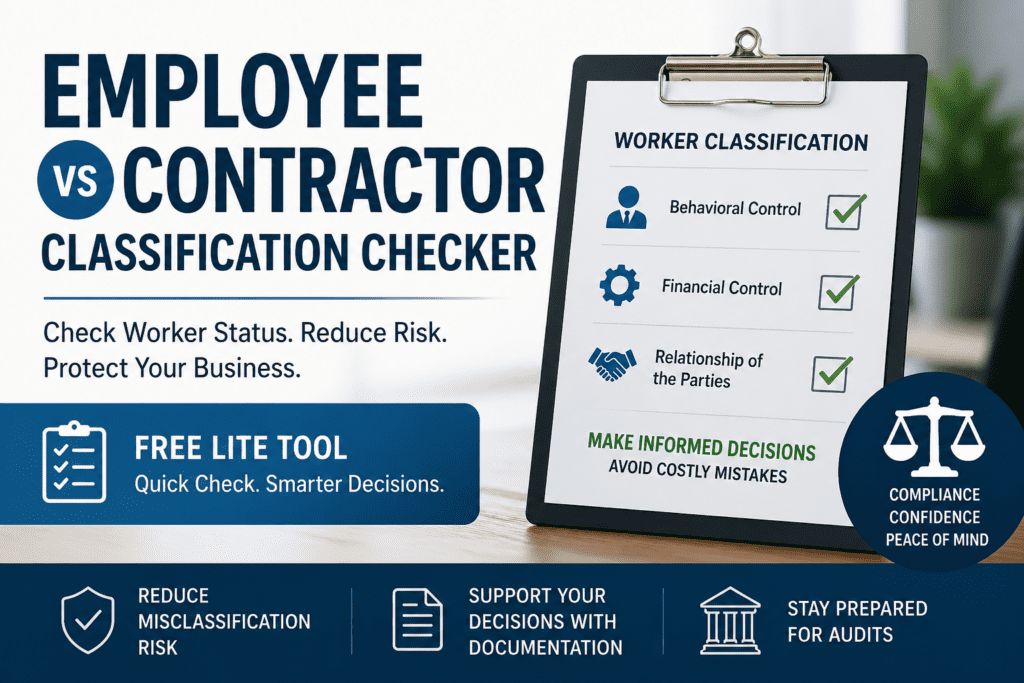
Employee vs Contractor Classification Matters More Than Most Business Owners Realize
Determining whether a worker should be classified as an employee or an independent contractor is one of the most important decisions a small business owner can make. The difference impacts taxes, liability, insurance, and compliance with agencies like the Internal Revenue Service (IRS) and the U.S. Department of Labor (DOL).
Many business owners assume they can simply label someone as a contractor—but classification is based on how the relationship actually works. If the structure is wrong, it can lead to back taxes, penalties, and unnecessary risk.
This free Employee vs Contractor Classification Checker helps you quickly evaluate a worker using simplified IRS factors so you can identify potential misclassification risk before it becomes a problem.
The RetireCoast Business Membership includes a complete system with contractor agreements, worker compliance files, dashboards, and audit defense reporting.
Explore the Full Compliance System
This simplified tool helps identify whether a worker may be classified as an employee or independent contractor based on IRS guidelines, plus key legal risk indicators.
Risk Score:
Access full compliance tools, agreements, tracking, and audit protection.
View MembershipThis Is Just the First Step
This free classification checker helps you identify potential employee vs contractor risk—but it’s only a starting point.
To fully protect your business, you need more than a quick check. You need documentation, agreements, and a system to support your decisions if they’re ever questioned.
- ✔ Contractor Agreement Generator (state-aware)
- ✔ Worker Compliance File System
- ✔ Compliance Dashboard
- ✔ Audit Defense Report Generator
- ✔ Multi-worker tracking and documentation
Don’t just decide — document it.
View Business MembershipLess than the cost of one mistake — built to help you avoid thousands in penalties.