
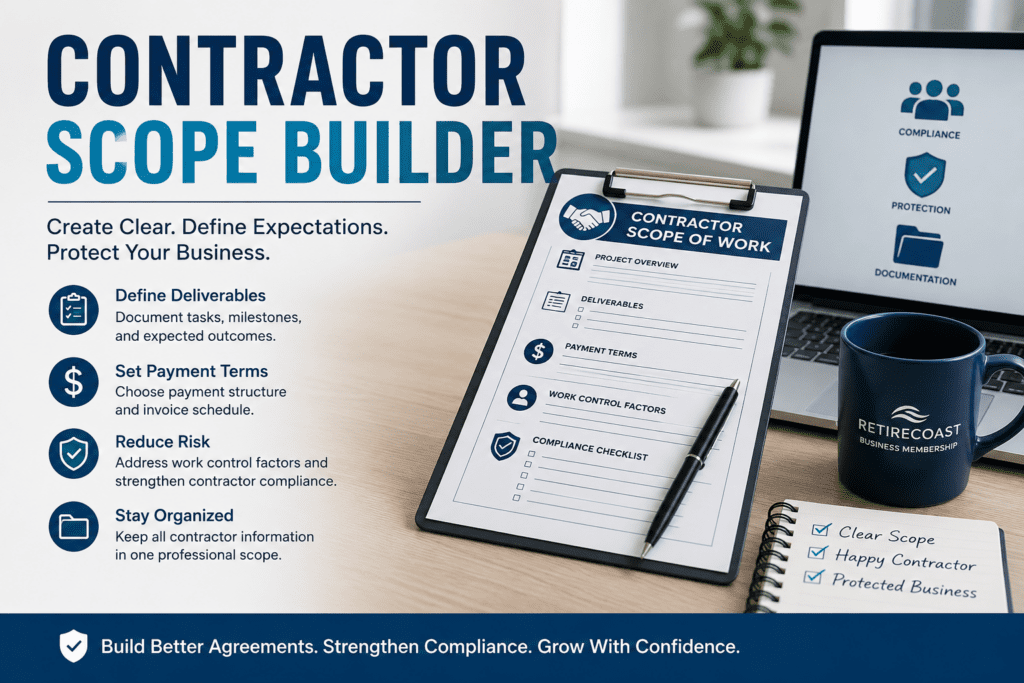
One of the biggest problems small business owners face when working with independent contractors is the lack of clear written expectations before work begins. Many businesses exchange a few emails, send text messages, or rely on verbal discussions — only to later discover disagreements about deadlines, payment terms, revisions, deliverables, or who was responsible for certain tasks.
The Contractor Scope Builder was created to help Business Membership users document the details of a contractor relationship in a practical and organized way before the project starts. A properly written scope of work can help reduce confusion, improve communication, support accounting documentation, and strengthen your contractor compliance process.
This tool helps you organize:
- Project descriptions and expected deliverables
- Payment structure and invoice schedules
- Items specifically excluded from the project
- Revision policies and change requests
- Work location and schedule control factors
- Independent contractor compliance documentation
- W-9 and TIN collection reminders
- Risk factors that may increase employee-classification concerns
Many IRS and state worker-classification disputes begin when businesses unintentionally treat contractors like employees. The more control a business exercises over schedules, equipment, work location, and daily activities, the greater the classification risk may become. This tool helps you recognize some of those warning signs while building a more professional project record.
The Contractor Scope Builder works especially well when combined with the other tools inside the RetireCoast Worker Compliance Dashboard, including:
- Advanced Employee vs Contractor Classification System
- Contractor Agreement Generator
- W-9 Compliance Tracker
- Worker Payment & 1099 Tracker
- IRS Audit Defense Packet Generator
- Worker Risk Audit Score Tool
Used together, these tools help small business owners create a more complete documentation system for independent contractor relationships — something that can become extremely valuable during audits, tax preparation, disputes, or internal business reviews.
This tool helps you create a detailed written scope of work for an independent contractor relationship before the project begins. The goal is to clearly define expectations, payment terms, deliverables, and compliance items while also helping reduce misunderstandings and worker-classification risks.
Start by entering the contractor’s name, business name, project title, project start date, and estimated completion date. These details create the foundation for the scope document.
Use the Project Description and Deliverables sections to explain:
- What work is being performed
- What the contractor is expected to deliver
- Project milestones or completion targets
- Specific tasks included in the agreement
The more clearly you define the work, the easier it becomes to avoid disputes later.
Use the “Excluded Work” section to identify tasks, revisions, services, travel, maintenance, or additional work that are not part of the original scope. This helps establish boundaries and reduce scope creep.
Select the payment structure and document:
- Flat fee or hourly rate
- Milestone payments
- Invoice timing
- Retainer arrangements
- Revision billing policies
Clear payment terms reduce misunderstandings and support proper accounting documentation.
The tool asks questions related to:
- Who provides tools and equipment
- Who controls the work schedule
- Whether work is remote or onsite
- How much business supervision exists
These factors may affect whether a worker could later be viewed as an employee instead of an independent contractor. The tool may generate review warnings based on your selections.
Before issuing payment, businesses should normally:
- Request a completed W-9
- Collect the contractor’s TIN or EIN securely
- Use a written contractor agreement
- Review worker classification status
- Verify insurance when appropriate
Completing these items helps strengthen your documentation system and may reduce audit risk.
Once completed, generate the scope document and either print it or copy it into your contractor agreement file. Save the final version with invoices, W-9 records, classification reviews, and payment documentation.
Build a professional contractor scope of work with payment terms, contractor certifications, compliance language, and signature blocks for both parties.
You have now identified your worker compliance risk — the next step is taking action. This audit is most effective when used alongside the full Worker Compliance system inside your Business Membership.
Depending on your results, you may need to confirm classification, create or update agreements, track payments properly, or improve your worker documentation. The Worker Compliance Dashboard gives you access to the tools designed to help address each of these areas.
Reducing worker compliance risk is an important step, but it is only one layer of protection. Consider strengthening your overall strategy by adding the Estate Planning Membership, designed to help protect both your business assets and personal wealth from legal, financial, and unexpected risks.