The American colonies were more than battlefields and political debates — they were a functioning economy built on trade, transportation, manufacturing, farming, shipping, and skilled labor. The Colonial Economy Simulator from RetireCoast brings that world to life through a growing collection of interactive calculators and educational tools inspired by the economy of 1776.
These tools allow readers, students, history enthusiasts, and educators to explore the financial realities faced by colonial merchants, blacksmiths, tavern owners, wagon operators, militia suppliers, and manufacturers during the Revolutionary era. From estimating freight costs along rough colonial roads to calculating tavern profits or musket production expenses, each simulator provides a hands-on look at how commerce operated during the birth of the United States.
The Colonial Economy Simulator is part of the broader RetireCoast America’s 250th Anniversary series, designed to help modern readers better understand the economic systems that supported independence, trade, military supply chains, and everyday colonial life.
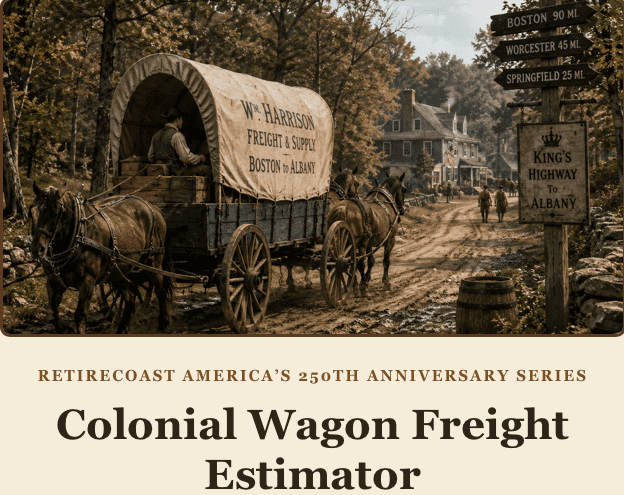
# Colonial Wagon Freight Estimator (1776-Themed Tool) ```html ``` # Suggested Yoast SEO ## Focus Keyphrase Colonial Wagon Freight Estimator ## SEO Title Colonial Wagon Freight Estimator | 1776 Trade Calculator ## Meta Description Estimate the cost of transporting goods across colonial America in 1776 using the Colonial Wagon Freight Estimator from RetireCoast’s Colonial Economy Simulator series. ## Slug colonial-wagon-freight-estimator # Suggested Featured Image Alt Text Colonial freight wagons transporting military and trade goods across rough American roads during the Revolutionary War era
During the Revolutionary era, transportation of goods through the Colonies was slow, dangerous, and expensive. Wagons frequently traveled through muddy roads, forests, mountain passes, and regions threatened by British patrols or bandits.
Freight operators carried food, iron, timber, musket balls, gunpowder, rum, cloth, tools, and military supplies between farms, ports, blacksmith shops, taverns, and Continental Army encampments.
This estimator recreates a simplified version of the logistical and economic challenges faced by colonial merchants and military suppliers during America’s struggle for independence.
Explore additional 1776-era economic simulators including the Tavern Profit Ledger, Blacksmith Production Estimator, Colonial Payroll Ledger, and Musket Production Cost Tool — all part of the RetireCoast America’s 250th Anniversary collection.


The same principles that helped successful entrepreneurs survive in 1776 still matter today: preparation, organization, risk management, adaptability, and protecting what you build.
Whether you operate a modern business, manage investment property, plan for retirement, or simply want to protect your family’s future, our memberships are designed to help you build a stronger foundation in uncertain times.