
Last updated on September 25th, 2025 at 04:09 am
Selling a home is one of the biggest financial decisions most people will ever make, and finding the best agent to sell your home can make all the difference. The right agent can help you sell faster, attract qualified buyers, and maximize your profit.
From my personal experience selling both homes and investment properties over the last 30 years, I’ve learned that the best agent isn’t just a salesperson—they are a partner who works with you every step of the way.
This article was created to help you understand the process to select a great agent to partner with you in selling your home. This article was created for you, a potential buyer. You may want to check out the variety of articles written on REAgentComm.com, which is a site created for real estate agents. Looking at this topic from a different point may be of some interest.
No matter how talented an agent may be, they cannot overcome resistance from their own client. Success is always a team effort.

Why Partnership Matters
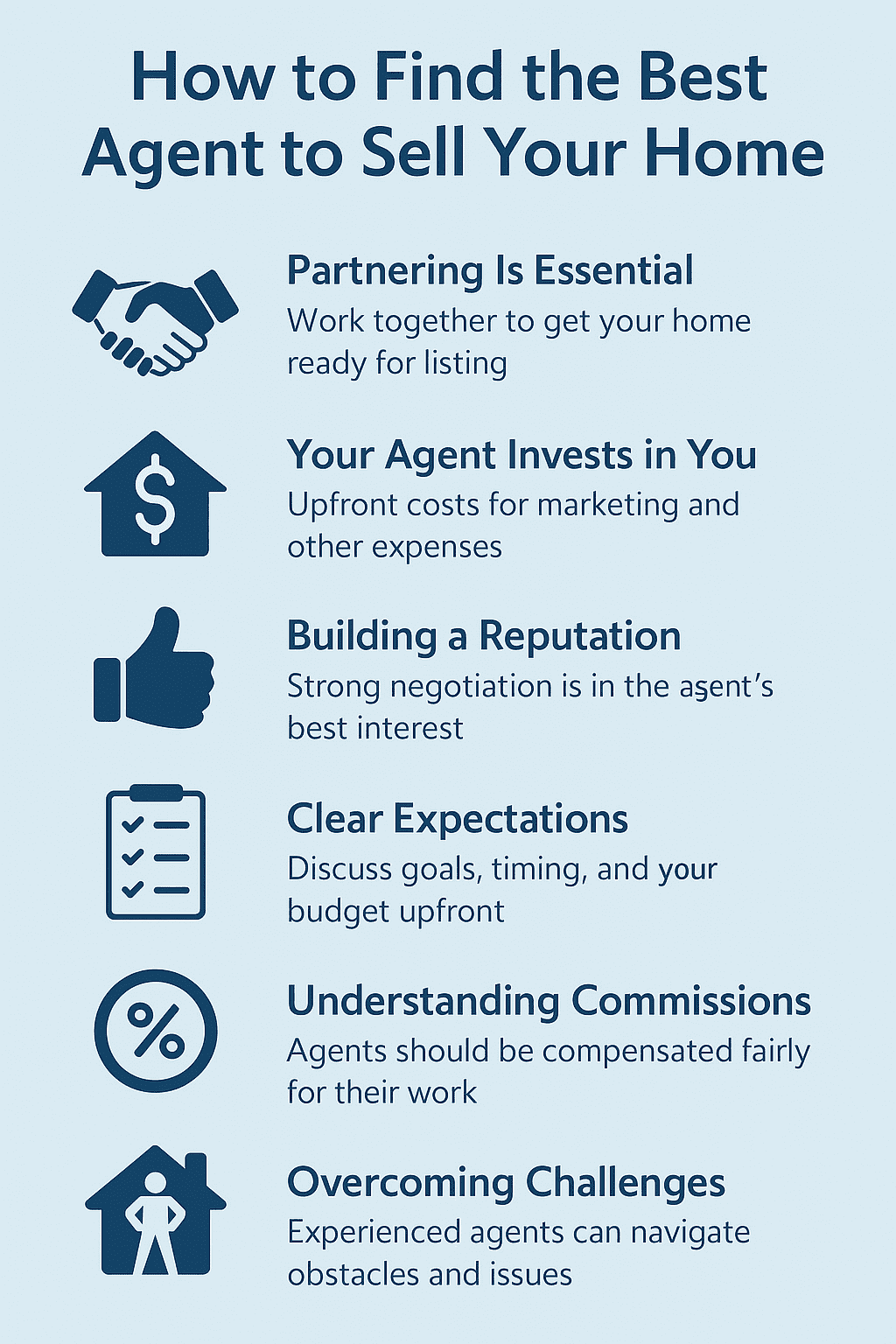
The relationship with your agent should feel like a partnership. If your agent recommends cleaning, repairs, staging, or even a price adjustment, take their advice seriously. They see your property through the eyes of buyers—not through your sentimental lens as the owner.
Declutter, freshen up paint, and keep the yard neat. If you have pets, vacuum daily and keep litter boxes spotless. Buyers notice everything. If you’re too busy, hire professional cleaners or landscapers. The best agent to sell your home can only do their job well when you’ve prepared the property for success.
If you’re planning to sell before retirement, you may also want to read Why You Should Retire on the Mississippi Gulf Coast.
Your Neighborhood Matters
If you live in an HOA or community association, your neighbors’ homes and common areas impact your sale. Overgrown lawns, vehicles parked in yards, or neglected shared spaces can turn buyers away.
Don’t be afraid to file a confidential complaint with your HOA if rules aren’t being followed. A clean, well-kept neighborhood benefits everyone. Buyers don’t just purchase a house—they buy into a community. The best agent to sell your home will highlight your neighborhood’s strengths, but it’s up to you to help minimize the weaknesses.
How Agents Invest in You
Few sellers realize how much agents spend and do before they ever earn a dime. The moment you sign a listing agreement, they begin investing in your property:
- MLS listing fees and professional descriptions
- High-quality photography and virtual tours
- Paid advertising and social media campaigns
- Flyers, signage, and open house expenses
Agents are independent contractors, not salaried employees. They cover these costs themselves in the hope of a successful sale.
And their investment goes far beyond money. Agents are often called upon to do things you wouldn’t expect. A repair technician might provide only a four-hour service window, leaving the agent to babysit the property. I once had to repair an electronic lock myself when Wi-Fi failed and the owner couldn’t provide showing codes. Most agents invest many unpaid hours like this for their clients—all in the hope that the property sells.
Reputation Is Everything
Forget the myth that agents underprice homes to make a quick sale. In reality, the best agent to sell your home builds their business on results and referrals. Their reputation depends on negotiating well, providing accurate market advice, and guiding you through the process smoothly.
A professional agent will:
- Research the market thoroughly
- Provide a realistic price range based on comparable sales
- Explain why similar homes sold higher or lower
- Advise on timing and presentation
Every successful sale leads to future referrals, so your success is in their best interest.
Give Your Agent the Right Tools
Your agent can only work with the information you provide. If you know about an upcoming park, school, or shopping center, tell them—it may be a selling point. At the same time, disclose past issues like roof leaks or water damage. Buyers will uncover these problems during inspections, and surprises can kill deals.
The best agent to sell your home often has a trusted network of contractors, stagers, and landscapers to handle improvements quickly. Use that network to your advantage.
This is especially important for investors. If you’re exploring that side of the market, see Real Estate Agents Guide to Work With Investors.
Agents Who Go Above and Beyond
The best agents don’t just market your home—they problem-solve. I’ve had agents who arranged landscaping for a vacant home, visited weekly to check conditions, and even supervised repairs.
In one case, an agent noticed the listing photos looked dark. Instead of delaying the launch, she brought in her own lighting equipment and restaged the rooms herself. The new photos attracted buyers quickly, and the home sold within weeks.
When interviewing, ask agents for examples of times they “went the extra mile.” Their answers will reveal how dedicated they really are.
Headwinds That Can Slow a Sale
Even the best preparation can’t prevent certain obstacles:
- Road construction near your property
- Seasonal timing (like listing after school starts)
- Problem neighbors with noise or clutter
- Rising insurance costs or property taxes
- A sudden glut of similar homes in the area
- Natural disasters or flood history
I once worked on a property where two buyers were scared off by constantly barking dogs next door. The agent stepped in, negotiated with the neighbor, and even scheduled showings while the dogs were at daycare. These “headwinds” may be outside your control, but the best agent to sell your home knows how to navigate them with creativity.
Experience Is the Edge
What separates good agents from great ones is how they handle challenges. Experienced agents have faced obstacles before and know how to adapt—whether it’s adjusting pricing, timing showings, or highlighting positives that outweigh negatives.
When interviewing agents, ask: “Tell me about a challenging listing you handled—how did you solve the problem?” The answer will tell you a lot.
Clear Expectations = Fewer Surprises
Don’t leave your first meeting without stating your true expectations. If you need a quick sale, say so. If you have a minimum net number in mind, be upfront.
The best agent to sell your home will tell you if your goals are realistic and explain how market conditions may affect the outcome. Honest conversations at the start prevent disappointment later.
More often than agents like to admit, clients fire them because expectations were never communicated clearly. For example, some buyers decide they have a budget of $300,000, and their agent only shows homes within that range. Later, the buyer finds a $325,000 listing online and wonders why it wasn’t shown. Miscommunication like this creates mistrust.
As mentioned earlier, this process is a partnership. It’s critical that you outline exactly what you want, when you want it, and that you are prepared to act if the right property appears. Clear expectations allow your agent to serve you effectively and keep the relationship strong.
What a Real Estate Agent Expects from Their Seller Client
Partnership works both ways. Just as sellers must prepare their homes, buyers must be ready to act. Here’s what most agents expect from buyer clients:
- Serious Intent – Be genuinely interested in purchasing, not just casually browsing.
- Immediate or Near-Term Timing – Your selling window should be now or very soon.
- No leins – Are there any strange liens that can affect the sale.
- Ownership – Are you the owner(s), all owners need to sign the listing agreement
- Agree to make minor fixes – You will fix minor items that will help sell your property
- Consistent Communication – Stay in touch and update your agent promptly if your criteria change.
- Available for showing – You agree to make your property available for buyers to see
- Presentation – The property must be presentable for showings, you need to keep it clean
The best agent to sell your home also needs reliable, committed buyers to make deals happen. This means that you as a seller need to be prepared to offer the selling agent a commission.
Give Buyers Space During Showings
When buyers tour your home, leave the property. Go for a walk or sit outside. Buyers need space to speak freely and imagine themselves living in the home. Your absence actually helps the showing go better.
Understanding Commissions
There’s no “standard” commission—rates are negotiable. Most fall between 5–6% and are split between the buyer’s agent and the seller’s agent.
Remember, commissions cover:
- Professional photography and marketing
- MLS fees and advertising
- Broker oversight and insurance
- Countless hours of time and travel
- Creation and management of real estate website
Real estate agents do not complete a purchase for every client. Many buyers never buy, others fail financing, and some back out before closing. That means even the best agents spend a great deal of time working without pay. The commissions they earn on completed sales also help cover those periods when work does not produce income.
The best agent to sell your home earns their commission by investing time, resources, and expertise to secure you the best result.
For more, review National Association of Realtors resources on commissions.
The Broker’s Role
Agents work under brokers, who provide oversight, liability coverage, and support services. Brokers also carry costs such as insurance, office space, and compliance training—costs covered through commissions.
Real estate agents are independent business people, but state laws require them to place their license with a broker who is legally responsible for their conduct. The broker is the go-to person when an agent needs guidance. Naturally, there is a cost for the broker’s activities, and part of the sales commission covers it.
Traditionally, the seller pays commissions for both the listing agent and the buyer’s agent. However, buyers and sellers can negotiate alternative arrangements depending on the deal and local practices.
Negotiate in Good Faith
Since commissions and responsibilities can vary, approach negotiations openly. A professional agent will explain their fees, outline their marketing plan, and clarify how they intend to represent you.
Remember: commissions are negotiable. While sellers often pay both sides, buyers and sellers can structure creative alternatives.
The best agent to sell your home will work hard to earn every dollar by bringing qualified buyers, handling negotiations, and guiding you to closing. Negotiating in good faith ensures they feel valued and motivated.
Here’s one example: A seller I knew didn’t want to reduce the list price after months on the market. Instead, the agent proposed increasing the buyer’s agent commission slightly to attract more showings. Within weeks, the home sold close to list price. It was a creative solution that saved the deal—proof that fairness and flexibility pay off.
Other things Agents help with
You came to the closing and received the closing statement. Do you know what is not in the form? Your agent knows. A client recently sold their home and they were upside down by a few thousand dollars. This meant the seller had to bring money to the closing table to make up the difference between the net required to close and the payoff of their mortgage.
My clients were upset that they had to find the funds to close. I told them that there was a silver lining. The mortgage company owed them escrow funds which would come in a few weeks after closing. In addition, I told them to immediately contact their insurance broker and request a refund for insurance that is always paid in advance of the policy year. The amounts of these two refunds would just about equal the amount they had to pay at closing.
The result is a breakeven. It gets better. Their property was rental meaning that their loss was tax deductible plus the costs during they year the put into the property. The point here is that many agents get involved in the financial part of the transaction and understand for example that failure to immediately ask for an insurance refund may mean they don’t get it at all.
Final Thoughts
The best agent to sell your home is someone who:
- Communicates clearly and often
- Invests their own time and money in your success
- Has the creativity and experience to overcome obstacles
- Works with you as a true partner
Selling a home isn’t just about hiring someone—it’s about collaboration. With the right agent, you’ll sell faster, more profitably, and with less stress.
👉 Thinking about selling? Start interviewing agents today. Ask about their marketing strategies, past challenges, and how they’ll partner with you.
For more information, see U.S. Department of Housing and Urban Development resources for sellers.
To avoid pitfalls, you may also enjoy Why Real Estate Sales Fail: How to Avoid Failure.
And if you’d like an insider’s perspective, visit REAgentComm.com. While created for agents, it can give sellers like you a valuable look at how professionals view commissions, marketing, and negotiation.
I’ll close with a personal story: I once believed a property should sell at $325,000 based on improvements I’d made. My agent showed me the market analysis pointing to $310,000. I trusted her advice, and the home sold at $312,000 with multiple offers in weeks.
Had I insisted on my higher price, the property might have lingered unsold. That experience taught me that the best agent to sell your home tells you what you need to hear—not just what you want to hear.
Above all, remember this: clear expectations are the foundation of trust. Whether you’re buying or selling, outlining your goals early ensures your agent can serve you effectively and keep your partnership strong through closing.
Frequently Asked Questions
How do I find the best agent to sell your home in my area?
What should I expect from a strong listing presentation?
How much prep should I do before listing?
Is there a “standard” real estate commission?
Why do agents earn commissions if some clients never buy or sell?
How do I price my home correctly?
What marketing should the best agent to sell your home provide?
What does a real estate agent expect from their buyer client?
Can buyers and sellers negotiate who pays which commissions?
How do I know when to reduce price vs. improve marketing?
Discover more from RetireCoast.com
Subscribe to get the latest posts sent to your email.