Introduction
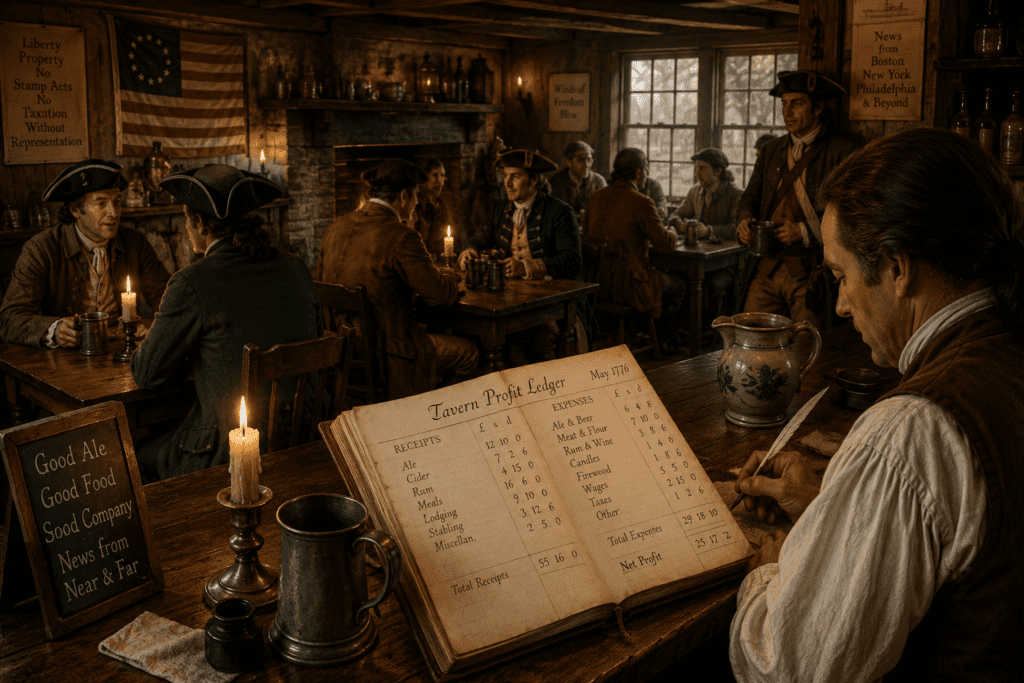
In colonial America, taverns were far more than places to drink ale. They operated as inns, restaurants, trading posts, post offices, political gathering places, recruiting centers, and even unofficial banks. During the years surrounding the American Revolution, tavern owners often stood at the center of local commerce and community life.
A successful tavern keeper had to balance food costs, imported goods, ale supplies, traveler traffic, lodging demand, and taxes while dealing with shortages caused by war, weather, and transportation delays. Some taverns prospered from military activity and busy wagon routes, while others struggled when trade slowed or supplies became scarce.
The Colonial Tavern Profit Ledger allows you to estimate how a tavern in 1776 might have performed financially by calculating income from:
- Ale and cider sales
- Meals and food service
- Lodging rentals
- Traveler and wagon traffic
- Special events and meetings
The ledger also estimates the impact of:
- Supply shortages
- Colonial taxes and licensing fees
- Imported goods costs
- Staffing expenses
- Firewood and candle consumption
- Wartime disruptions
Whether you are studying colonial business operations, teaching Revolutionary War economics, or simply curious about how taverns operated during America’s founding era, this tool offers a practical look at one of the most important businesses in 18th century society.
Tool Instructions
- Enter the estimated number of travelers visiting the tavern weekly.
- Add average ale, cider, and meal sales.
- Estimate the number of rented lodging rooms and nightly rates.
- Include supply costs such as food, imported rum, candles, firewood, and ale barrels.
- Adjust wartime shortages or taxes to simulate Revolutionary-era disruptions.
- Review estimated weekly and annual profits.
Suggested Tool Sections
Tavern Traffic Estimator
Estimate weekly travelers, wagon teams, militia members, merchants, and local customers.
Ale & Spirits Revenue
Track:
- Ale
- Cider
- Rum
- Whiskey
- Wine imports
Meal Revenue Ledger
Estimate profits from:
- Stews
- Bread
- Salt pork
- Fish
- Oysters
- Roasted meats
Lodging Income
Calculate:
- Occupied rooms
- Stable rentals
- Horse boarding
- Overnight travelers
Colonial Expense Ledger
Include:
- Imported supplies
- Local taxes
- Staff wages
- Firewood
- Candle usage
- Food spoilage
- Wartime shortages
Revolutionary War Impact Simulator
Estimate how:
- British troop movement
- Militia activity
- Supply shortages
- Harbor closures
- Inflation
affected tavern profits.
Historical Context Section
Colonial taverns played a major role in the movement toward independence. Important discussions about liberty, trade restrictions, taxation, and resistance to British rule often occurred inside tavern meeting rooms. Many taverns also hosted militia officers, traveling merchants, newspaper readers, and political organizers.
In some cities, taverns became unofficial headquarters for revolutionary groups and local committees. During wartime, tavern owners often faced difficult choices involving loyalty, shortages, rising costs, and military occupation.
For many colonial entrepreneurs, operating a tavern was both an opportunity and a constant financial risk.


The same principles that helped successful entrepreneurs survive in 1776 still matter today: preparation, organization, risk management, adaptability, and protecting what you build.
Whether you operate a modern business, manage investment property, plan for retirement, or simply want to protect your family’s future, our memberships are designed to help you build a stronger foundation in uncertain times.