
One of the most stressful events a business owner can face is receiving an IRS notice related to worker classification, missing 1099 filings, payroll issues, or contractor compliance documentation. In many cases, the difference between a manageable audit and a costly dispute comes down to one thing: organized records and documented compliance efforts.
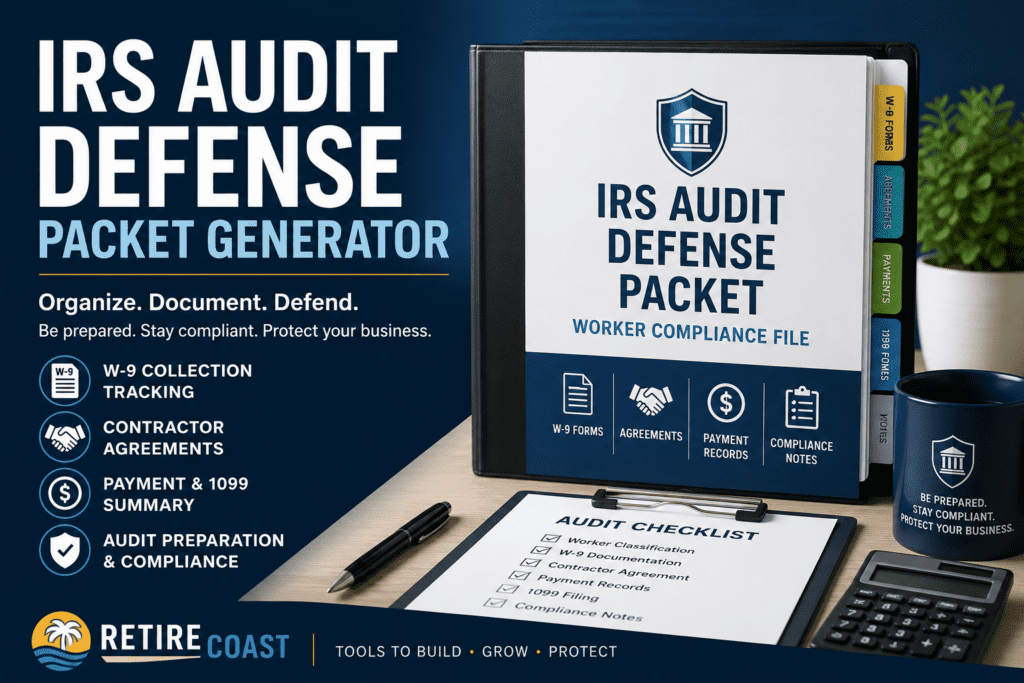
The RetireCoast IRS Audit Defense Packet Generator was created to help small business owners organize the key records often requested during an IRS review or worker classification examination. This tool allows you to create a structured compliance packet containing worker classifications, payment summaries, W-9 collection status, contractor agreement records, 1099 filing information, and internal compliance notes.
Many small businesses operate with incomplete systems during their early years. Owners may hire independent contractors informally, fail to obtain W-9 forms before issuing payments, or forget to maintain written agreements explaining the nature of the contractor relationship. These gaps can become serious problems if the IRS later questions whether a worker should have been classified as an employee rather than an independent contractor.
This tool helps you begin organizing those records into a more professional and defendable structure. It also helps identify weaknesses in your compliance process by generating a risk score based on missing documentation, classification concerns, and filing issues.
This tool is part of the broader RetireCoast Worker Compliance Dashboard included with the Business Membership. Members also receive access to advanced worker classification tools, contractor agreement generators, W-9 tracking systems, payment and 1099 tracking tools, compliance scoring systems, and additional audit preparation resources designed specifically for small business owners and LLC operators.
This tool helps you organize worker compliance records into a structured audit preparation file. It is designed primarily for small businesses, LLC operators, real estate professionals, property managers, short-term rental owners, and other businesses that regularly hire independent contractors.
- When W-9 forms were requested
- How the contractor relationship was structured
- Whether the worker provided invoices
- Proof of insurance or licensing
- Independent contractor business activities
- Corrective actions taken after discovering compliance gaps
- Copies of W-9 forms
- 1099 filings
- Invoices and payment records
- Bank statements
- Independent contractor agreements
- Email correspondence
- Insurance certificates
- Worker classification evaluations
You have now identified your worker compliance risk — the next step is taking action. This audit is most effective when used alongside the full Worker Compliance system inside your Business Membership.
Depending on your results, you may need to confirm classification, create or update agreements, track payments properly, or improve your worker documentation. The Worker Compliance Dashboard gives you access to the tools designed to help address each of these areas.
Reducing worker compliance risk is an important step, but it is only one layer of protection. Consider strengthening your overall strategy by adding the Estate Planning Membership, designed to help protect both your business assets and personal wealth from legal, financial, and unexpected risks.