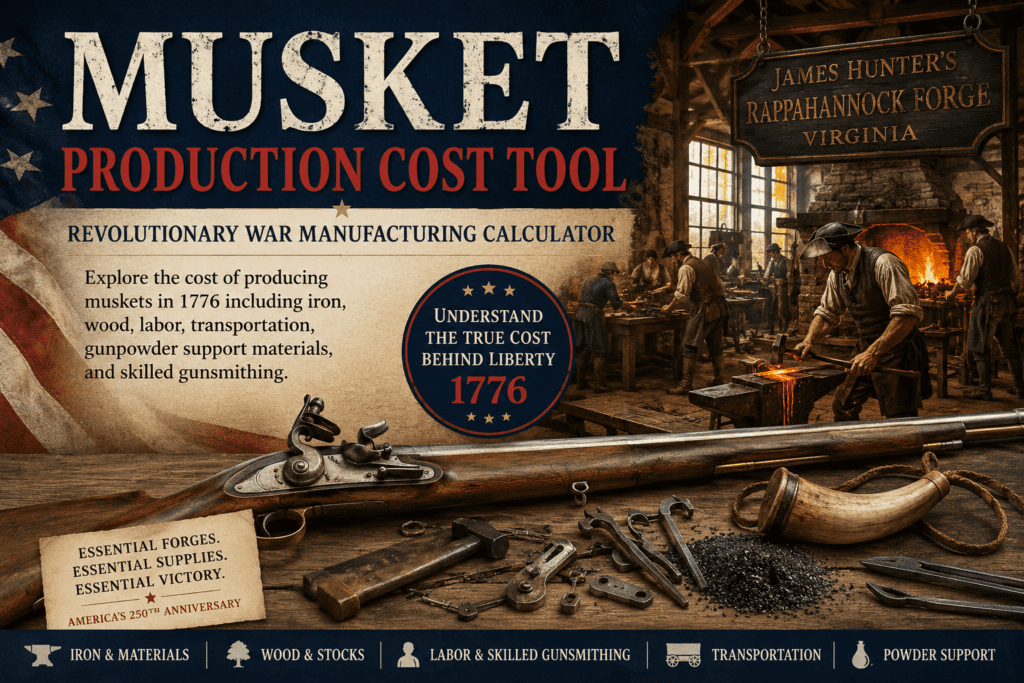
Real World Example of Musket Production in 1776
James Hunter’s Rappahannock Forge in Virginia was far more than a simple blacksmith shop. During the Revolutionary War, it became one of the most important industrial facilities supporting the American war effort. The forge required absolute control over labor, inventory, transportation, raw materials, and military production schedules. Hundreds of workers, including blacksmiths, gunsmiths, laborers, woodworkers, charcoal producers, teamsters, and support staff, were necessary to keep operations functioning during wartime shortages and constant military demand.
Producing muskets in 1776 was an enormous industrial undertaking. Iron ore had to be acquired and refined into usable metal. Hardwood stocks required skilled shaping and fitting. Locks, flints, springs, and barrels demanded precision craftsmanship from experienced gunsmiths. Gunpowder support materials, transportation systems, wagon freight, food supplies for workers, and military oversight all added to the cost and complexity of production. Delays in any part of the supply chain could slow the manufacturing of desperately needed firearms for colonial troops.
This Musket Production Cost Tool helps demonstrate the economic realities faced by Revolutionary-era military manufacturers. It illustrates why forges such as James Hunter’s operation became critical strategic assets during the fight for American independence and why careful inventory management and labor coordination were essential to sustaining the Revolutionary War effort.
This Musket Production Cost Tool connects directly with one of our most popular America’s 250th Anniversary articles: Weapons Used in 1776. While this calculator estimates what it cost to manufacture muskets and military arms, the article explains the actual weapons carried by soldiers, militia, sailors, and officers during the Revolutionary War.
Read Weapons Used in 1776This calculator is part of the RetireCoast Colonial Economy Simulator ecosystem designed to demonstrate how manufacturing, transportation, labor, and military supply systems shaped the American colonies during the struggle for independence.
Visit the Free Calculators Hub Business Builder Membership

The same principles that helped successful entrepreneurs survive in 1776 still matter today: preparation, organization, risk management, adaptability, and protecting what you build.
Whether you operate a modern business, manage investment property, plan for retirement, or simply want to protect your family’s future, our memberships are designed to help you build a stronger foundation in uncertain times.