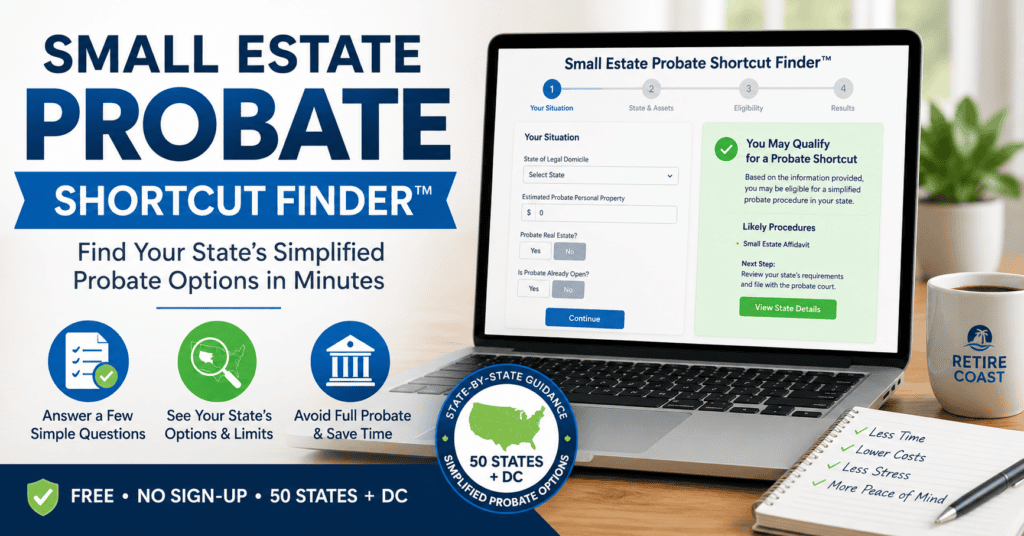
Small Estate Probate Shortcut Finder featured image showing a state-by-state probate screening tool on a laptop with icons highlighting simplified probate options, probate affidavits, and the ability to determine whether an estate may qualify for a small-estate procedure in all 50 states and the District of Columbia.

Settling an estate does not always require a long or expensive formal probate proceeding. Many states offer a small-estate affidavit, summary administration, voluntary administration, or another simplified process when the probate estate falls below certain limits.

The free RetireCoast Small Estate Probate Shortcut Finder™ helps you identify which simplified probate option may be available in your state. Enter the deceased person’s state, estimate the value of the probate assets, and answer a few questions about real estate, debts, heirs, and possible disputes.

The tool will provide an educational screening result, identify the procedure you may need to research, and explain the next steps to confirm eligibility with the appropriate probate court or attorney.

RetireCoast Estate Planning Academy
Small Estate Probate Shortcut Finder™

Answer a few questions to learn whether an estate may qualify for a small-estate affidavit, summary administration, or another simplified probate process.

Start with the probate estate—not the person’s total net worth. Assets with a valid beneficiary, jointly owned assets that pass automatically, trust-owned property, and some transfer-on-death assets usually are not counted as probate assets. State rules differ, so this tool provides an educational screening result rather than a legal determination.
1. State
2. Assets
3. Eligibility
4. Result
Probate normally begins in the state and county where the person was legally domiciled at death.
The date matters because some dollar limits are adjusted periodically.
Examples: solely owned bank accounts, refunds, vehicles, household property, and investments without a beneficiary.
Enter only real estate titled solely in the deceased person’s name and not controlled by a trust, beneficiary deed, or survivorship ownership.
Did the deceased person own real estate in another state?
Out-of-state real estate can require a separate ancillary probate proceeding.
Usually excluded from this estimate: life insurance with a named beneficiary, retirement accounts with beneficiaries, payable-on-death accounts, jointly owned survivorship property, and assets already titled in a trust.
Has a probate case already been opened or has a personal representative been appointed?
Is there a dispute about the will, heirs, property ownership, or who should receive the assets?
Are known debts, taxes, funeral expenses, and family allowances manageable with available estate funds?
Is the person using this tool an heir, beneficiary, surviving spouse, or legally authorized successor?
State
Estimated probate estate$0
Screening status

Documents commonly needed

  • Certified death certificate
  • Original will, if one exists
  • Asset statements showing date-of-death values
  • Vehicle titles and real estate deeds
  • List of heirs, beneficiaries, and addresses
  • Known debts, final expenses, and tax information
  • State or county small-estate affidavit, petition, or court form
Do not distribute property too quickly. A person who receives or distributes estate property may become responsible for creditor claims, taxes, family allowances, or an incorrect distribution. Verify the procedure with the probate court or a qualified attorney before signing an affidavit under oath.

Knowing that an estate may qualify for a simplified probate procedure is only the first step. Review the deceased person’s assets, beneficiary designations, debts, real estate, will, and trust documents before filing anything with the court.

Continue through the RetireCoast Estate Planning Academy to learn how probate works, which assets avoid probate, and how thoughtful planning can reduce delays and expenses for your family.

Unlock More Than Just a Calculator

This free calculator helps answer one important question. RetireCoast Memberships help you build a more complete plan.

Millennial Financial Lab

Budgeting, debt reduction, major life decisions, retirement projections, and wealth-building tools.

Business Builder

Business formation, pricing, compliance, tax-saving strategies, and operational decision systems.

Estate Planning

Draft documents, organize assets, evaluate trust strategies, and prepare before meeting an attorney.

All-Access Membership

Complete access to every RetireCoast membership, dashboard, tool, calculator, and planning system.

Why guess about retirement, business, estate planning, or long-term financial decisions? Use structured RetireCoast planning tools to move from a single calculation to a more complete plan.