
How to Use the 2026 Tax-Free Retirement Withdrawal & Roth Conversion Calculator.
Understanding the Purpose of the Calculator
Tax-Free Retirement Withdrawal Calculator (2026 Forecast Edition)
How to Use the Tax-Free Retirement Withdrawal Calculator (for preparing 2026 taxes due in 2027)
Retirement tax planning is not about avoiding taxes entirely. It is about controlling when and how much tax you pay over your lifetime.
Many retirees accumulate substantial balances in traditional IRAs and 401(k) plans. While these accounts provide tax-deferred growth, every dollar withdrawn is generally subject to federal income tax. Eventually, Required Minimum Distributions (RMDs) may force larger withdrawals and potentially push retirees into higher tax brackets.
The Tax-Free Retirement Withdrawal Calculator helps estimate how much money can be withdrawn from tax-deferred retirement accounts while remaining within the lowest federal income tax brackets.
Many retirees use this strategy to gradually convert funds from traditional retirement accounts into Roth IRAs, reducing future taxes and creating a source of tax-free retirement income.
Your IRA or 401(k) Is Not Entirely Yours
When you contributed to a traditional IRA or 401(k), you received a tax deduction in exchange for agreeing to pay taxes later. Retirement is often the time when that deferred tax bill begins to come due.
The objective is to withdraw or convert funds strategically while tax rates remain low rather than waiting until larger RMDs potentially increase your future tax burden.
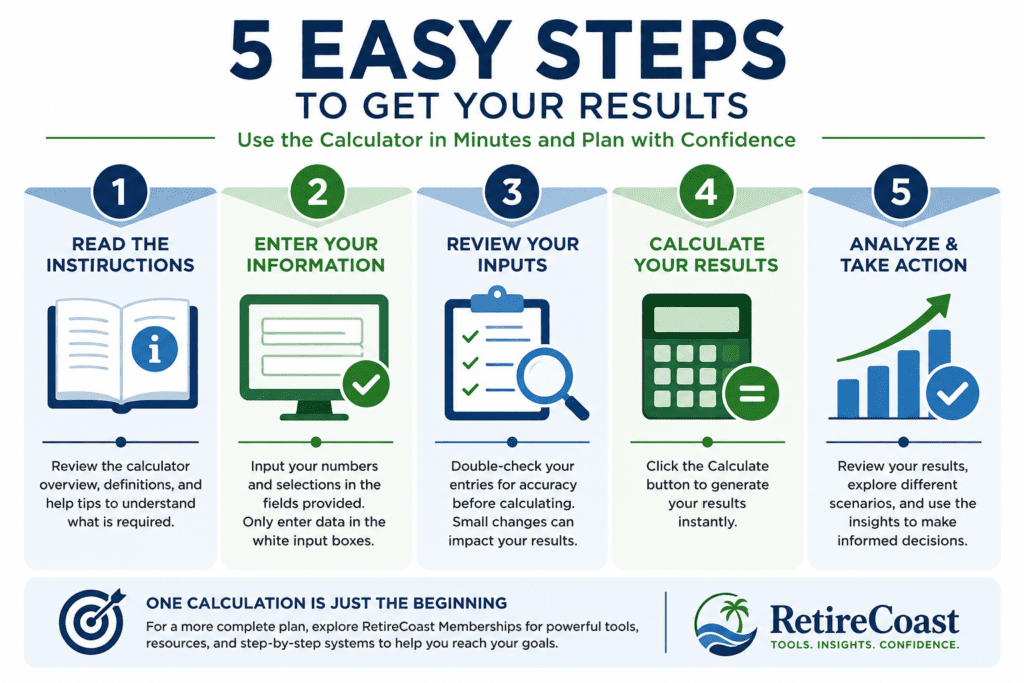
How to Use the Calculator
Step 1: Enter Your Estimated Taxable Income
Enter your expected taxable income for the year. This may include:
• Taxable Social Security benefits
• Pension income
• Rental income
• Interest and dividends
• Part-time employment income
• Other taxable income
Step 2: Calculate Available Tax-Free Withdrawals
The calculator estimates how much additional income can be recognized before reaching the projected standard deduction amount.
Income sheltered by the standard deduction generally results in little or no federal income tax liability.
Step 3: Review Low-Tax Withdrawal Opportunities
After utilizing available deductions, the calculator estimates how much additional retirement income can be withdrawn while remaining within the lowest federal tax brackets.
Many retirees choose to withdraw or convert these amounts to a Roth IRA each year.
Step 4: Evaluate Roth Conversion Opportunities
The calculator can help identify opportunities to move money from a traditional IRA into a Roth IRA while paying taxes at relatively low rates today rather than potentially higher rates later.
Step 5: Review Estimated Tax Impact
The calculator estimates the federal income tax generated by additional withdrawals, helping you determine whether a Roth conversion or distribution strategy makes sense.
Why This Strategy Matters
Many retirees focus solely on investment returns while ignoring taxes. In reality, tax management can significantly impact how much money remains available for retirement spending and future heirs.
Gradual withdrawals and Roth conversions may help:
• Reduce future Required Minimum Distributions (RMDs)
• Lower future tax liabilities
• Create tax-free Roth IRA assets
• Improve flexibility during retirement
• Leave more tax-efficient assets to beneficiaries
Benefits of Roth IRA Conversions
Tax-Free Growth
Once funds are converted into a Roth IRA, future qualified growth is generally tax-free.
Tax-Free Withdrawals
Qualified Roth withdrawals are generally not subject to federal income tax.
No Lifetime RMDs
Unlike traditional IRAs, Roth IRAs do not require lifetime minimum distributions for the original owner.
Estate Planning Advantages
Roth assets can often provide greater flexibility for beneficiaries and may reduce future tax burdens for heirs.
2026 Forecast Assumptions
This calculator uses projected 2026 federal tax rules and estimated inflation adjustments. Actual IRS tax brackets, standard deductions, and other tax provisions may differ when final guidance is released.
Results should be used for planning purposes only and should not be considered tax, legal, or financial advice.
Putting the Plan into Action
- Estimate your annual taxable income.
- Use the calculator to identify available low-tax withdrawal opportunities.
- Consider Roth conversions while remaining within your desired tax bracket.
- Review your strategy annually as tax laws and personal circumstances change.
- Coordinate your withdrawal plan with Social Security, Medicare, pensions, and Required Minimum Distributions.
Smart tax planning today can help create a more predictable and tax-efficient retirement tomorrow.
Related Articles
• 2026 Federal Income Taxes: Complete Guide
• 18 Tax-Saving Strategies for 2026
• Roth Conversion Strategies for Retirees
• How Long Will My Retirement Savings Last?
• Estate Planning for Retirement Assets
Visit our Calculators Hub for more free calculators that can help you with your income tax planning and financial health.
2026 Tax-Free Retirement Withdrawal Calculator
Estimate how much you may be able to withdraw or convert from a Traditional IRA/401(k) before reaching the 10%, 12%, or 22% federal tax brackets.
This free calculator helps answer one important question. RetireCoast Memberships help you build a more complete plan.
Budgeting, debt reduction, major life decisions, retirement projections, and wealth-building tools.
Business formation, pricing, compliance, tax-saving strategies, and operational decision systems.
Draft documents, organize assets, evaluate trust strategies, and prepare before meeting an attorney.
Complete access to every RetireCoast membership, dashboard, tool, calculator, and planning system.
Why guess about retirement, business, estate planning, or long-term financial decisions? Use structured RetireCoast planning tools to move from a single calculation to a more complete plan.
Disclaimer
This calculator is provided for educational purposes only and does not constitute tax advice. For official tax guidance and withholding estimates, visit the IRS Tax Withholding Estimator before making significant retirement withdrawal decisions. Results should be reviewed with your tax professional.
RetireCoast.com © All Rights Reserved.