Last updated on December 17th, 2025 at 02:30 pm
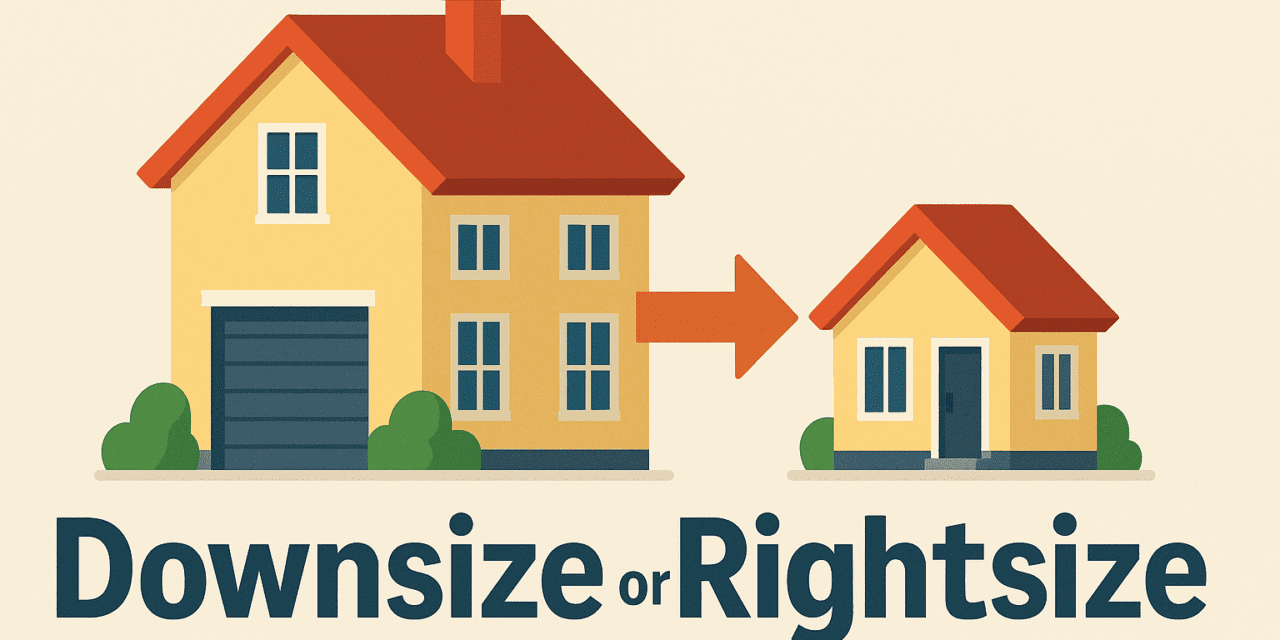
Downsizing vs rightsizing is one of the most important housing decisions Gen X homeowners will make before retirement. While downsizing focuses on living in a smaller home, rightsizing looks at total costs, taxes, and lifestyle fit to support long-term financial stability.
As part of the Selling & Investing Hub, this article helps homeowners—especially Gen X—understand a housing decision that directly impacts retirement confidence, cash flow, and long-term flexibility. At first glance, downsizing and rightsizing sound interchangeable. They’re not. One focuses on less space. The other focuses on better outcomes.- Why This Decision Matters More to Gen X Than Any Generation Before
- What “Downsizing” Actually Means (And Why It Often Disappoints)
- What “Rightsizing” Gets Right
- Downsizing vs. Rightsizing: A Practical Comparison
- The Hidden Variable: Ongoing Operating Costs
- The Tax Side Most Homeowners Miss
- Equity Isn’t the Win — Strategy Is
- Model the Decision Before You Commit (Especially for Gen X)
- More From the Selling & Investing Hub
- Gen X–Specific Questions to Answer Before Moving
- Gen X Downsizing and Rightsizing FAQ
- Downsizing vs. Rightsizing: Common Questions
- Downsizing vs. Rightsizing FAQ
- Bottom Line
Why This Decision Matters More to Gen X Than Any Generation Before
Gen X sits at a unique crossroads:
- Peak earning years—but limited time left to recover from mistakes
- Rising insurance and property taxes
- Kids in college or returning home
- Aging parents who may soon need support
These pressures fuel a widespread fear: running out of money later in life.
👉 Why Gen X Fears Running Out of Money
Housing decisions made now often determine whether that fear grows—or fades.
What “Downsizing” Actually Means (And Why It Often Disappoints)
Downsizing traditionally means moving into a smaller, cheaper home.
The assumption:
- Smaller home = lower costs
- Equity unlocked = financial relief
Reality is often messier.
Common Downsizing Pitfalls
- HOA dues replacing yard work
- Higher insurance costs in condos or coastal areas
- Loss of usable space for work, storage, or guests
- Reduced tax efficiency
Downsizing focuses on square footage—not function or financial structure.
What “Rightsizing” Gets Right
Rightsizing asks a better set of questions:
- What space do I actually use?
- Which costs are predictable—and which are volatile?
- How does housing fit into my 20-year retirement plan, not just next year?
Rightsizing treats your home as financial infrastructure, not just shelter.
Downsizing vs. Rightsizing: A Practical Comparison
| Question | Downsizing | Rightsizing |
|---|---|---|
| Primary focus | Smaller home | Better-fit home |
| Cost analysis | Purchase price | Total ownership cost |
| Tax impact | Often overlooked | Intentionally evaluated |
| Flexibility | Limited | Designed-in |
| Retirement alignment | Weak | Strong |
People Also Ask
Is it better financially for Gen X to downsize or rightsize?
Rightsizing is usually better because it evaluates long-term costs—not just the purchase price. Gen X benefits most when housing decisions reduce taxes, insurance, and maintenance over the next 10–20 years rather than focusing only on square footage.
The Hidden Variable: Ongoing Operating Costs
Many homeowners are shocked to learn that a “smaller” home can cost more per year.
Rightsizing examines:
- Property taxes
- Insurance premiums
- Maintenance and replacement reserves
- Utilities
- HOA dues and special assessments
- Location-driven costs (travel, services, healthcare access)
This is where theoretical savings disappear—and real planning begins.
The Tax Side Most Homeowners Miss
Housing decisions can reshape your tax picture:
- Mortgage interest deductions (where applicable)
- Property tax deductions (within limits)
- Capital gains exclusions on future sales
See:
Downsizing without understanding tax consequences can unintentionally increase long-term costs.
Rightsizing evaluates after-tax affordability, not just monthly payments.
People Also Ask
What should Gen X do with the equity after downsizing?
The best approach depends on retirement goals. Many Gen X homeowners divide equity between eliminating debt and investing for income. Rightsizing—not just downsizing—helps determine how to use equity to reduce long-term financial risk.
Equity Isn’t the Win — Strategy Is
Selling your home isn’t the finish line.
The real question is:
What does your equity do next?
Rightsizing may allow you to:
- Eliminate or reduce mortgage risk
- Invest part of your equity for income
- Build healthcare or longevity buffers
- Reduce reliance on market timing later in retirement
This philosophy sits at the core of the
Selling & Investing Hub.People Also Ask
When should Gen X start planning a downsizing or rightsizing move?
Ideally 5–10 years before retirement. Planning early gives Gen X more flexibility and helps avoid selling under pressure when income becomes fixed. Early rightsizing often leads to much better long-term financial outcomes.
Model the Decision Before You Commit (Especially for Gen X)
Guessing is expensive.
Before you downsize or rightsize, create side-by-side scenarios:
- Staying where you are
- Downsizing
- Rightsizing into a different home or location
Adjust only the variables:
- Taxes
- Insurance
- Maintenance
- Utilities
- HOA costs
- Mortgage vs. cash ownership
Seeing the numbers side-by-side changes decisions fast.
Gen X Planning Tool (Recommended)
Adjust variable costs to compare staying, downsizing, or rightsizing — and see how each choice impacts your long-term financial stability.
Use a flexible budget to compare staying, downsizing, or rightsizing by changing only variable costs—and see how each choice affects long-term stability.
More From the Selling & Investing Hub
As part of the Selling & Investing Hub, this guide tackles a decision that quietly drives more retirement anxiety than almost any other housing choice—especially for Gen X:Gen X–Specific Questions to Answer Before Moving
Gen X Downsizing and Rightsizing FAQ
Is Gen X starting too late to downsize or rightsize effectively?
No. Most Gen X homeowners still have 10 to 20 working years left, which is a prime window to restructure housing costs and retirement plans. The biggest mistake is waiting until after retirement when income is already fixed.
How should Gen X balance kids in college with downsizing?
Rightsizing allows Gen X homeowners to maintain functional space for college-age children or returning adults while reducing unnecessary expenses. The goal is not a forever home but a next 10 to 15 years home that supports both family needs and long-term finances.
Should Gen X pay off their mortgage or invest extra cash?
It depends on interest rates, risk tolerance, and retirement timelines. Many Gen Xers use a blended strategy, reducing housing costs with rightsizing while investing part of their equity to support future retirement income.
What if Gen X plans to work part-time during retirement?
Rightsizing into a lower-maintenance, lower-cost home reduces financial pressure and supports flexible work arrangements, making part-time or consulting work optional instead of necessary to pay basic bills.
Will downsizing limit Gen X’s ability to help aging parents or adult children?
Not if the move is planned carefully. Rightsizing focuses on efficient layouts, guest or flex spaces, and homes that support multi-generational needs while still keeping long-term costs predictable and manageable.
How does the fear of running out of money affect Gen X housing decisions?
Housing is Gen X’s largest controllable expense. A rightsizing strategy can reduce volatility in taxes, insurance, utilities, and maintenance, which lowers the risk of draining retirement savings too quickly.
Should Gen X move before or after mortgage rates fall?
Moving before rates fall can sometimes offer better pricing and less competition. Future rate drops may allow refinancing. Securing a home that supports long-term affordability is usually more important than perfectly timing the rate cycle.
Does Gen X need to worry about losing tax benefits when downsizing?
Yes. Downsizing without tax planning may reduce deductions or change how future capital gains are treated. Rightsizing looks at the after-tax cost of your housing and aims to preserve or improve your tax position.
How do side businesses or consulting work affect Gen X housing plans?
Many Gen Xers have side income streams. Rightsizing takes home office needs, quiet spaces, and layout requirements into account. A smaller home that is only “downsized” might not support the way you actually work and earn income.
How can Gen X compare staying, downsizing, or rightsizing?
The most effective approach is scenario modeling. Create budgets for staying, downsizing, and rightsizing, then adjust taxes, insurance, utilities, HOA dues, and maintenance. Comparing these scenarios shows which option provides the most stable long-term cash flow.
These questions tackle:
- Timing mistakes Gen X often makes
- Balancing kids, parents, and career income
- Mortgage payoff vs. investing
- Side income and work-from-home needs
Want to compare retirement accounts that can help reduce taxes now or later? Use this guide to understand the most common tax-advantaged options and how they typically work.
Read the guide →Downsizing vs. Rightsizing: Common Questions
Downsizing vs. Rightsizing FAQ
What is the difference between downsizing and rightsizing?
Downsizing focuses on moving to a smaller, usually cheaper home based on square footage. Rightsizing evaluates lifestyle, long-term costs, taxes, and retirement planning to find a home that fits how you will live over the next 10 to 20 years.
Does downsizing always save money?
No. Smaller homes can still have higher property taxes, insurance premiums, HOA fees, utilities, or maintenance. Rightsizing compares the total cost of ownership instead of focusing only on size or price.
How does downsizing or rightsizing affect retirement planning?
Housing is one of the largest expenses in retirement. Poorly planned downsizing may increase costs or reduce tax advantages. Rightsizing focuses on stable, predictable housing costs that support long-term retirement security.
Should I pay off my mortgage before downsizing or rightsizing?
It depends on your interest rate, tax situation, and retirement timeline. Some homeowners benefit from paying off the mortgage, while others keep a modest loan and invest some equity. The best choice depends on your long-term cash flow and comfort with risk.
How do tax benefits factor into downsizing versus rightsizing?
Tax benefits such as mortgage interest deductions, property tax deductions, and capital gains exclusions can change after moving. Rightsizing evaluates the after-tax cost of your housing so you can preserve or improve your overall tax position.
Is a condo or townhome always better for retirement than a single-family home?
Not always. Condos and townhomes may reduce yard work but often come with higher HOA dues or special assessments. A smaller single-family home can sometimes cost less overall. Rightsizing compares all ongoing expenses, not just yard work.
How can I compare the cost of staying versus downsizing or rightsizing?
The best method is to create separate budgets for each scenario and adjust taxes, insurance, utilities, maintenance, and HOA dues. Comparing the numbers side by side shows the true long-term cost differences and helps avoid guesswork.
When is the right time to start thinking about rightsizing?
Planning five to ten years before retirement gives you more flexibility and reduces the risk of having to move under financial pressure. Earlier planning makes it easier to find a home that fits both your lifestyle and your budget.
What are the biggest mistakes people make when downsizing?
Common mistakes include underestimating HOA or insurance costs, giving up useful space for guests, hobbies, or work, assuming a new location will automatically fit their lifestyle, and failing to plan how to use freed-up equity in a strategic way.
How does the Selling and Investing Hub help with the downsizing decision?
The Selling and Investing Hub connects selling, buying, and investment planning into one strategy so homeowners can make housing decisions that support long-term lifestyle, tax planning, and retirement goals instead of treating each step separately.
This general FAQ supports featured snippets and long-tail search traffic.
Bottom Line
Downsizing reduces space.
Rightsizing improves outcomes.
For Gen X homeowners, this isn’t a cosmetic decision—it’s foundational.
When housing is aligned with taxes, operating costs, and long-range planning, it reduces anxiety, increases flexibility, and protects financial independence.
That’s exactly why this article lives inside the Selling & Investing Hub.Discover more from RetireCoast.com
Subscribe to get the latest posts sent to your email.


![Biloxi Mississippi is a great place to live/visit [2025]](https://retirecoast.com/wp-content/uploads/2022/06/Biloxi-light-house-440x264.jpeg)