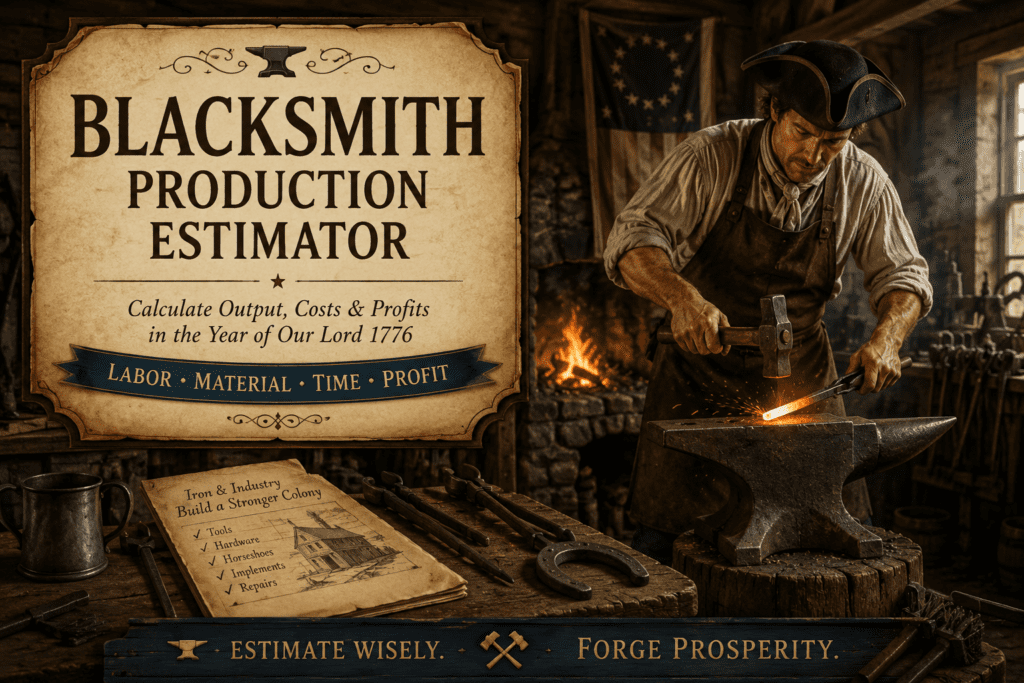
In Revolutionary America, the blacksmith was one of the most important tradesmen in town. He repaired wagons, forged nails, made hinges, fitted horseshoes, shaped tools, mended farm implements, and helped support local military needs. This estimator recreates a simplified shop ledger for a day’s production at the forge.
Prices, wages, and production varied by colony, town, season, war conditions, skill, iron supply, and demand. This tool is educational and uses simplified assumptions for historical exploration.
This tool estimates shop revenue from the number of pieces produced and the selling price per piece, adjusted by the selected market condition. It then subtracts iron, fuel, labor, overhead, and a waste allowance for broken pieces, spoiled iron, or rework at the forge.
A blacksmith’s profits depended on steady demand, access to iron, fuel supply, skill, location, and wartime needs. A shop near a wagon road, port, military post, courthouse, ferry crossing, or farming district could be essential to the local economy.
This Blacksmith Production Estimator is part of RetireCoast’s Colonial Economy Simulator, created for the America’s 250th Anniversary series. Explore wagon freight, tavern profits, colonial payroll, printing, and musket production to see how work, trade, and supply chains helped shape 1776 America.
If this article helped you, consider joining one of our RetireCoast memberships. Members receive access to deeper planning tools, worksheets, decision guides, and practical resources designed for real-world business, retirement, and estate planning decisions.


RetireCoast tools and resources are educational and practical planning aids. Legal, tax, financial, and business decisions should be reviewed with qualified professionals when appropriate.
1776 membership cta