This article is part of our wider series on home buying and relocating. While you are in the decision phase of relocating or staying where you are, one of the challenges is trying to buy a home while you are trying to sell a home. We have included links in this article to related articles and calculators to help you along the way.
This article is focused on the concept of selling the house you live in and moving to another area. I also recommend, through this article https://retirecoast.com/buy-your-retirement-home-before-you-retire/, that you consider buying your retirement home before you retire. Let’s dive into relocation.
1. Why People Relocate (and How to Know It’s Time)
Relocation is rarely about just changing addresses. People move to new states because:
- The cost of living in their current area is squeezing their retirement or lifestyle.
- They’ve received a new job offer or career opportunity.
- They want a better quality of life—less congestion, less regulation, or a different pace.
- They want to be closer to family or a stronger support system.
- They’re looking for a different climate or more outdoor activities.
- Retirement is coming, and they want their money (and time) to go further.
Sometimes, you simply reach the point where staying no longer makes sense. Common signs it may be time to relocate:
- You feel stuck with limited growth or lifestyle options where you are.
- The cost of living is pushing your budget to the edge.
- You want a different lifestyle than your current state can realistically provide.
- Family or health needs are pulling you elsewhere.
- You’ve done your research and keep coming back to the same “new” area.
Relocation is a big decision, but it becomes more manageable when you treat it as a process, not an impulsive event.
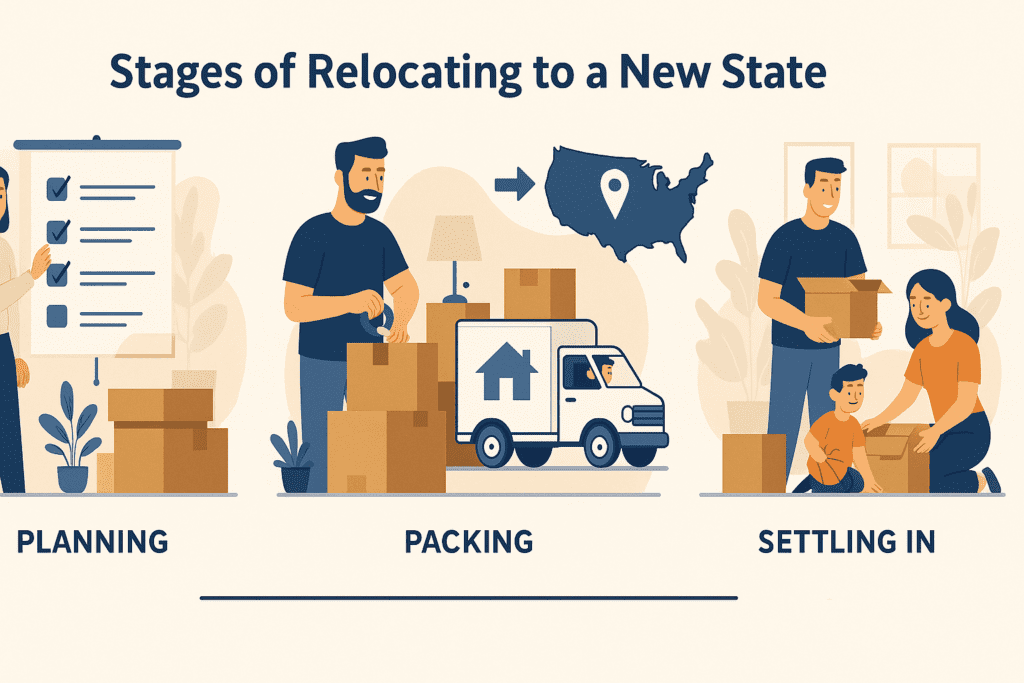
“A successful relocation happens in stages. When people try to treat moving as a single event, it becomes overwhelming. When they approach it as a sequence of decisions—planning, preparation, execution, and settling in—the process becomes manageable and far less stressful.”
2. Planning the Timing of Your Move
Once you’re serious about relocating, timing becomes critical—especially if you have a home to sell.
When choosing the right season to move, you are also choosing the right season to sell your home if you have one. Spring and early summer are usually the strongest selling seasons: homes tend to sell faster and at better prices. That’s helpful if you must both buy and sell.
If you are primarily buying, and don’t have a home to sell, the fall can be a good time to purchase. Prices can be softer, competition may be lighter, and you may have more negotiating room.
Plan well in advance—a year or more if you can:
- Use the Home Affordability Calculator at
https://retirecoast.com/home-affordability-calculator/ - Run numbers with the Full Mortgage Calculator at
https://retirecoast.com/full-mortgage-calculator/
These tools help you understand what price range works in your new location before you put your current home on the market.
🌅 Why I Chose to Relocate as Part of My Retirement Strategy
I decided to relocate as part of a long-term retirement strategy, and several of the reasons listed above played a major role. Living in California, I realized I could either stay and “just afford” retirement—scraping by each month—or move somewhere that would allow me to enjoy retirement with far less financial pressure.
The numbers spoke for themselves. By relocating, I reduced my cost of living by nearly 40%. Housing, utilities, insurance, and even everyday expenses were dramatically lower. That shift alone improved my financial stability and created space for a better, more fulfilling lifestyle.
Beyond finances, I wanted a less crowded, less stressful environment with substantially fewer regulations impacting daily life. Relocation gave me the freedom to design the retirement I wanted—not the one I felt stuck with. It was one of the best decisions I’ve made.
Relocation planning also means building a realistic timeline:
- Start serious planning at least 6–12 months ahead if you’re relocating for retirement.
- Give yourself at least 2–3 months of focused activity for packing, movers, and logistics.
- If you’re coordinating with school calendars, work schedules, or construction, more time is better.
Time is the single best stress reducer in relocation.
How Do I Relocate to Another State?
Relocating to another state works best when approached in stages: planning, housing decisions, budgeting, moving logistics, and settling in. Start by researching cost of living and housing, then align your move date with realistic timing for selling, buying, or renting. Breaking the process into phases reduces stress and costly mistakes.
3. Deciding How You’ll Live: Buy, Rent, or Transition
Your first major decision is where you’ll live in the new area and how permanent that choice should be.
Renting vs. Buying in the New Location
If you’re not completely familiar with the area, renting first can make sense. It gives you time to learn neighborhoods, traffic patterns, and communities before committing to a long-term purchase.
Use the Rent vs. Buy Calculator here:
https://retirecoast.com/rent-vs-buy-calculator-2/
That calculator can help you compare the cost of renting versus buying at your new destination, given your budget, time horizon, and interest rates.
Short-Term Rentals as a Bridge
Sometimes the cleanest solution is a short-term rental in the new area while you sell your current home, or while your new home is under construction. A short-term rental can:
- Give you a local address and a place to land.
- Reduce the urgency to buy quickly.
- Allow you to explore the area at a comfortable pace.
- Reduce the cost of moving furniture twice.
If you’re relocating to the Mississippi Gulf Coast, for example, my company uses properties listed through ChristiesGulfBeachRentals.com as a transition tool when clients are building a house or waiting for their existing home to sell. Rates posted are often negotiable for longer stays, and in many cases, a short-term rental is cheaper than repeated moves and storage plus hotel bills.
The more flexibility you build into your housing plan, the less pressure you’ll feel throughout the relocation.
Should I Buy or Rent When Relocating?
Buying before relocating can reduce uncertainty if you know the area well, while renting first provides flexibility to learn neighborhoods and pricing. Many people use short-term rentals during the transition. Comparing costs with affordability and rent-vs-buy tools helps guide the decision.
4. Long-Distance Home Search and Working With an Agent
If you’ve decided to buy in your new area, you may be searching and making decisions from several states away.
As a real estate broker working in a retirement area near the beach, I routinely work with buyers who are relocating from several states away. After they are pre-qualified (using checklists like
https://retirecoast.com/pre-purchase-home-buying-checklist/), they often arrive with a list of properties they’ve found on Zillow or Realtor.com.
I go out to the best options on their list and show them the property using my mobile phone, describing what my trained eye sees: condition, neighborhood, traffic, and anything the photos don’t reveal. If the client is interested, I dig into the history of the home and send more detailed information about its condition, repairs, and comparable sales.
This kind of partnership is essential in a relocation.
- A local agent who understands your priorities (retirement, budget, lifestyle).
- Someone who will tell you the truth about each property and neighborhood.
- A broker who understands timing when you have a home to sell in another state.
You don’t need to see 30 houses in person. You need a trusted professional to filter your options and help you make an informed decision.
🎥 How I Help Relocating Buyers See Homes From Afar
As a real estate broker working in a retirement area near the beach, I meet many people who intend to relocate from several states away. After they are pre-qualified using tools like my Pre-Purchase Home Buying Checklist , they usually tell me which properties they are most interested in after spending time on sites like Zillow or Realtor.com.
I go to the best options on their list and walk the property with my mobile phone, providing a live or recorded video walkthrough. While I’m there, I explain what my trained eye sees—both the good and the bad: condition, neighborhood context, traffic, and anything the listing photos may not reveal.
When a client is seriously interested in a particular home, I dig into the history of the property and send more detailed information about its condition, repairs, and comparable sales. This process gives relocating buyers the confidence to make informed decisions even when they can’t be here in person for every showing.
5. Making an Offer From Afar, Inspections, and Contingencies
Once you’ve identified the right home, the next challenge is making an offer while you’re still living in another state.
I often recommend that when my relocating clients have settled on a home, they make an offer with contingencies that give them time to visit the home for a final confirmation. If the visit goes well, the next step is to schedule a home inspection by a licensed professional.
At that point:
- If the inspection is acceptable, the deal moves toward closing.
- If significant issues surface, you can negotiate repairs or credits.
- If the problems are too serious, you can use the inspection contingency to terminate the deal and move on.
This approach acknowledges the reality of long-distance buying: you need a way to secure the home without being forced to close on something you’ve never seen or that has hidden defects.
📝 Offer Strategy & Inspection Contingency
I recommend that when my client has decided on a home—especially when relocating from another state—they make an offer that includes appropriate contingencies giving them time to visit the property for final confirmation.
Assuming the home is acceptable after that visit, the next step is to order a professional home inspection conducted by a licensed inspector. At that point, we gain clarity about the true condition of the property and whether the transaction should proceed to closing.
If significant issues are discovered, the inspection contingency provides the option to renegotiate or terminate the agreement without penalty. This approach protects relocating buyers and reduces the risk of committing to a home sight unseen.
6. Choosing Movers, Managing Logistics, and Building a Budget
Moving your household—especially long-distance—is one of the biggest cost and stress points in relocation.
Interviewing Movers Early
Timing is everything. Interview movers well in advance, even before you list your existing home or sign a lease. For major metro areas, moving schedules can be flexible. But when you’re moving to a smaller market or less congested area, large moving trucks may not visit as frequently. Long-term planning is essential.
Expect that:
- Your furniture and belongings may be in transit for a period of time, longer than most people expect.
- If you haven’t secured housing yet, or you’re living in a vacation rental, your goods may need to be stored at an additional cost.
- Some items may be cheaper to replace at the new location rather than move.
Get quotes from multiple reputable companies, confirm they’re properly licensed and insured, and ask for details about:
- Delivery windows and storage options.
- Extra charges (stairs, long carries, special items).
- How claims are handled if there’s damage.
🧮 Relocation Budget Calculator
Relocation almost always costs more than people expect. Utilities, deposits, movers, storage, cleaning, travel, and “small” setup expenses add up quickly.
Our Relocation Budget Calculator helps you estimate these costs in one place so you can plan realistically before committing to a move.
Open the Relocation Budget Calculator →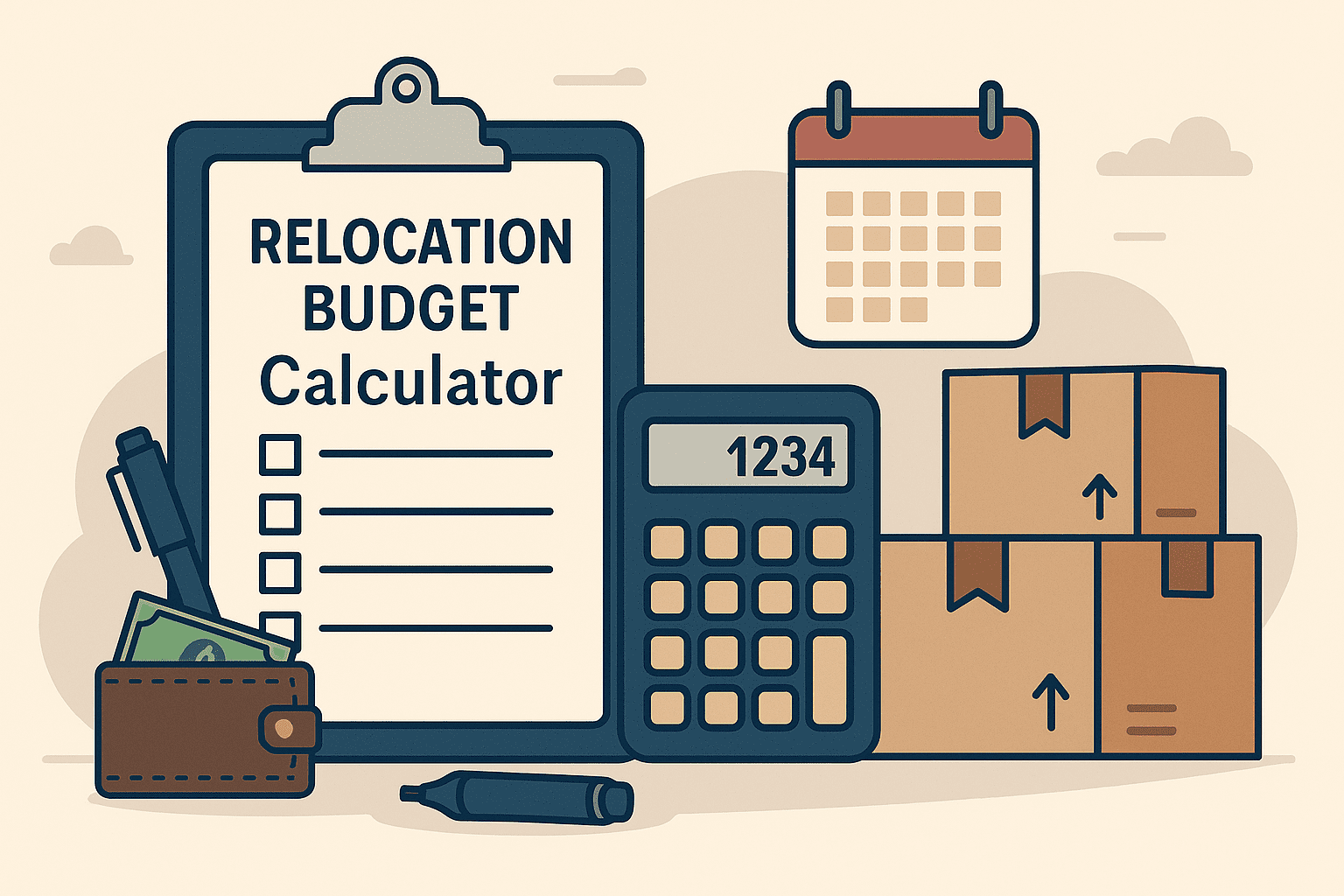
Budgeting Realistically
Relocation costs aren’t just about the moving truck. They include:
- Moving company or truck rental.
- Temporary housing.
- Utility deposits and connection fees.
- Increased costs during the transition (eating out, travel).
- Storage fees, cleaning, landscaping or minor repairs before sale.
- Replacement of items that don’t make sense to move.
It’s wise to maintain an emergency buffer—10–15% of your estimated total relocation cost. Things go wrong even in well-planned moves. A buffer keeps surprises from turning into crises.
🚚 Pro Tip: Timing Is Everything When Contacting Movers
Timing is everything when hiring movers. Begin interviewing moving companies well in advance—even before listing your current home or committing to a rental. Early conversations help you understand availability, pricing ranges, and required lead time.
If you’re moving to or from a large metropolitan area, mover schedules tend to be more flexible. However, the farther you move—and especially if you’re relocating to a less populated or remote area—moving vans may not travel those routes as frequently. Long-distance and less-common destinations require far more planning.
Expect your furniture and belongings to be in transit for a period of time, with rare exceptions. If you have not secured permanent housing or will be staying in a short-term rental, your belongings may need to be stored—often at additional cost. Planning ahead gives you options and reduces last-minute stress.
7. Decluttering, Garage Sales
Moving is the perfect time to ask a hard question: Do I really want to pay to move this?
Everyone accumulates “stuff.” Some of it is valuable, much of it is not. Remember that movers often charge by weight. An old treadmill you never use may cost more to move than to replace with a better secondhand model in your new location.
I strongly suggest reading:
https://retirecoast.com/moving-all-that-stuff/
In my own case, my daughter—an expert at this—came over and helped. We sold or gave away at least a quarter of everything we owned, even though we were moving to a larger home. I kept tools and items I knew I’d use, but things I hadn’t touched in decades were sold or donated. She even sold my snow blower from a previous life, since we were moving to the beach where it never snows.
You might find this YouTube video useful for getting into the right mindset:
With the large standard deduction, many people no longer get a tax benefit from small donations. But you may still want to give usable items to organizations such as the Salvation Army, St. Vincent de Paul, or Jewish Family Services. The point is to unload anything you won’t use in the next year. Decluttering makes packing easier, reduces stress, and lowers your moving bill.
🧹 Declutter One Small Zone at a Time
One way to avoid feeling overwhelmed is to break each room into small zones — for example, “desk,” “closet,” “bookshelf,” instead of “the whole office.” Set a timer for 20–25 minutes and work one zone at a time. Short, focused sessions almost always accomplish more than trying to tackle an entire room at once.
Keep in mind that a significant share of moving costs is tied directly to the volume and weight of your belongings, so every box you eliminate lowers both your stress level and your final bill.
When Clutter Is Overwhelming
Sometimes the volume of possessions goes beyond “we have a lot of stuff” and into genuine hoarding or near-hoarding territory. In those cases, professional help can be invaluable.
Professional organizers—especially those trained for complex situations—can:
- Work one-on-one at a realistic pace.
- Help sort items into keep, donate, sell, discard.
- Create systems for the new home that reduce the risk of clutter returning.
Many professional organizers specialize in hoarding and chronic disorganization. You can find qualified organizers through the National Association of Productivity and Organizing Professionals (NAPO) or the Institute for Challenging Disorganization (ICD).
The goal is not perfection. The goal is to arrive at the new home with what you actually use and value, not boxes full of deferred decisions.
8. Relocating With Family and Pets
Relocation takes on a different character when children, aging parents, or pets are involved. You’re not just moving belongings—you’re moving routines, relationships, and support systems.
Helping Children Through the Transition
Children often experience a move as something that “just happens” to them unless you intentionally include them. Younger kids may worry about toys and bedrooms. Older children worry about friends, sports, and school.
Helpful strategies include:
- Creating a moving journal or memory notebook where each child can write, draw, or collect photos.
- Holding brief family check-ins to explain what’s happening next and answer questions.
- Giving age-appropriate roles—labeling boxes, choosing paint colors, or helping plan the route.
- Maintaining core routines (meals, bedtimes, schoolwork) as much as possible while packing.
- Planning simple farewell moments with friends and favorite places.
- Allowing each child a small memory box with meaningful items from the current home.
Children don’t need a perfect move. They need to feel informed, heard, and included.
👨👩👧👦 Family Relocation Reality Check
Relocating with a family is not just a logistics exercise—it’s an emotional transition. Children often react differently than adults, and their concerns may change as moving day approaches. The most successful family moves are the ones where parents acknowledge those emotions while keeping daily routines as consistent as possible.
Involving children in age-appropriate decisions, setting aside time for questions, and preserving familiar habits can make a significant difference. When kids feel included and informed, the move becomes a shared experience rather than something that simply happens to them.
Balancing Packing and Daily Life
Packing should support family life, not demolish it. Practical steps:
- Keep a dedicated homework or school area usable until the last days.
- Leave basic kitchen items accessible so you can still cook simple meals.
- Establish a moving command center for checklists, contracts, keys, contacts, and important documents.
- Schedule packing in short blocks around school and work, rather than marathon sessions.
- Keep one low-stress play or relaxation zone unpacked until the end.
This structure reduces stress for everyone—especially children.
Essentials Boxes for Each Family Member
Instead of one generic “essentials box,” create a clearly labeled box for each family member that travels with you rather than with the movers.
For children, that might include:
- A favorite toy or two.
- Comfort item (blanket, stuffed animal, pillow).
- A few changes of clothes.
- Bedtime books or a night light.
- Basic toiletries or medications.
For adults:
- Important documents (ID, policies, closing paperwork).
- A basic toolkit and box cutter.
- Phone chargers and a small power strip.
- Prescriptions and basic first-aid items.
- Clothes and toiletries for a few days.
A separate kitchen essentials box should hold:
- Paper plates, cups, utensils.
- Coffee maker and coffee.
- Simple snacks and breakfast items.
- Paper towels, trash bags, basic cleaning supplies.
If you have these boxes with you, the family can function from day one—even if the rest of the house is still boxed up.
Moving With Pets
Pets experience stress too. Before the move:
- Ensure vaccinations and licenses are current.
- Plan a safe method of transport (car crates, rest stops, hotel pet policies).
- Keep food, water, and bedding accessible.
On moving day, pets should be in a quiet, secure space away from open doors and heavy traffic—at the old home, the new home, or with a boarder or family member.
🎒 School Transition Planning
If your relocation includes school-age children, school timing deserves early and deliberate planning. Whenever possible, aligning a move with the end of a school year or a natural break reduces disruption and gives children time to adjust academically and socially.
Contact the new school district well in advance to understand enrollment requirements, placement testing, transportation options, and transfer of records. Even when a move happens mid-year, preparation and clear communication can significantly reduce stress for both children and parents.
Pro Tip: Travel Pacing With Family and Pets
If your relocation involves multi-day travel, especially with pets, children, or older family members, don’t try to drive 10–12 hours a day. Booking pet-friendly hotels in advance and limiting travel to 3–4 hours per day gives everyone time to rest, adjust, and arrive in reasonable shape.
9. Utilities, Services, and Address Changes
Utilities are often the most overlooked part of relocation—until you arrive at a dark, cold, or disconnected house. Managing utilities and services correctly helps ensure a smooth transition and avoids unnecessary frustration during your first days in a new state.
Before you move, create a complete list of all existing utilities and services at your current home, including:
- Electric and gas
- Water and sewer
- Trash and recycling
- Internet and cable
- Security systems
- Lawn care or other recurring services
Schedule shutoff dates after your move-out, not on the moving day itself. This allows time for cleaning, repairs, and inspections. At the same time, schedule turn-on dates at your new home before arrival, so services are active when you walk through the door.
Address Changes and Mail Forwarding
Relocation also requires updating your address with multiple organizations. Be systematic and start early.
Common address updates include:
- USPS mail forwarding
- Banks, credit cards, and lenders
- Insurance companies
- Subscription services and memberships
- Employer payroll, Social Security, pensions, and annuities
Keeping a checklist of completed updates can prevent missed bills or delayed payments during the transition.
💡 Pro Tip: Utilities and Deposits
Many utilities now allow disconnects and connections to be handled entirely online. Be prepared to use a credit card and possibly pay deposits at the new location. Also remember to follow up on refunds of old utility deposits after service is disconnected—this is money many people forget to reclaim.
10. Insurance, Medical, and Legal Updates
Relocation frequently triggers automatic changes in insurance coverage and legal requirements. Addressing these items early prevents coverage gaps and compliance issues.
Health and Medical Considerations
Medical insurance is often state-based, particularly Medicare Advantage (HMO/PPO) plans and Marketplace policies.
Important points to understand:
- Moving to another state may require you to select a new health plan
- Medicare HMOs typically cover emergency services only outside your plan’s service area until you switch
- An address change often creates a special enrollment period, allowing plan updates
Practical steps include:
- Requesting medical and dental records in advance
- Transferring prescriptions to a pharmacy near your new home
- Identifying new primary care providers, specialists, and hospitals
Addressing healthcare early reduces stress, especially during the first few months after relocation.
Auto and Property Insurance
Insurance rules and premiums vary widely by state. Before you move:
- Contact an insurance broker in your new state
- Update auto and homeowners insurance for the new address
- Confirm coverage is active before you drive into the new state
Once you arrive, update your driver’s license and vehicle registration on schedule. Many states require this within 10–30 days of establishing residency.
Legal Documents and Residency
Relocation is also a good opportunity to review important legal documents, including:
- Wills and trusts
- Powers of attorney
- Healthcare directives
- Beneficiary designations
Because laws differ by state, documents that were sufficient in your prior location may need adjustments. A brief review with a local attorney can prevent complications later.
How Much Does It Cost to Relocate to Another State?
The cost to relocate to another state typically ranges from a few thousand dollars to tens of thousands, depending on distance, household size, housing overlap, and moving services. Expenses often include movers, travel, temporary housing, deposits, and unexpected transition costs. Planning for overlap reduces stress and rushed decisions.
11. Budgeting for Relocation (Plus a Personal Strategy)
Relocation almost always costs more than people expect. A realistic relocation budget should include far more than just the moving truck.
Common cost categories include:
- Movers or truck rental
- Travel, lodging, and meals
- Overlap housing (owning or renting in two places temporarily)
- Storage costs
- Utility deposits and HOA move-in fees
- Replacing items that aren’t worth moving
Planning for housing overlap rather than assuming a perfectly synchronized closing can actually reduce stress. Carrying two housing costs for a short period allows flexibility and avoids rushed decisions under pressure.
Personal Experience: Spreading Costs Over Time
In my own relocation, I purchased my new home two years before I moved. I also bought a vehicle at the new location and registered it there. This allowed me to spread relocation-related expenses over time, including:
- Vehicle registration and insurance
- HOA fees and utility deposits
- Tools and equipment appropriate for my new property
By the time I actually moved, many of these expenses were already behind me. I then budgeted specifically for professional movers and professional cleaning of my old home, which went on the market as I left. That planning reduced stress significantly and turned a potentially chaotic relocation into a manageable transition.
12. Arriving, Settling In, and Building a New Life
The moving truck leaving your driveway is not the end of the relocation process. The final—and often most important—stage is settling in, because this is what determines whether the move truly feels successful.
The First 30 Days
Focus on making the home functional before worrying about perfection.
Priority tasks include:
- Setting up beds and bathrooms first
- Unpacking kitchen essentials so you can cook
- Confirming utilities are working as expected
- Establishing basic daily routines quickly
Give yourself permission to live with some boxes for a while. Comfort and routine matter more than finishing every room immediately.
Learning Your New Area
Familiarity reduces anxiety. Spend time learning:
- Grocery stores, pharmacies, and gas stations
- Healthcare providers and urgent care locations
- Trash and recycling schedules
- Local traffic patterns and weather conditions
Small daily efficiencies add up quickly and help the new location feel like home.
Building a Support System
Relocation can feel isolating if you don’t intentionally build connections.
Ways to integrate into your new community include:
- Veterans joining organizations such as the VFW or American Legion
- Joining a garden club, yacht club, or hobby group
- Becoming part of a local church or faith community
- Registering to vote and learning the local political landscape
Engagement accelerates belonging. The more you participate, the faster the new state begins to feel like your place, not just where you moved.
🤝 Community & Engagement Tip: How to Feel at Home Faster
One of the fastest ways to feel settled after relocating is to intentionally engage with your new community. If you are a veteran, consider joining the VFW or American Legion. These organizations provide built-in community, shared experiences, and an easy way to meet people with common interests.
Joining a garden club, yacht club, or hobby group is another effective way to connect locally. These organizations naturally create conversation and routine, making integration into your new environment easier and more enjoyable.
Becoming part of a local church or faith community can also provide support and social connection. In addition, registering to vote and learning the local political landscape helps you become an informed participant in your new community rather than a temporary observer.
Relocation Summary and Next Steps
Feeling “at home” has far less to do with how quickly you unpack and far more to do with how quickly you build routine, connection, and confidence in your new surroundings. A successful relocation is not measured by empty boxes—it’s measured by how steadily your new life takes shape.
Relocating to a new state is one of life’s biggest transitions. It affects your housing, finances, family dynamics, healthcare, and overall lifestyle all at once. The experience becomes far more manageable—and far less overwhelming—when you break it into clear, achievable steps:
- Treat relocation as a series of phases, not a single event
- Plan timing, housing, and overlap with realistic expectations
- Use tools like the Home Affordability and Mortgage Calculators to understand your numbers before committing
- Declutter early so you only move what matters
- Build a relocation budget that includes overlap days and unexpected costs
- Support family members emotionally as well as logistically
- Engage with your new community early to build connection and routine
Relocation decisions often overlap with broader goals—especially retirement planning, financial stability, and long-term lifestyle choices. If you’re exploring how a move fits into your next chapter, these RetireCoast resources provide firsthand insight and practical planning guidance:
- Why I Decided to Retire in Ocean Springs, Mississippi
https://retirecoast.com/why-i-decided-to-retire-in-ocean-springs-mississippi/ - Retirement Lifestyle Planning
https://retirecoast.com/retirement-lifestyle-planning/
For more hands-on support, explore the RetireCoast Calculator Hub, where you’ll find tools for home affordability, mortgage planning, rent-vs-buy decisions, and other essential financial considerations. These calculators are designed to complement the strategies in this guide and help you plan with clarity and confidence.
Your relocation is more than a move—it’s the beginning of a new chapter. With thoughtful planning and the right resources at your side, you’re well-positioned to make this transition smooth, intentional, and deeply rewarding.
With proper planning, the right tools, and a realistic timeline, relocating is not just about leaving an old house. It’s about building a better chapter in a place that fits your budget, lifestyle, and long-term goals.
Frequently Asked Questions About Relocating
1. How far in advance should I start planning my relocation?
2. Should I buy a home in the new area before I move, or rent first?
3. How do I know if I can afford to relocate to a different state?
• Home Affordability Calculator
• Full Mortgage Calculator
Finally, build in realistic moving costs, overlap housing, and an emergency fund so the move doesn’t strain your retirement or monthly budget.
4. What’s the best season to sell my current home and move?
5. How can I make relocating with children less stressful?
6. What should go in my “essentials” boxes for moving day?
• Medications and important documents
• A few days of clothing and basic toiletries
• Phone chargers and a small power strip
• Favorite children’s toys, blankets, and books
• Kitchen basics such as paper plates, utensils, coffee, and snacks
With these boxes, you can live comfortably for a few days even if the rest of the house is still in boxes.
7. Should I hire professional movers or do a DIY move?
8. What legal and administrative tasks should I expect when moving to a new state?
9. How does relocating affect my healthcare and insurance?
10. How can I tell if my relocation really supports my retirement lifestyle?
• Does this area improve my cost of living and stretch my retirement income?
• Am I gaining the lifestyle I want—climate, activities, pace, and community?
• Will I have access to the healthcare and support I’ll need later?
Articles like Why I Decided to Retire in Ocean Springs, Mississippi and Retirement Lifestyle Planning can help you think through the lifestyle side of relocation, not just the mechanics of moving boxes.
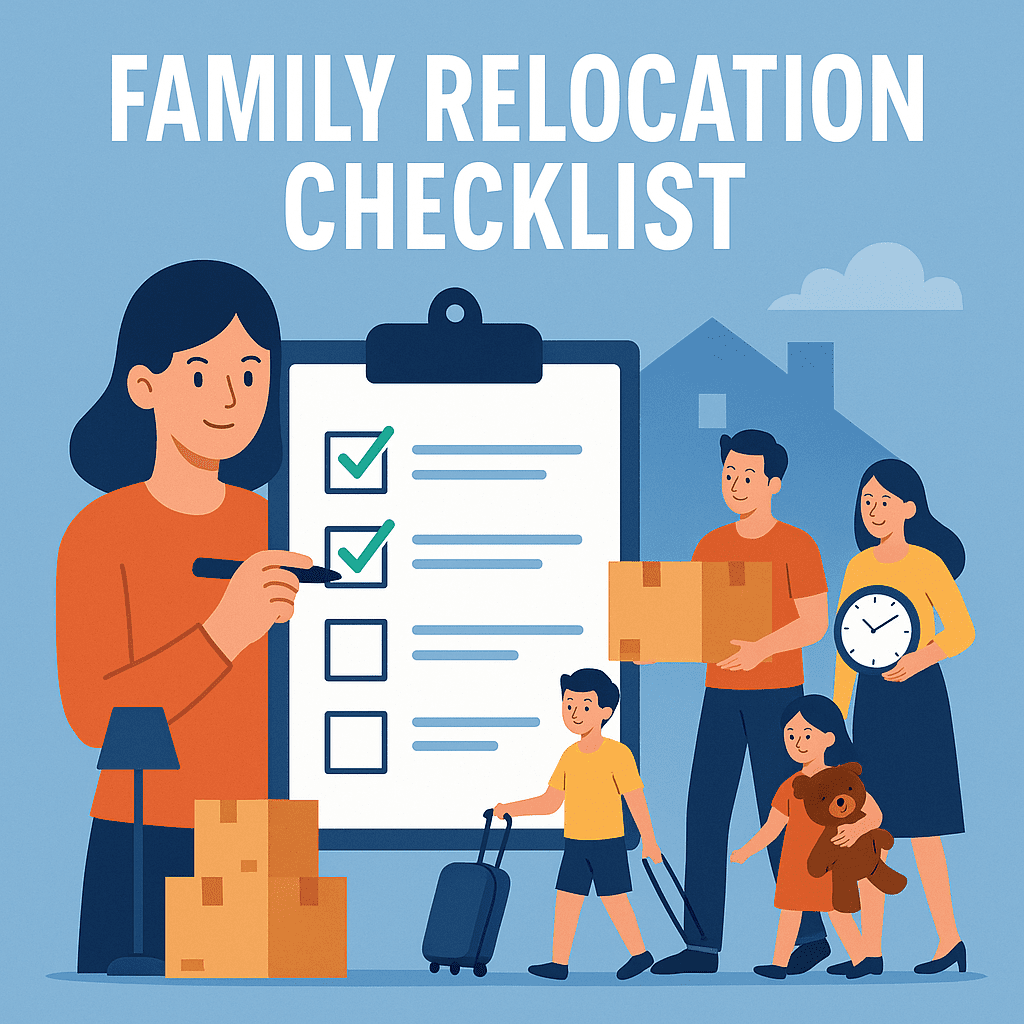
🧳 Download Your Relocation Checklist (RetireCoast®)
Get our printable and fillable Relocation Checklist – Family Edition, branded by RetireCoast.com®. Use it to track every major step in your move, including planning, movers, utilities, family logistics, and more.
Print it, keep it in your moving binder, and use the notes column to customize the checklist for your situation. A QR code to RetireCoast.com is included at the bottom of the PDF for quick access to related articles and tools.
📥 Download Relocation Checklist (PDF)