Last updated on December 19th, 2025 at 06:14 am
Meet Jessica and Harry — a Gen X couple in their mid-40s who are actively relocating to a new place while raising two children, 8-year-old Susie and 10-year-old Billy. Jessica is a dedicated teacher who thrives on creative projects, strong school communities, and local events, while Harry is an electrical engineer with a passion for problem-solving, hands-on work, and weekend fishing trips.
Like many families relocating to a new place, they are balancing career stability, housing costs, school quality, safety, and the desire for a better quality of life for their children.
They weren’t chasing trends or “hot” destinations. Instead, they wanted stability, affordability, and a sense of community where their children could thrive and where everyday life felt less stressful and more intentional.

They also wanted to make smart financial decisions that would support not just the next few years, but the decades ahead — including retirement, potential real estate investing, and building a life that didn’t depend on constant hustle just to stay afloat.
As their story unfolds throughout this guide, Jessica and Harry’s experiences mirror the real questions, tradeoffs, and discoveries families face when deciding whether to stay put or start fresh somewhere new. Their journey is not presented as a one-size-fits-all solution, but as a practical, relatable framework for evaluating what truly matters when choosing where to live next.
Relocating to a new place is rarely driven by one decision alone. It’s the result of financial, lifestyle, family, and long-term considerations coming together. The sections below break down the same factors Jessica and Harry evaluated, giving you a practical framework to use as you consider where to relocate next.
- WHY PEOPLE CHOOSE TO RELOCATE
- FINANCIAL CONSIDERATIONS
- COST OF LIVING DIFFERENCES
- 2025 Cost of Living Index by State
- WHAT THE INDEXES MEAN
- 3. Analyze Cost of Living and Tax Policy
- AFFORDABILITY
- AFFORDABILITY IS A CHOICE
- TAX POLICY & FISCAL HEALTH
- WHY FINANCIAL FACTORS ARE THE FIRST FILTER
- HOUSING & REAL ESTATE CONSIDERATIONS
- YOUR HOUSING CHECKLIST (TWO-PROPERTY COMPARISON)
- Jessica & Harry Relocation Story
- JESSICA & HARRY — VISITING THE NEW AREA
- INVESTMENT PROPERTY CONSIDERATIONS
- PERSONAL ANECDOTE — REAL ESTATE INVESTING
- STARTING A BUSINESS AFTER RELOCATION
- WHY HOUSING IS THE MOST IMPORTANT RELOCATION FACTOR
- 4. Understand the Housing Market and Long-Term Affordability
- EMPLOYMENT & ECONOMIC OPPORTUNITY
- ECONOMIC TRENDS DRIVING RELOCATION
- MAJOR PROJECTS MOVING INTO RURAL AREAS
- RELOCATION PACKAGES & PROFESSIONAL MOBILITY
- Practical Moving Logistics: Test Before You Commit
- REMOTE WORK AND HYBRID OPPORTUNITY
- EMPLOYMENT OPPORTUNITIES — JESSICA & HARRY’S EXPERIENCE
- Proximity to Family, Airports & Transportation Checklist
- Metro Area vs Small Town: Relocation Comparison
- EMERGING ECONOMIC OPPORTUNITIES IN SMALL TOWNS
- HOW ECONOMIC FACTORS CONNECT TO OTHER RELOCATION DECISIONS
- Education & Lifelong Learning
- K–12 Education Quality
- Higher Education & Adult Learning Opportunities
- Educational Support Services
- Why Education Matters Even if You Don’t Have Children
- Takeaway
- Healthcare Access and Medical Considerations
- Local Healthcare Quality and Availability
- Insurance, Medicare Acceptance, and Out-of-Pocket Costs
- Specialized Medical Services
- Healthcare and Quality of Life
- Emergency Services and Response Times
- Takeaway
- Climate, Weather & Natural Risks
- LIFESTYLE, CULTURE & SOCIAL BELONGING
- Recreational & Cultural Amenities Checklist
- CULTURAL DIVERSITY IN UNEXPECTED PLACES
- DIVERSITY ISN’T JUST URBAN
- LIFESTYLE & SOCIAL CONNECTIONS
- POLITICAL CLIMATE — A NEW TOP RELOCATION FACTOR
- LIFESTYLE & VALUES ALIGNMENT
- LIFESTYLE SUMMARY
- Safety, Crime, and Community Stability
- FAMILY DYNAMICS, CHILD EXPERIENCE & PERSONAL STORIES
- THE FULL JESSICA & HARRY CASE STUDY
- THE TURNING POINT
- THE SEARCH FOR SOMETHING BETTER
- THE KIDS’ EXPERIENCE — THE FIRST FAMILY VISIT
- DISTANCE CAN BRING FAMILIES CLOSER
- THE NEW DYNAMIC OF FAMILY VISITS
- BUILDING NEW RELATIONSHIPS — MEETING NEIGHBORS
- CULTURAL INTEGRATION — JESSICA’S DISCOVERY
- EXTENDED FAMILY & FUTURE GENERATIONS
- Climate, Geography, and Living With Environmental Reality
- A Balanced View of Natural Risks in Different States
- Climate Perception vs. Climate Reality
- Humidity: One of the Most Misunderstood Climate Factors
- Nature, Outdoor Access & Everyday Serenity When Moving to a New Area
- How to Evaluate Climate & Weather When Making a Big Move
- Separating Headlines From Reality When Relocating
- Housing Market, Real Estate Investment, Affordability & What a Big Move Can Do for Your Wealth
- Why Housing Costs Drive So Many Relocation Decisions
- California vs. the Southeast: A Common Example
- AUTHOR PERSONAL ANECDOTE — Real Estate as a Wealth Builder
- Investment Opportunities When Relocating to a New Place
- Affordability as a Driving Force — A Candid Perspective
- Housing as a Lifestyle Factor (Not Just a Financial One)
- Tools for Calculating Affordability, Rent vs. Buy, & Housing Costs)
- Lifestyle, Community, Cultural Fit & Long-Term Well-Being When Relocating to a New Place
- Finding Your Community: What It Means to Belong Somewhere
- Diversity Through Experience (Not Just Demographics)
- Community Traditions: How Relocation Creates Unexpected Joy
- Jessica’s Mardi Gras Story — Becoming Part of Something Bigger
- Harry and the Barber Shop — When You Know You’re Home
- Social Life: Meeting New People & Creating a New Circle
- Political Climate: A Growing Factor in Relocation Decisions
- The Importance of Respectful Community Culture
- Culture, Lifestyle & the “Feel” of a Place Matter
- Why Lifestyle Fit Should Rank High in Your Decision
- Emotional Readiness, Psychological Fit & Personal Values When Relocating to a New Place
- Emotional Drivers Behind a Big Move
- Political Climate as a Relocation Factor
- Respectful Community Culture
- Culture, Lifestyle & Emotional Fit
- How Emotional Comfort Predicts Long-Term Relocation Success
- Political Climate & Relocation: A Growing National Reality
- Emotional Fit: Small Towns vs. Big Cities
- When Jessica & Harry Realized They Needed a Community That Fits
- How Lifestyle Alignment Reduces Stress
- Relocation as a Path to Emotional Freedom
- Long-Term Planning, Financial Well-Being & Future-Proofing Your Relocation
- How Relocation Impacts Long-Term Financial Stability
- Financial Well-Being Changes With Age — Why That Matters When Relocating
- Retirement Readiness & Relocation: A Major Life Planning Intersection
- Investment Growth After Relocation
- Estate Planning & Legacy Considerations
- Tools for Future-Proofing Your Move (Internal Links)
- Relocating for a Better Life — Emotional, Financial, and Practical Alignment
- Case Studies & Real Relocation Stories: How Families Transform Their Lives by Moving to a New Place
- Case Study: Jessica & Harry — A Family Searching for Something Better
- Vignette: Crime as a Catalyst for Change
- Exploratory Visit: When the Kids Said “Yes”
- Community Integration: Jessica Discovers the Krewe Tradition
- Micro-Story: Harry Finds His Sense of Place in a Barber Shop
- Extended Family Dynamics: Moving Away to Be Closer Emotionally
- How Jessica & Harry Future-Proofed Their Move
- Emotional Outcome: A Sense of Peace They Didn’t Know They Needed
- Author Acknowledgment — The Real Inspired This Fiction
- Final Takeaways, How to Use This Guide & Your Next Steps in Relocating to a New Place
- The Single Most Important Lesson When Planning a Big Move
- How to Use the Tools, Links & Checklists in This Guide
- 1. Start With Your Relocation Budget & Cost-of-Living Expectations
- 2. Use Mortgage & Housing Calculators to Compare Potential States
- 3. Evaluate Long-Term Security & Futureproofing
- 4. Career Changers or Entrepreneurs: Consider Business Opportunities in Your New State
- 5. Use the Relocation Priorities Checklist (PDF)
- Relocation Readiness Questionnaire
- Your Journey Starts Now — The Next Step Is Simple
- Final Words
- Epilogue: Where Jessica & Harry Finally Chose — and Why
- Jessica & Harry Relocation FAQ
WHY PEOPLE CHOOSE TO RELOCATE
People move for many reasons—financial, emotional, family-driven, lifestyle-driven, or simply because they need a fresh start in a new city or a new home. Some look for career opportunities or a better housing market; others seek a lower cost of living, better schools, a safer neighborhood, or a break from the political or social tension in their current area.
Many are looking for new experiences, a good fit for their long-term goals, or an escape from a crowded, high-pressure environment.
Relocating can also be a path to personal growth. Many people move for a fresh start, a new environment, or simply because their current location no longer aligns with personal goals, family dynamics, or financial realities.
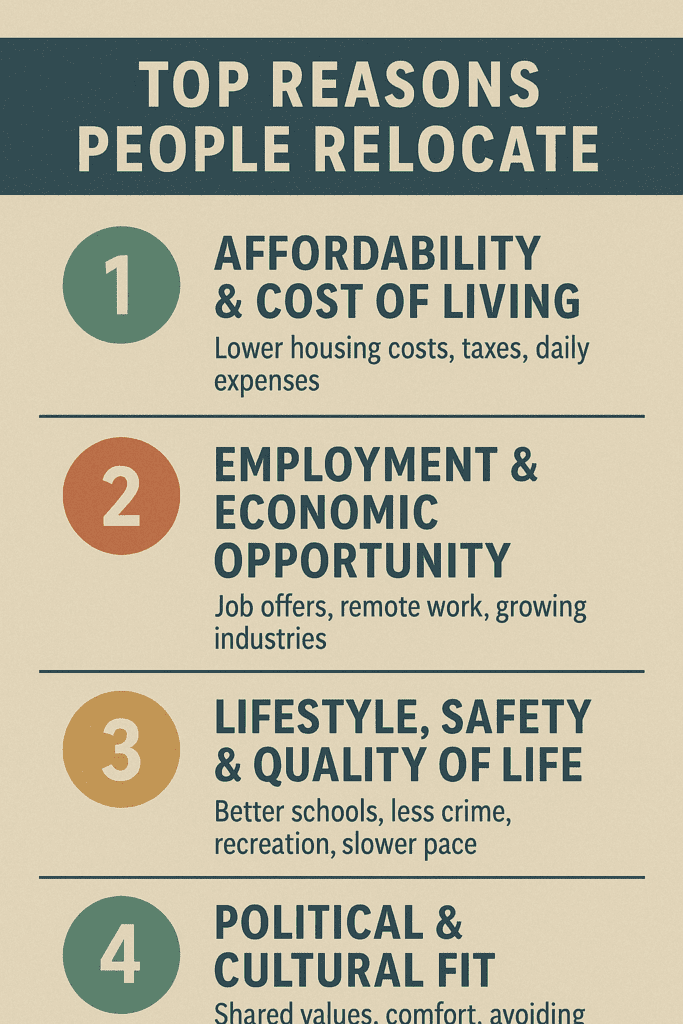
Surveys from the U.S. Census Bureau consistently show that Americans move for a combination of financial reasons, family reasons, career changes, housing costs, and the desire for a better neighborhood or lifestyle.
Relocation also becomes a major factor when life changes occur—a new job, job loss, a starter home that no longer fits a growing family, a long time living in the same place, or a need for extra room. Some move because of mental health considerations or the need for a better social circle.
Others, particularly young adults, move because of higher education or new career prospects in life sciences, technology, or growing industries. For many, a relocation assistance package or relocation stipend from a new company becomes the catalyst.
People seeking a different state, different reasons, or even a good way to upgrade their daily life often find relocation to be the best path toward financial stability, personal fulfillment, and long-term opportunity.
FINANCIAL CONSIDERATIONS
Financial considerations remain one of the main reasons people choose to leave their current home or current city. Everything from income tax to home prices, housing costs, property taxes, transportation, groceries, and overall affordability can have a significant impact on daily life and long-term financial security.
With rising costs in many major cities, a move to a new area, small town, or new state can be the difference between barely getting by and enjoying a better quality of life. For many people, it is the best way to gain extra money, ease financial pressure, and escape a hard time caused by high home prices or taxes.
f your relocation plan includes reducing expenses, consider whether downsizing or rightsizing makes sense before choosing a new area.
Article: downsizing or rightsizing
COST OF LIVING DIFFERENCES
2025 Cost of Living Index by State
The Cost of Living Index compares each state to a U.S. national average of 100. Values above 100 indicate higher-than-average costs, while values below 100 indicate lower-than-average costs. Data source: Cost of Living Index by State 2025, WorldPopulationReview.com.
| State | Cost of Living Index (2025) |
|---|---|
| Hawaii | 185.0 |
| California | 142.3 |
| Massachusetts | 141.2 |
| New York | 125.1 |
| Alaska | 124.9 |
| Maryland | 115.4 |
| New Jersey | 115.1 |
| Washington | 114.1 |
| Vermont | 113.6 |
| Maine | 113.0 |
| Connecticut | 112.7 |
| Oregon | 111.8 |
| New Hampshire | 111.4 |
| Arizona | 110.7 |
| Rhode Island | 110.6 |
| Colorado | 102.7 |
| Florida | 102.2 |
| Utah | 102.2 |
| Delaware | 101.9 |
| Virginia | 100.8 |
| Nevada | 100.2 |
| Idaho | 99.9 |
| North Carolina | 97.8 |
| Wisconsin | 97.7 |
| Pennsylvania | 97.2 |
| Montana | 95.5 |
| Illinois | 94.7 |
| South Carolina | 94.7 |
| Minnesota | 94.6 |
| Ohio | 94.3 |
| New Mexico | 93.7 |
| Wyoming | 93.7 |
| Nebraska | 92.6 |
| Georgia | 92.5 |
| Kentucky | 92.5 |
| Louisiana | 92.3 |
| Texas | 92.1 |
| South Dakota | 91.9 |
| North Dakota | 91.4 |
| Indiana | 91.0 |
| Tennessee | 90.3 |
| Michigan | 90.1 |
| Iowa | 89.7 |
| Arkansas | 89.6 |
| Missouri | 89.0 |
| Kansas | 88.8 |
| Alabama | 88.6 |
| West Virginia | 88.3 |
| Mississippi | 87.3 |
| Oklahoma | 86.0 |
Source: Cost of Living Index by State 2025 – WorldPopulationReview.com . National U.S. Cost of Living Index listed on that page: 103.4.
WHAT THE INDEXES MEAN
3. Analyze Cost of Living and Tax Policy
Cost of living plays a major role in relocation decisions, but the true picture comes from understanding how expenses behave over time. Housing, insurance, utilities, transportation, healthcare, and taxes all add up—and many of these costs rise at different rates depending on the state, county, and city you’re considering.
Key Cost of Living Components to Evaluate:
- Median home prices and long-term housing affordability
- Property taxes and assessment practices
- State and local income taxes
- Sales taxes and exemptions for seniors
- Homeowners, wind, and flood insurance costs
- Utility rates (electric, gas, water, broadband)
- Transportation and fuel costs
- Healthcare costs and Medicare acceptance
Tax Policy Matters More Than Most People Expect
When comparing states, counties, or cities, tax structure—and how frequently taxes increase—can dramatically affect your long-term budget. Some places follow predictable tax cycles, while others raise taxes regularly to fund government spending. Understanding the tax climate is essential, especially if you’re living on fixed retirement income.
Some states, such as California and several California counties, operate as tax-and-spend jurisdictions where taxpayers have limited control over spending growth. Others may have large unfunded liabilities, high debt loads, or a history of borrowing to pay for basic operations. These patterns often lead to regular tax increases that must be factored into any relocation plan.
Evaluating tax stability is now as much a political and policy consideration as a financial one. Many people today choose to relocate based on fiscal responsibility, predictable tax environments, and government transparency.
Mississippi Example: Predictable Property Tax Reassessments
Counties in Mississippi are required to reassess properties every four years. While they are allowed to reassess more frequently, most counties follow the four-year cycle consistently.
In my own experience, property taxes increased by about $75 per month during the most recent reassessment. Because of the four-year structure, I do not expect another adjustment for three more years. By comparison, some states authorize annual property tax increases of up to 2% per year—regardless of reassessment.
These differences can significantly impact retirees and others on fixed income. Predictable tax cycles help protect budgeting accuracy and long-term affordability.
2025 Cost of Living Index by State
Index values: 100 = U.S. national average. Source: WorldPopulationReview.com.
| State | Cost of Living Index (2025) |
|---|
What the Cost of Living Indexes Actually Mean
The Cost of Living Index compares living expenses in each state to a U.S. national average of 100. The number shows how far your dollar goes.
- California (142.3): Living costs are about 42.3% higher than the U.S. average.
- Mississippi (87.3): Living costs are about 12.7% lower than the U.S. average.
- California is roughly 63% more expensive than Mississippi (142.3 ÷ 87.3 ≈ 1.63).
These indexes reflect typical expenses such as housing, groceries, utilities, transportation, and healthcare, though housing usually drives the biggest gap.
Salary Comparison: What Happens to Someone Earning $70,000?
The key concept is purchasing power — how much your income can buy after accounting for local living costs.
➤ Equivalent salary needed in California to match $70,000 in Mississippi:
Formula: $70,000 × (CA index ÷ MS index)
= $70,000 × (142.3 ÷ 87.3)
≈ $114,100.
Because costs are 63% higher in CA, you’d need about 63% more income to break even.
➤ Equivalent salary needed in Mississippi to match $70,000 in California:
Formula: $70,000 × (MS index ÷ CA index)
= $70,000 × (87.3 ÷ 142.3)
≈ $42,980.
At Mississippi prices, $70,000 feels like earning $114,100 in California.
➤ Relative Purchasing Power (Same $70,000 in Both States):
- In Mississippi: $70,000 buys what roughly $114,100 would in California.
- In California: $70,000 buys what about $43,000 would in Mississippi.
In short, $70,000 goes dramatically further in Mississippi. You would feel financially more comfortable and retain more discretionary income.
Important Caveats
- These are statewide averages; costs can vary significantly inside each state.
- Indexes do not include taxes (California has higher income tax).
- Indexes do not consider lifestyle, job availability, or climate.
- Data sources vary slightly, but the ratio method used above is the industry standard.
AFFORDABILITY
We often hear the term “affordability.” What this means to me is that the person who is complaining is doing little to improve affordability for their own circumstance.
We have shown in this article that relocating to a more affordable area can solve that issue. Yet mostly young people who can relocate do not. They stay in an area they cannot afford when they could move and enjoy life.
I recall someone telling me about a family in California who were in the country without authorization and how they had to live with several other families to make ends meet. My first thought was that they could move to another area that they could afford because they had no ties to the area.
It seems that doing something about the lack of affordability is a personal decision—not one that we should expect government to take care of.
Counties in Mississippi are required to reassess properties for property taxes every four years. They can do so more often, but they tend to stay with the four-year program.
My property taxes went down $35 per year last year, and I do not expect that to change for the next three years. Conversely, property taxes in many states raise up to 2% each and every year.
These are real considerations and can have a major impact on fixed retirement income.
🔗 Related Resources
People often underestimate how much housing market differences, income tax, and property tax policies affect their financial stability. Yet these factors are among the most common reasons Americans relocate, according to multiple U.S. Census Bureau studies and surveys about mobility trends.
AFFORDABILITY IS A CHOICE
We often hear the term “affordability.” What this means to me is that the person who is complaining is doing little to improve affordability for their own circumstance.
We have shown in this article that relocating to a more affordable area can solve that issue. Yet mostly young people who can relocate do not. They stay in an area they cannot afford when they could move and enjoy life.
I recall someone telling me about a family in California who were in the country without authorization and who had to live with several other families to make ends meet. My first thought was that they could move to another area they could afford because they had no ties keeping them in place.
It seems that doing something about the lack of affordability is a personal decision, not one that government should be expected to solve.
TAX POLICY & FISCAL HEALTH
Consider tax policy for the state, county, and city you are targeting. Some areas such as California—and some counties in California—are tax-and-spend areas with no political control over spending.
Give some thought to moving to a state that is deep in debt or local governments who borrow to pay their debt and balance their budgets.
What is the climate for taxation? This can also be considered a political decision, as many people are realizing today.
High-income-tax states may also offer:
- lower property taxes
- higher public services
- transportation options
But if these don’t align with your lifestyle needs, moving may offer better financial comfort, mental health, and personal growth.
Counties in Mississippi are required to reassess properties for property taxes every four years. They can do so more often, but they tend to stick with the four-year schedule.
My property taxes went up $75 per month last year, and I do not expect that to change for the next three years. Conversely, property taxes in many states increase automatically by up to 2% every year.
These realities matter — especially when living on a fixed retirement income.
WHY FINANCIAL FACTORS ARE THE FIRST FILTER
When choosing a new environment, new area, or different state, most Americans begin with financial analysis because it shapes every other life decision:
- career opportunities
- school districts
- long-term planning
- lifestyle
- access to nature and recreation
- crime and public safety
- ability to retire early
- ability to invest in real estate
- ability to relocate again later
Financial stability can also influence:
- mental health
- personal well-being
- family decisions
- career advancement
- long-term personal goals
And when affordability becomes impossible in a big city, a move to a small town, rural area, or emerging region can be transformational.
HOUSING & REAL ESTATE CONSIDERATIONS
Housing is often the single largest factor influencing relocation. A move to a new city, new state, new area, or new home can provide a major improvement in housing costs, daily life, financial situation, and overall satisfaction with your living environment.
When comparing your current home to options in a different location, it becomes clear that the housing market can make or break your long-term plans. Whether you are moving for a growing family needing extra room, looking for a better neighborhood, or wanting a smaller home to fit a new lifestyle, housing is central to the decision.
Rising prices in urban areas, limited inventory, dense traffic corridors, and older housing stock push people to relocate. A new place can offer lower home prices, more space, better neighborhoods, and access to local events, clubs, associations, and more.
🔗 Related Guides & Articles
YOUR HOUSING CHECKLIST (TWO-PROPERTY COMPARISON)
Scoring helps buyers and relocating families compare properties or cities objectively.
Jessica & Harry Relocation Story

JESSICA & HARRY — VISITING THE NEW AREA
Jessica and Harry decided to visit Vancleave to get a feel for the community. They took their kids, Susie and Billy (ages 8 and 10), and framed it as a family vacation.
Since Vancleave is only 15 miles from the beach, with plenty to do, the kids were excited.
They loved what they saw — the beaches, the cows on the farms, the school, and especially the massive banana split they shared. The visit also gave Jessica and Harry the chance to meet a real estate agent and select a home.
A great trip that helped facilitate their final move.
INVESTMENT PROPERTY CONSIDERATIONS
Housing is not just about where you live — for many, it’s a chance to build wealth.
Your relocation decision may include evaluating whether the housing market presents good investment opportunities. Some people move because:
- They want to buy rental properties
- They want their own home to appreciate
- They want to reduce long-term financial risk
- They want to diversify their real estate holdings
In some high-cost states, it’s nearly impossible to buy property and be profitable unless you pay cash or take high risks.
PERSONAL ANECDOTE — REAL ESTATE INVESTING
For many years while living in California, I purchased real estate for investment. I could buy an apartment building or condo and make money renting it after expenses.
As the economy changed — taxes rising, insurance rising, fees rising — it became almost impossible to profit unless I paid cash.
While planning for retirement, I noticed that rental property in my target relocation area was priced far below what I was used to, but the key difference was that rents were high enough to borrow, buy, and still be profitable.
This became another factor in selecting my retirement location.
My analysis proved correct: we bought several properties and rented them profitably. I could buy three properties for the price of one in California. That spread the risk and improved our retirement security.
STARTING A BUSINESS AFTER RELOCATION
For some, moving to a new location also means pursuing:
- a new career path
- self-employment
- a side business
- real estate investing
- an online business
Housing affordability plays a big role here. Lower costs leave more money available for:
- launching a business
- obtaining licenses
- hiring help
- covering startup costs
This is especially meaningful for retirees starting small businesses after retirement.
Farming After Retirement: A Business or a Lifestyle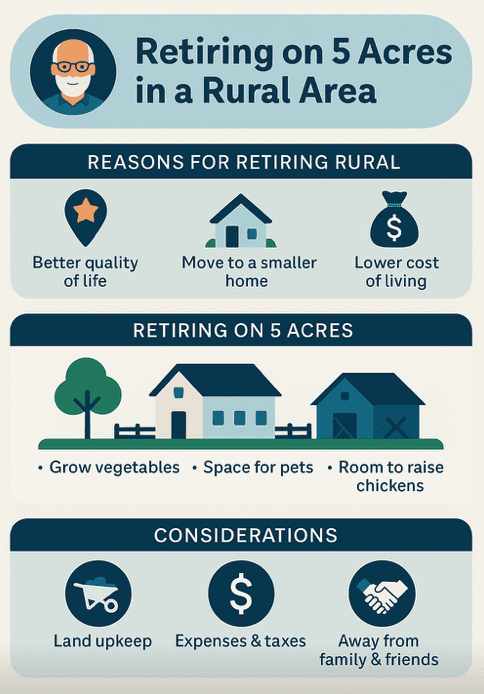
WHY HOUSING IS THE MOST IMPORTANT RELOCATION FACTOR
Because housing ties directly to:
- personal comfort
- safety
- finances
- long-term stability
- investment strategy
- community
- school options
- mental health
- family dynamics
… it is the anchor for all other relocation decisions.
People who pick the right housing market often find:
- a better neighborhood
- more space
- lower monthly expenses
- a calmer environment
- better-quality schools
- improved life satisfaction
- the ability to save or invest more
4. Understand the Housing Market and Long-Term Affordability
Housing will likely be your single largest expense after you relocate. A home that looks affordable on the surface can become expensive once you factor in property taxes, insurance, HOA fees, repairs, and interest rates. Before you commit, step back and look at the entire housing picture, not just the listing price.
If your relocation plan includes reducing expenses, you may want to consider downsizing vs. rightsizing as part of the move. Sometimes the best outcome is not just a cheaper house, but a home that better fits your current stage of life.
Key housing factors to evaluate
- Median home prices and recent price trends
- Neighborhood stability and overall desirability
- Age, condition, and quality of construction
- HOA dues and any special assessments
- Availability and cost of new construction
Ongoing costs that impact your budget
- Property taxes and how often they increase
- Homeowners, wind, and flood insurance premiums
- Typical maintenance and repair costs for that area
- Local inventory and how competitive the market is
- Rental prices if you plan to rent before you buy
A low purchase price in a high-tax, high-insurance market can still end up costing more each month than a slightly higher-priced home in a lower-cost, lower-risk area. This is why it’s important to run the numbers instead of relying on listing prices alone.
Run the numbers before you decide
Before you make an offer, use the Full Mortgage Calculator to estimate your full monthly payment (principal, interest, taxes, and insurance) in the new area.
For a deeper look at everything that goes into buying a home after you relocate, read the Complete Guide to Home Buying Costs & Benefits . It will help you decide whether buying in your new location truly supports your long-term financial and lifestyle goals.
Tip: If you are unsure about a market, consider renting for 6–12 months first. This gives you time to learn neighborhoods, watch prices, and confirm that the area really fits your daily life before you commit to a purchase.

EMPLOYMENT & ECONOMIC OPPORTUNITY
Employment remains one of the major factors influencing relocation decisions. Whether someone is pursuing a new job, better career prospects, a new position, or simply improved career advancement, people often relocate when their current job or current area no longer aligns with their personal goals.
A new city or new state can offer a great opportunity for higher income, a thriving industry, better work-life balance, or a stronger professional network. This is especially true for young adults seeking a fresh start in major cities or rapidly growing regions, but today it applies just as much to mid-career families, retirees seeking part-time work, and individuals in the life sciences or technology sectors.
Research indicates that many people who relocate for career-related reasons cite:
- limited opportunities in their current location
- high housing costs preventing career mobility
- changing industries
- remote work flexibility
- desire for a better neighborhood or safer environment
- need for proximity to family members
- desire for new experiences
Career mobility is closely tied to personal growth, financial stability, and the ability to maintain a good balance between work and daily life.
Major investment isn’t just reshaping big cities. Large-scale data centers are rapidly transforming small-town America — bringing jobs, infrastructure upgrades, and long-term economic stability.
This Fox Business video explains why companies are choosing rural and small-town locations and what that means for communities once considered “flyover” areas.
Watch: How Data Centers Are Transforming Small-Town America →ECONOMIC TRENDS DRIVING RELOCATION
Many companies today are moving into areas previously considered “flyover country,” bringing high-quality jobs to places with lower housing costs and better quality of life.
This shift is supported by federal infrastructure spending, private-sector investment, and the growing appeal of small towns, rural regions, and mid-sized cities.
Industries driving geographic job growth include:
- Advanced manufacturing
- Aerospace and defense technologies
- Electric vehicle production
- Semiconductor fabrication
- Life sciences and biotech
- Data centers
- Logistics and distribution
- Food processing and agriculture technology
- Tourism and hospitality
These expanding sectors mean people no longer need to crowd into a major metro to find top-tier employment or career opportunities.
MAJOR PROJECTS MOVING INTO RURAL AREAS
With trillions of dollars being invested in the United States, new jobs are increasingly flowing to areas once known only as “flyover” territory.
Gen Z & Millennials Are Choosing Small Towns
Business Insider reports that younger generations are increasingly favoring rural communities over large metro areas.
Read the Business Insider analysis →Major Companies Embrace Rural Locations
Area Development details how corporations are selecting wide-open rural regions for new manufacturing and logistics facilities.
Explore the Area Development report →These shifts mean opportunity is spreading — making relocation to rural and small-town regions more appealing than ever.
RELOCATION PACKAGES & PROFESSIONAL MOBILITY
Many large employers now offer some form of relocation assistance or a lump sum relocation stipend to help workers move to a new area. This may include:
- moving expenses
- temporary housing
- home-finding trips
- closing cost reimbursements
- transportation coverage
- job search services for spouses
This is increasingly common in industries competing for specialized talent.
A relocation package is often the only way workers can move to a more affordable region while transitioning out of a high-cost one.
Practical Moving Logistics: Test Before You Commit
Many relocation articles focus on why people move but skip the most practical question: How do you reduce risk before fully committing? Smart relocations are rarely impulsive. They are staged, tested, and adjusted.
Practical moving logistics include far more than hiring movers. They involve evaluating costs, testing daily life, and ensuring the new location truly works for your family, pets, and lifestyle before making irreversible decisions.
Key Logistics to Evaluate
- Moving Costs: Get multiple quotes and compare full-service movers, self-pack options, and hybrid solutions.
- Packing Strategy: Decide what moves, what gets sold, and what goes into temporary storage.
- Trial Rental: Renting for 3–12 months allows you to experience the area without long-term commitment.
- Scouting Visits: Visit more than once, at different times of year, and include weekdays—not just weekends.
- Virtual Tours: Use video walk-throughs and live calls to preview homes and neighborhoods remotely.
- Pet Relocation: Research veterinarians, pet-friendly housing, boarding options, and travel requirements.
A trial period—whether through a short-term rental or extended visit—often reveals issues that research alone cannot: commute realities, noise levels, weather patterns, healthcare access, and how welcoming the community truly feels.
Relocation doesn’t have to be all-or-nothing. Testing a location first is often the smartest move you can make.
REMOTE WORK AND HYBRID OPPORTUNITY
Remote work has created a historic shift, allowing people to choose where they want to live rather than where their employer is located.
This means:
- You can live in a small town but keep a big city salary
- You can choose a lower tax environment
- You can afford a larger home or better neighborhood
- Your money goes further in daily life
- Your personal goals can drive your choice of community
Remote work has directly increased migration to states like Mississippi, Alabama, Tennessee, Texas, Montana, Idaho, Utah, and the Carolinas.
EMPLOYMENT OPPORTUNITIES — JESSICA & HARRY’S EXPERIENCE
Jessica and Harry did not simply relocate for schools and safety — employment played a major role.
Harry, an electrical engineer, anticipated the need to be near a strong regional job market. Jessica, a teacher, needed excellent K–12 school districts to support her career growth.
Vancleave, Mississippi, offered:
- lower living costs
- strong local schools
- easy commute distances
- a healthier job-to-housing-price ratio
- new employers moving into nearby counties
Both Jessica and Harry quickly found work in their fields, benefiting from a region hungry for professionals.
Their experience is common among families seeking:
- better neighborhoods
- lower housing costs
- career stability
- more time with family
- a safer environment for kids
Proximity to Family, Airports & Transportation Checklist
Family dynamics are often discussed emotionally when relocating, but logistics matter just as much. Travel time, cost, and transportation options directly affect how often you see family and how easily you can live day to day — especially without relying entirely on a car.
✔ Things to Look For: Family Proximity
- Driving distance to close family and grandchildren
- Ease and cost of flights for family visits
- Availability of direct flights vs connecting flights
- Seasonal travel costs and peak holiday pricing
- Ability for family to visit without renting a car
- Guest accommodations nearby for longer stays
✔ Things to Look For: Airports & Transportation
- Distance to a regional or international airport
- Airport size and number of destinations served
- Availability of rideshare, shuttle, or taxi services
- Public transportation options (bus, rail, commuter services)
- Walkability of daily needs (groceries, dining, healthcare)
- Driving alternatives for aging in place without a car
- Safe pedestrian and bike-friendly infrastructure
Metro Area vs Small Town: Relocation Comparison
When relocating to a new place, proximity to family, airports, and transportation works very differently in metro areas versus small towns. This comparison highlights the real-world tradeoffs.
| Factor | Metro Area | Small Town / Rural Area |
|---|---|---|
| Airport Access | Multiple airports, many direct flights | One regional airport or longer drive to major hub |
| Travel Costs | Higher airfare, parking, rideshare costs | Lower parking and ground costs, airfare may vary |
| Public Transportation | Robust bus, rail, and commuter systems | Limited or no public transportation |
| Walkability | High in city cores, lower in suburbs | Low overall, but easier traffic and parking |
| Driving Dependence | Optional in some neighborhoods | Usually required for daily activities |
| Family Visits | Short, frequent visits possible | Longer, more intentional visits |
| Aging Without a Car | More feasible with transit options | Requires planning (rides, delivery services) |
Key insight: Metro areas offer convenience and transportation options, while small towns often trade some access for affordability, safety, and a slower pace — making visit quality more important than visit frequency.
EMERGING ECONOMIC OPPORTUNITIES IN SMALL TOWNS
Opportunity Is Moving Into America’s Heartland
One of the most overlooked trends for families relocating to a new place is that economic opportunity is no longer limited to expensive major metros. With trillions of dollars being invested across the United States, new jobs and industries are increasingly landing in smaller cities, rural communities, and regions once labeled “flyover country.”
This shift is being driven by lower land costs, easier permitting, workforce availability, and quality-of-life advantages that appeal to both employers and employees. As a result, many families are finding strong career paths in places where housing costs, taxes, and daily stress are significantly lower.
- Young adults and families looking beyond big cities: Business Insider: Gen Z & Millennials are considering rural small towns
- Major employers expanding outside metros: Area Development: Major projects embrace wide-open rural spaces
HOW ECONOMIC FACTORS CONNECT TO OTHER RELOCATION DECISIONS
Economic realities flow into many other factors:
Housing
Can you afford a suitable home in your current city?
Schools
Does your salary cover living in the district that gives your kids the best environment?
Lifestyle
Do you spend more time commuting than with family?
Savings Rate
Does the cost of living allow you to save enough to reach long-term goals?
Retirement Planning
Are you in a place where you can retire comfortably?
Mental Health
Does your work environment drain you more than it supports your well-being?
Community Belonging
Does your new company culture or new city align with your identity, values, and preferred lifestyle?
How Jessica & Harry Turned a Big Move Into a Clear Decision
As Jessica and Harry evaluated whether relocating to a new place made sense for their family, they quickly realized that emotions alone weren’t enough. Every potential location felt promising — until they tried to compare them side by side.
They needed a way to slow down, ask the right questions, and see their options clearly. That’s when they used a structured relocation checklist to score each location on affordability, schools, safety, healthcare, climate, lifestyle, and long-term fit.
The checklist didn’t make the decision for them — but it made the trade-offs obvious. What once felt overwhelming became manageable, logical, and confidence-building.
Use the same checklist Jessica and Harry used to evaluate whether relocating to a new place truly fits your life — today and long term.
Education & Lifelong Learning
When relocating to a new state or a new city, education is one of the most important but often overlooked factors—whether you have children, grandchildren, are raising a growing family, or you simply value lifelong learning. The quality of local schools, access to higher education, and availability of enrichment programs can significantly influence your daily life, your property values, and even your long-term financial goals.
Even if you don’t currently have school-age children, choosing a home in a better neighborhood with strong schools typically supports higher resale value and attracts future buyers. For young adults, students, or anyone building a career in a new environment, access to universities and technical programs can be a major factor in future earnings and personal growth.
K–12 Education Quality
Before moving to a new area, it’s important to research school districts just as thoroughly as you research home prices or housing costs. Look at academic performance, student-to-teacher ratios, extracurricular programs, and specialized tracks such as STEM, arts, gifted programs, or advanced placement courses.
Many locations with a lower cost of living still offer excellent public schools, while some major cities with higher home prices may have uneven school quality depending on the district. Visiting schools, attending open houses, or speaking with school administrators can give you a clearer picture than test scores alone.
For families planning a big move or a fresh start in a different state, strong school systems can ease the transition by helping children make new friends, build a new social circle, and adapt quickly to their new community.
For Gen X families relocating to a new place, school quality isn’t just about education — it directly affects home values, neighborhood stability, and long-term resale potential.
Communities with strong schools tend to attract steady demand, hold value during market swings, and appeal to future buyers — even if your own children are nearing graduation.
If you’re weighing schools as part of a relocation decision, this article explains why they matter more than most people realize:
Great Schools Have a Positive Impact on Property Values →
Higher Education & Adult Learning Opportunities
Relocation can also open doors for higher education, professional development, or career advancement. Many urban areas and college towns offer access to universities, community colleges, and continuing education programs that support career changes, job searches, or upskilling for a new position.
If your move is tied to a job offer or relocation package, explore whether your new company partners with nearby schools for tuition support, certifications, or life sciences training programs. These opportunities can be a crucial factor in long-term career prospects.
Lifelong learning resources—libraries, museums, science centers, arts programs—can enrich daily life, especially for retirees or those seeking personal growth in a new community. These local events and workshops offer a good way to stay engaged, build confidence, and make the most of your new environment.
Educational Support Services
Some areas provide broader educational support systems that benefit young adults, families, and older learners alike, including:
- Strong special-education services
- Vocational and technical programs
- After-school tutoring or academic clubs
- Community mentorship programs
- Youth sports, arts, and music programs
These services can make a significant impact on your family’s comfort and success in a new home or new area. They also reflect the local government’s investment in the community.
Why Education Matters Even if You Don’t Have Children
Education quality indirectly affects nearly every part of relocation:
- Neighborhood desirability
- Home prices and long-term property values
- Tax structures and municipal funding
- Local job opportunities and economic stability
- The overall culture and character of the area
Areas with good schools often attract families, young adults, and professionals, helping maintain a strong housing market and a vibrant community. Even for retirees or those without children, settling in a location with strong educational anchors can support a better quality of life and improved long-term financial stability.
Takeaway
Whether you’re moving for a new job, a fresh start, a better neighborhood, or a lower cost of living, evaluating education should be part of your relocation checklist. Strong schools, lifelong learning opportunities, and access to higher education can shape everything from career advancement to personal fulfillment, making education a major factor in choosing the best new location for your next chapter.
Healthcare Access and Medical Considerations
Healthcare is one of the most critical—and often underestimated—factors when choosing a new place to live. Whether you’re relocating for a new job, a fresh start in a different state, retirement planning, personal goals, or being closer to family members, access to quality medical care can have a significant impact on your daily life, long-term health, and financial stability.
A new location may offer better hospitals, more specialized services, lower healthcare costs, or greater access to preventive care. On the flip side, moving to a rural area or a small town may mean fewer providers, longer wait times, or more travel to see specialists. Understanding the healthcare landscape is an essential part of any big move.
Local Healthcare Quality and Availability
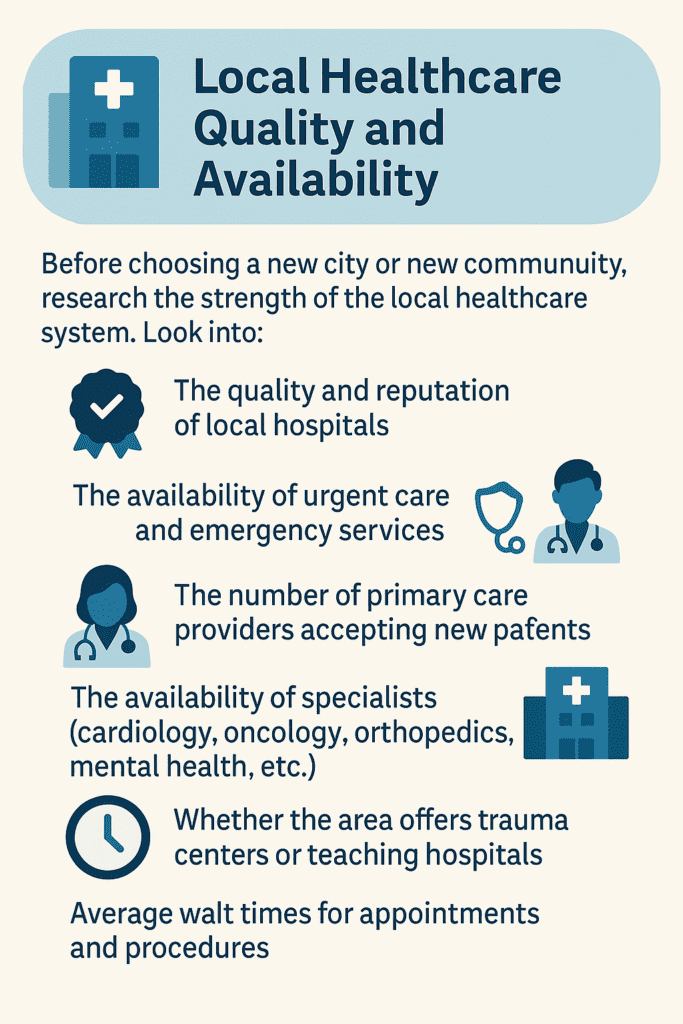
Before choosing a new city or new community, research the strength of the local healthcare system. Look into:
- The quality and reputation of local hospitals
- The availability of urgent care and emergency services
- The number of primary care providers accepting new patients
- The availability of specialists (cardiology, oncology, orthopedics, mental health, etc.)
- Whether the area offers trauma centers or teaching hospitals
- Average wait times for appointments and procedures
Large urban areas typically have broader networks of specialists and advanced medical facilities, while smaller towns may offer more personalized care but fewer resources. If you or your family members have specific health needs, such as chronic conditions or upcoming procedures, this becomes a major factor in choosing the right new environment.
Insurance, Medicare Acceptance, and Out-of-Pocket Costs
Healthcare costs vary dramatically between states—and sometimes even between counties. When evaluating a potential new home:
- Check whether local providers accept your insurance
- Confirm Medicare acceptance rates (critical for retirees)
- Review average out-of-pocket costs in the region
- Look at typical costs for prescriptions, labs, and imaging
- Evaluate whether telehealth options are widely available
For people moving from high-cost states to a lower cost of living area, healthcare savings can be substantial. Conversely, some low-tax states have fewer providers or higher private insurance premiums, which can affect your financial situation.
Healthcare affordability and access are often a major factor in determining the best long-term location—especially for young adults starting families, older adults planning retirement, or anyone considering a new job with a relocation package.
Specialized Medical Services
If you or someone in your household requires specialized medical care, make sure your new location offers:
- Specialty hospitals or clinics
- Cancer treatment centers
- Heart and vascular institutes
- Pediatric specialty care
- Mental health and behavioral services
- Rehabilitation, physical therapy, and occupational therapy
Moving to a different state or new city may significantly improve access to specialty care, but it may also reduce it. For some families, access to top-tier “destination medicine” can be a good reason to relocate to a major city or medical hub.
If the new job offer or new opportunity places you in a region with a stronger health system, this may be one of the biggest benefits of the move.
Healthcare and Quality of Life
Access to good healthcare does more than treat illness—it supports a healthier daily life. Preventive care, wellness centers, fitness programs, nutrition coaching, and mental health support can all play a role in helping you thrive after relocating.
Your health directly affects:
- Your ability to enjoy your new area
- Your productivity in a new job or new position
- Your mental health and stress levels
- Your long-term independence as you age
- The cost of living in your new home
Communities with strong healthcare systems tend to have active social circles, community wellness programs, and local events focused on healthy living. These resources can make your new location a better fit for your lifestyle and personal goals.
Emergency Services and Response Times
When evaluating neighborhoods, consider:
- How close the nearest hospital is
- How quickly emergency services respond
- Whether the area has fire/rescue stations nearby
- The reliability of ambulance services
- Whether the area is prone to natural disasters (hurricanes, tornados, earthquakes)
In some rural or remote locations, emergency response can take significantly longer than in a larger city. That can be a significant factor for older adults or families with young children.
Takeaway
Healthcare access is a crucial factor in finding the right place to live. Whether you’re pursuing a new adventure, considering career advancement, planning for retirement, relocating your family, or simply seeking a better quality of life, understanding the healthcare landscape can help you choose a new home that supports your long-term well-being.
The best way to evaluate healthcare in a different state or new city is to combine data—hospital ratings, insurance acceptance, provider availability—with your personal health needs and long-term goals. A great opportunity in a new location becomes even better when your health is supported by a strong, accessible medical system.
Climate, Weather & Natural Risks
Climate is one of the most influential lifestyle factors when relocating to a new place. Many people move in search of more sunshine, less snow, milder winters, fewer gloomy days, or a weather pattern that better aligns with how they want to live day to day.
But climate is not just about comfort. It shapes daily routines, health, recreation, housing costs, and long-term affordability. Evaluating climate correctly means looking beyond simple preferences and understanding how weather, environment, and lifestyle intersect.

When relocating to a new place, the goal is not to find a “perfect” climate—no such thing exists—but to choose one that matches your priorities, routines, and tolerance for tradeoffs.
Climate influences:
- outdoor activities and recreation
- health and wellness
- heating and cooling costs
- local culture and social life
- job types and work schedules
- property insurance
- home maintenance
- daily rhythms of life
Relocators who evaluate the whole picture, rather than reacting to headlines, make better long-term decisions.
Regional Weather Realities in the United States
Every region of the United States faces environmental challenges, yet each has developed adaptations, building practices, and cultural norms that make living there not only viable—but desirable.
Common examples include:
- Coastal regions: hurricanes and tropical storms
- Midwest: tornadoes and severe thunderstorms
- California: wildfires and earthquakes
- Northern states: heavy snow and ice storms
- Pacific Northwest: rain and periodic flooding
- Southwest: extreme heat and drought
- Hawaii: volcanic activity
No area is risk-free. Yet millions of people thrive happily in every one of these regions. The difference is not the absence of risk—it is understanding risk realistically when relocating to a new place.
Hurricanes are a concern for coastal living—just as tornadoes affect the Midwest, wildfires and earthquakes impact California, snowstorms challenge the North, and volcanoes exist in Hawaii.
Every region has weather-related events. Yet people live and thrive everywhere.
The key is understanding potential issues so you can live with them—not fear them. In almost every region, there are practical ways to mitigate risk.
For a deeper look at coastal storms, see our detailed guide: Concerned About Hurricanes? Moving to the Mississippi Gulf Coast
Climate & Comfort — Humidity Explained
Humidity is one of the most misunderstood climate factors when people are relocating to a new place. It is often portrayed as uniquely oppressive in the Southeast, when in reality:
- humidity exists everywhere (including Minnesota)
- air conditioning removes moisture efficiently
- indoor comfort is largely unaffected
- most daily activities occur in climate-controlled spaces
- peak humidity is seasonal, not year-round
For most residents, humidity only becomes challenging during strenuous outdoor labor in peak summer months. Even then, people adapt by adjusting schedules—just as those in snowy climates adjust for winter.
Humidity simply means moisture in the air—and it exists everywhere. Yes, eastern and southern coastal areas experience higher humidity in summer, but so do many parts of the U.S., including the Midwest and Upper Midwest.
Air conditioning removes moisture and keeps homes, offices, and cars comfortable. High humidity is only difficult during strenuous outdoor work at peak summer heat.
Most residents simply schedule intense outdoor tasks during the nine months of the year when humidity is much lower.
Nature, Serenity & Daily Well-Being
Climate directly affects how often people can enjoy the outdoors—and how restorative that time feels. Many people relocate to escape:
- constant congestion
- noisy streets
- heavy traffic
- poor air quality
- cramped living environments
Natural beauty becomes a form of daily therapy. Mountains, beaches, deserts, lakes, and forests offer serenity and space that dense cities simply cannot replicate.
This is one reason people leave major metropolitan areas when relocating to a new place—not because cities lack amenities, but because space, calm, and beauty improve mental well-being.

The “Live Where You Vacation” Mindset
Many people vacation near beaches, mountains, or lakes because those environments reduce stress and restore balance. A growing number of relocators decide to live where they once vacationed.
This is especially true along the Mississippi Gulf Coast, where people discover:
- 40 miles of white-sand beaches
- minimal traffic
- low population density
- stunning sunsets
- relaxed drives along Highway 90
- affordability rare in coastal regions
Many big cities have parks, but people leave them for wide-open spaces for a reason. Mountains, beaches, and deserts all share two things: serenity and beauty.
Why do people escape crowded environments for national parks or camping by a stream? To get away from pressure and congestion.
Why not consider living like you’re on vacation year-round?
After relocating to a new place on the Mississippi Gulf Coast, I regularly drive along 40 miles of white-sand beaches on Highway 90—rarely crowded, even during the so-called “rush 15 minutes.”
We escaped suburban congestion and gained a slower pace, natural beauty, and calm. It’s something worth considering for mental well-being and access to nature.
Climate, Cost of Living & Planning
Climate also influences the cost of living through:
- utility expenses
- insurance premiums
- maintenance schedules
- long-term affordability
Warm climates may reduce heating costs but increase cooling or insurance expenses. The key when relocating to a new place is planning with real numbers, not assumptions.
Helpful planning tools include:
Best Retirement Relocation Budget Tool Simple Steps to Ensure Your Future Is Secure Starting a New Business? Consider the Mississippi Gulf Coast RetireCoast Calculators HubCareful planning helps relocators see the real cost of life, not the stereotypes.
Climate & Health Considerations
Climate can also affect health and wellness, including:
- seasonal allergies
- respiratory comfort
- skin conditions
- physical activity levels
- stress reduction and mood
health. When relocating to a new place, climate should support—not fight—your health goals.Some people seek dry climates for joint comfort; others prefer moderate humidity for breathing. Many move toward sunnier regions to support mental health. When relocating to a new place, climate should support—not fight—your health goals.
LIFESTYLE, CULTURE & SOCIAL BELONGING
(Lifestyle and cultural fit often determine whether relocating to a new place truly feels right. Even when financial factors, housing opportunities, or job prospects drive the initial relocation decisions, the long-term success of moving to a new city, new state, or new area depends heavily on whether the local culture matches your personality, values, and preferred way of life.
People want to feel at home—not only inside their new home, but in their new community. The social environment influences mental health, daily life satisfaction, personal well-being, and the sense that you made the right decision when relocating to a new place.
This includes:
- friendliness of neighbors
- cultural traditions
- local festivals
- community engagement
- shared values
- political climate
- diversity of experiences
- community pride
- neighborhood tone
Lifestyle fit is often the hidden “deal-maker” for relocation decisions.
Recreational & Cultural Amenities Checklist
When relocating to a new place, quality of life depends heavily on what you and your family can do outside of work and school. Use this checklist to evaluate whether a community offers the activities and opportunities that matter most.
✔ Things to Look For: Adults
- Golf courses and driving ranges
- Fitness centers, yoga studios, and wellness programs
- Arts scene (galleries, theaters, live music venues)
- Dining options ranging from casual to upscale
- Entertainment such as concerts, festivals, and events
- Hiking and walking trails, parks, and green spaces
- Boating, fishing, kayaking, or waterfront access
- Senior centers, clubs, and organized activities
- Volunteer opportunities and civic organizations
- Community groups, churches, or social organizations
✔ Things to Look For: Kids
- Youth soccer, baseball, softball, and basketball leagues
- Football or flag football programs
- Swimming pools, swim teams, and lessons
- Martial arts, gymnastics, dance, and cheer programs
- Tennis, pickleball, and junior sports clinics
- Track & field and cross-country programs
- Outdoor activities (fishing, hiking, archery, hunting education)
- Skate parks, BMX parks, or recreation centers
- 4-H, FFA, Scouts, and youth leadership programs
- STEM clubs, robotics, music, arts, and esports programs
CULTURAL DIVERSITY IN UNEXPECTED PLACES
When moving to a new area, many people assume diversity exists only in big cities. But cultural richness often appears in small towns, rural communities, and regions with long local histories.
DIVERSITY ISN’T JUST URBAN
Diversity Isn’t Just Urban
This article mentions “more diverse social interactions.” What that really means often comes down to personal experience.
Since relocating to the Mississippi Gulf Coast, I’ve met people I would never have encountered where I lived before — Creole, Cajun, and Southern families, each “different” in the best possible way.
Sometimes I have trouble understanding Cajun accents, but that’s part of the fun — and it’s become part of my life. People here eat things like alligator. I tried it before complaining… and I liked it.
Diversity isn’t only about people from different countries. Sometimes the greatest diversity is right in your own backyard.
This type of everyday cultural variety helps people feel fulfilled after relocating to a new place because it enriches daily interactions and builds new forms of community identity.
LIFESTYLE & SOCIAL CONNECTIONS
One of the biggest concerns people have when relocating to a new place is whether they will make new friends or feel welcome. Lifestyle compatibility influences:
- your social circle
- local engagement
- how quickly you feel at home
- sense of belonging
- access to activities you enjoy
Small towns, suburban communities, and rural areas often offer stronger social cohesion than expected.
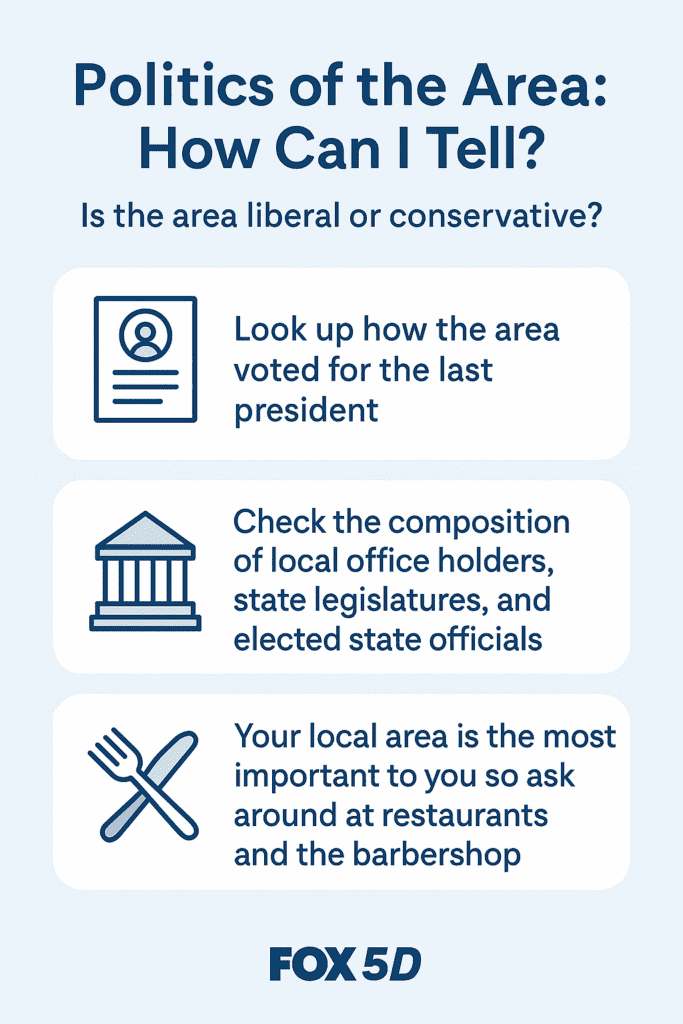
When relocating to a new place, decisions are no longer driven solely by jobs or housing costs. For many Americans, the political climate has become a major factor in choosing where to live.
This FOX 5 DC video reports that nearly half of people considering a move cite political climate as a reason — underscoring how lifestyle comfort, values, and day-to-day quality of life now shape relocation decisions.
Watch the video: Why political climate matters when relocating →POLITICAL CLIMATE — A NEW TOP RELOCATION FACTOR
For many Americans, political compatibility is now a crucial factor when relocating to a new state or new community. The growing divide in national politics influences:
- neighborhood comfort
- family interactions
- freedom to express views
- desire for affirmation rather than conflict
- decisions about where to raise children
Political Compatibility Has Become a Relocation Driver
One key reason people relocate today is political compatibility.
Conservatives often want to speak freely without conflict — without being yelled at, labeled, or having family skip Thanksgiving dinners over political disagreements.
Liberals, on the other hand, often want affirmation and acceptance of their views without feeling criticized or dismissed.
Because of this growing divide, political climate is now among the top reasons Americans move.
Newsweek has analyzed this trend extensively:
Americans Are Relocating for Political Reasons – Newsweek
I’ve seen this firsthand among clients relocating to the Mississippi Gulf Coast — a red area in a red state. Despite the political reputation, people are broadly accepted here, shouting matches are rare, and neighbors generally get along well. There are liberals here too, and day-to-day life is far more cooperative than headlines suggest.
https://retirecoast.com/the-best-conservative-cities-mississippi-gulf-coast/ ]
This helps people relocating to a new place choose a community where they feel at peace.
LIFESTYLE & VALUES ALIGNMENT
When relocating to a new area, the question isn’t simply: “What do I want politically?” but also:
“Where will I be most comfortable living my daily life?”
Every region has its own culture, pace, and personality—finding the right fit makes the move worthwhile.

Social Belonging Is the Hidden Pillar
Social belonging is often the hidden pillar of relocation success. A supportive community, local pride, shared traditions, and friendly interactions can make relocating to a new place feel not just like a move — but like coming home.
LIFESTYLE SUMMARY
Relocating to a new place works best when lifestyle and culture align with:
- your values
- your daily routines
- your need for social engagement
- your pace of life
- your preferred community environment
- your long-term personal goals
Lifestyle compatibility is one of the strongest predictors of relocation satisfaction.
Safety, Crime, and Community Stability
When families think about relocating to a new place, safety is rarely an abstract concept. It isn’t about national rankings or sensational headlines—it’s about daily life. Parents think about whether their children can ride bikes in the neighborhood, whether they feel comfortable walking at night, and whether the community around them feels stable and predictable.
This section addresses crime and safety directly and completely. Other sections of this article do not revisit this topic. The goal here is clarity—separating perception from reality, statistics from lived experience, and fear-driven narratives from practical evaluation.
Crime Statistics vs. Daily Reality
Crime statistics are often misunderstood, especially when comparing large cities to small towns. Many reports rely on per-capita crime rates without explaining how dramatically population size can distort those figures.
For example, a small town with 1,000 residents that experiences two serious crimes in a year may appear to have an extremely high crime rate on paper. The same number of incidents in a city of one million people would barely register statistically. This “small population effect” creates volatility—crime rates in small communities can spike one year and drop to zero the next.
In contrast, large urban areas tend to show more consistent and higher overall crime levels year after year, particularly for violent crime. Headlines rarely explain this nuance, which leads to widespread misunderstanding.
The takeaway is simple: numbers without context are misleading.
Why Small Towns Sometimes Look More Dangerous Than They Are
Small towns frequently appear on “highest crime rate” lists not because they are unsafe, but because statistical formulas exaggerate isolated incidents. A single event can dramatically skew the data.
This does not mean crime should be ignored anywhere—it means crime must be evaluated locally. Look at patterns, not single-year spikes. Talk to residents. Visit neighborhoods at different times of day. Observe whether crime is random, localized, or systemic.
Context matters more than rankings.
Jessica & Harry: When Safety Becomes Personal
Jessica and Harry lived in what had once been a nice neighborhood. Over time, subtle changes began to feel more concerning.
One month, a daylight robbery occurred just four doors down. A week later, a car was stolen from an open garage nearby. One evening, Jessica heard noises outside and looked down from her bedroom window to see two men attempting to break into a neighbor’s car parked on the street.
None of these incidents alone forced an immediate decision—but together, they changed how safe the neighborhood felt. The sense of stability they once took for granted was gone.
For Jessica and Harry, safety wasn’t about fear—it was about recognizing a pattern. That realization became another checkmark in favor of relocating.
Community Stability vs. Transitional Neighborhoods
Safety is closely tied to community stability. Neighborhoods where people stay long-term, know one another, and invest in their homes tend to experience lower crime and faster informal intervention when issues arise.
In transitional areas—where turnover is high, ownership is low, or economic stress is increasing—crime often follows instability rather than causes it. These signals are easier to detect in person than in reports.
This is why scouting trips matter. Walking the neighborhood, talking to residents, and observing how people interact provides insights no dataset can offer.
Why Headlines Often Get Safety Wrong
Many crime-related articles are written by authors who rely entirely on aggregated data. They may be hundreds or thousands of miles away from the communities they describe.
Statements like “State X is unsafe” or “City Y has rising crime” tell you very little about where people actually live. States contain urban centers, suburbs, coastal communities, and rural towns—each with vastly different safety profiles.
Before relocating to the Mississippi Gulf Coast, I read multiple articles written by authors based in New York and California describing Mississippi as unsafe. Those claims were unsupported by local reality. On the Gulf Coast, crime patterns, community engagement, and policing are entirely different from what those articles implied.
Safety is local. Evaluating it requires local insight.
Crime Is Only One Part of Feeling Safe
True safety isn’t measured solely by crime statistics. It includes:
- Community cohesion
- Visibility of neighbors
- Pride of ownership
- School engagement
- Local accountability
Places where people know each other, attend local events, and look out for one another often feel safer even when their statistical profile appears average.
Jessica and Harry didn’t choose their new community because it ranked well on a list. They chose it because it felt stable, predictable, and connected.
Key Takeaway
When evaluating safety while relocating to a new place:
- Don’t rely on single-year crime rates
- Don’t compare small towns to large cities without context
- Don’t trust headlines written from afar
- Do observe daily life
- Do talk to residents
- Do look for patterns, not anecdotes
Safety is not about perfection—it’s about predictability, stability, and peace of mind.
FAMILY DYNAMICS, CHILD EXPERIENCE & PERSONAL STORIES
Family dynamics often shape the emotional core of every relocation decision. While finances, housing, jobs, and schools matter, the real story of relocating to a new place frequently centers on:
- how children respond
- how parents feel about safety
- how extended family relationships change
- how community belonging evolves
- how daily life improves or stabilizes
Real-world stories help families imagine what relocating to a new place might feel like for them — and whether a new community can offer deeper roots, stronger relationships, and a better quality of life.
In this section, Jessica & Harry’s journey becomes the human thread illustrating the powerful impact relocation can have on a family seeking a better life.
THE FULL JESSICA & HARRY CASE STUDY
Jessica and Harry lived in a metro-area neighborhood that was changing quickly — and not for the better. Housing costs were high, crime was rising, schools were declining, and the cultural tone of their community no longer matched their needs or values.
As parents, they felt increasing pressure to protect their children from:
- unsafe school environments
- disruptive cultural trends
- deteriorating neighborhood behavior
- higher living costs with diminishing quality
- social tensions at school and in their community
This is a familiar pattern for many families considering relocating to a new area.
THE TURNING POINT
A series of local crime incidents pushed their quiet concerns into urgent clarity:
- a daylight break-in
- a car stolen from a neighbor’s open garage
- two men attempting to break into a car on their street at night
Jessica watched that last event unfold from upstairs.
That night, they began seriously considering relocating to a new place.
THE SEARCH FOR SOMETHING BETTER
At first, Jessica and Harry did what many do — they looked at “hot spots” listicles online. But those places were crowded with people fleeing the same problems they were fleeing. Housing prices and safety concerns were following the trend of migration.
They needed something different.
Something stable.
Something safe.
Something community-centered.
Something affordable.
Something meaningful.
That’s when they began looking into small-town options — places not celebrated by big cities but cherished by their own residents.
They discovered Vancleave, Mississippi.

THE KIDS’ EXPERIENCE — THE FIRST FAMILY VISIT
Turning a “Maybe” Into a Family Yes
Jessica and Harry decided to visit Vancleave to get a feel for the community. They took their kids, Susie and Billy (ages 8 and 10), and made a family vacation out of the trip.
Being only 15 miles from the beach, they knew the kids would love it.
They did.
- The kids adored the beaches
- They loved seeing the cows on nearby farms
- The school tour surprised them—in a good way
- And the highlight: the giant banana split they shared at a local shop
The visit also allowed Jessica and Harry to meet with a real estate agent and select a home.
This trip made the upcoming move feel not only possible — but exciting.
Children often respond to relocating to a new place with enthusiasm when the new area offers:
- nature
- freedom to explore
- local traditions
- better schools
- room to grow
Relocating to a new area often reveals how misinformed friends or relatives can be about other parts of the country.

DISTANCE CAN BRING FAMILIES CLOSER
Sometimes moving away enhances family relationships instead of weakening them.
THE NEW DYNAMIC OF FAMILY VISITS
One concern many people have when relocating is how often family will visit. What’s changed is how people travel and plan time together.
Instead of quick weekend drop-ins, family visits are now more intentional — longer stays planned around school breaks, holidays, or remote work flexibility.
Relocating to a destination-style area often increases the quality of family time. Beaches, small towns, and slower-paced communities turn visits into shared experiences rather than rushed check-ins.
For many families, fewer visits — but better visits — become the new normal.
Before we moved from California to the Mississippi Gulf Coast, we saw our family perhaps once a month for dinner and a couple of hours of conversation. The commute was rough, so we never stayed long. When they visited us, it was usually the same short, rushed scenario.
Now that we have moved, they can visit us as a vacation. We have them for at least a week or more — day and night. We can actually talk, relax, and enjoy each other’s company.
Between visits, we stay connected through video calls, phone conversations, and emails. While it’s harder to be there for special occasions like birthdays, I genuinely believe we may be closer now than we were before.
BUILDING NEW RELATIONSHIPS — MEETING NEIGHBORS
Relocating to a new area can introduce people to neighbors who become lifelong friends — something far less common in large metro areas.

CULTURAL INTEGRATION — JESSICA’S DISCOVERY
While her husband’s emotional anchor became the old-fashioned barbershop, Jessica found her place through tradition, creativity, and celebration.
The Mystic Krewe of Pine Island became a second family to her — something she had never experienced in her old neighborhood.
This kind of emotional belonging is a major reason families thrive after relocating to a new state.

EXTENDED FAMILY & FUTURE GENERATIONS
Jessica and Harry weren’t only thinking about themselves — they were thinking about:
- the schools their kids would attend
- the safety of the neighborhood
- the long-term stability for future grandchildren
- the ability to afford a larger home and more land
- living in a community where families return generation after generation
This is a major reason people choose small-town America when relocating to a new place.
Climate, Geography, and Living With Environmental Reality
When relocating to a new place, climate should be evaluated not as an abstract risk ranking but as a lived experience. This section is not about housing costs, insurance pricing, or investment considerations—those topics are addressed elsewhere. Instead, this section focuses on what daily life actually feels like in different climates, how residents adapt, and why people continue to live—and thrive—in regions often misunderstood by outsiders.
Every part of the United States faces environmental challenges. Hurricanes, tornadoes, wildfires, earthquakes, snowstorms, and extreme heat all shape regional lifestyles in different ways. People do not avoid these areas entirely; they learn how to live with them. Understanding this reality is essential for anyone relocating to a new place and seeking long-term comfort, resilience, and peace of mind.
The reality is simple:
**Every region of the United States has natural risks.
Yet millions of people happily thrive in every region.**
Understanding risk in context is the key to making a confident relocation decision.
A Balanced View of Natural Risks in Different States
People often eliminate a potential new state because of a single risk factor, even though their current location has its own risks — just different ones.
For a deeper perspective: Concerned About Hurricanes? Move to the Mississippi Gulf Coast.
Relocation isn’t about avoiding all risk — it’s about choosing which risks are manageable in exchange for a lifestyle improvement.
Climate Perception vs. Climate Reality
Headlines written in large metro areas often fail to accurately reflect the local conditions of smaller regions. Entire states are frequently painted with one broad brush, giving people an incorrect impression of the climate, safety, or day-to-day living conditions.
This is a crucial reminder for anyone planning a big move:
Local reality often differs from national stereotypes.
Humidity: One of the Most Misunderstood Climate Factors
Humidity is often cited as a reason people hesitate to move to the Southeast, but the lifestyle impact is far less dramatic than people imagine.
Humidity rarely impacts quality of life for retirees, remote workers, or families relocating for a fresh start.
Nature, Outdoor Access & Everyday Serenity When Moving to a New Area
Many people searching for a new place or new community want more access to nature. Big cities have parks — but parks aren’t the same as waking up in a place surrounded by beauty and tranquility.
LIVING LIKE YOU’RE ON VACATION YEAR-ROUND
Nature access is increasingly becoming a top relocation motivator, especially for families wanting a better environment for kids and retirees seeking calm and space.
How to Evaluate Climate & Weather When Making a Big Move
Ask yourself:
- What climate makes me happiest day-to-day?
- Which natural risks am I comfortable managing?
- What lifestyle improvements outweigh seasonal challenges?
- How does this climate impact hobbies, energy levels, and long-term plans?
- Does the region invest in mitigation, infrastructure, and preparedness?
Climate should guide your decision — not dictate it.
People thrive everywhere from Alaska to Arizona. Your goal is finding the climate that matches your goals, your lifestyle, and your long-term plans.
Separating Headlines From Reality When Relocating
One of the biggest mistakes people make when relocating to a new place is relying on broad headlines, statewide rankings, or national “best places” lists to make deeply personal decisions.
These summaries are often written by authors who have never lived in—or sometimes never even visited—the areas they evaluate. They compress diverse communities into a single narrative and strip away the local nuance that actually determines quality of life.
This section is not about crime or safety. Those issues are addressed separately. Instead, this section focuses on how media narratives, rankings, and generalized data often mislead people when evaluating healthcare access, education quality, infrastructure, lifestyle, and long-term livability.
The Problem With State-Level Generalizations
Statements like “Mississippi has poor healthcare” or “California offers the best quality of life” sound authoritative, but they are almost meaningless when applied to real people choosing real communities. Every state contains dozens—sometimes hundreds—of vastly different local environments.
Before relocating to the Mississippi Gulf Coast, I read multiple articles written by authors based in New York and California asserting that healthcare across Mississippi was poor. Those statements were wrong—not because healthcare challenges don’t exist anywhere, but because they ignored regional realities.
The issue in many rural areas nationwide is proximity, not quality. Distance and population density affect access, not medical competence.
On the Mississippi Gulf Coast, the healthcare landscape is entirely different. Multiple large hospitals serve the region, alongside a major VA hospital and the Keesler Air Force Base medical system, which provides care to both active-duty personnel and veterans.
These institutions attract qualified doctors, nurses, and specialists, and the quality of care is excellent. Broad state-level criticism completely failed to reflect this reality.
The lesson is simple: statewide averages are not decision tools.
Why Rankings Often Mislead Relocators
Rankings frequently prioritize factors that matter to data compilers rather than to individuals or families. A “top city” ranking may emphasize nightlife density, mass transit usage, or median household income—metrics that say little about whether a location is right for raising children, retiring, or building long-term financial stability.
Education rankings can be similarly misleading. A state may rank low overall while still containing pockets of outstanding school districts supported by engaged parents, strong local leadership, and stable communities. Likewise, a state ranked highly may include districts that struggle significantly once you move outside elite zip codes.
The same applies to infrastructure, healthcare access, and cultural offerings. The quality of daily life is shaped locally, not statistically.
Why Firsthand Research Matters More Than Media Narratives
Relocating successfully requires moving beyond what you read and focusing on what you can observe. Walking neighborhoods, visiting grocery stores, talking to local residents, attending community events, and meeting healthcare providers tell you far more than a national article ever will.
This is why scouting trips are so important. They allow you to evaluate how a place feels, how it functions day-to-day, and whether it aligns with your values and expectations. Jessica and Harry’s experience visiting potential communities mirrors this process exactly—they learned more in a few days on the ground than they could have learned from months of reading articles online.
Understanding the Difference Between Narrative and Reality
Media narratives often follow trends. When cities are “hot,” coverage is glowing. When states fall out of fashion, coverage turns dismissive. But people don’t live in narratives—they live in communities.
Successful relocation decisions come from understanding:
- Local conditions, not state averages
- Community engagement, not rankings
- Infrastructure and access, not headlines
- Personal priorities, not cultural trends
Learning to separate narrative from reality is one of the most valuable skills anyone relocating to a new place can develop.
Key Takeaway
If there is one guiding principle for this section, it is this:
Never let someone else’s headline make your relocation decision for you.
Housing Market, Real Estate Investment, Affordability & What a Big Move Can Do for Your Wealth
The housing market is one of the most influential factors when people consider relocating to a new place. Whether you’re a young family seeking more room, a Gen X professional reevaluating long-term financial goals, or a retiree looking for a lower cost of living, the housing landscape in your new state can make or break your decision.
This section explains how home prices, competition, property taxes, and investment potential vary dramatically across different locations — and how choosing the right new community can transform your financial situation.
Why Housing Costs Drive So Many Relocation Decisions
Across the U.S., housing affordability is one of the top three reasons people move to a new city or new state.
Affordability has declined sharply in many metro areas due to:
- soaring home prices
- bidding wars
- higher mortgage interest rates
- rising property taxes
- insurance increases
- HOAs and regulatory burdens
This has created a pivotal moment:
People are realizing they can dramatically improve their lives simply by moving to a region that costs less.
For many families and retirees, the only realistic way to improve their financial situation is to relocate to a more affordable market.

California vs. the Southeast: A Common Example
Large metro areas like Los Angeles, San Diego, San Francisco, Seattle, Denver, and New York have become prohibitively expensive for many middle-income families.
In contrast, states like Mississippi, Alabama, South Carolina, parts of Tennessee, and parts of Texas offer:
- much lower home prices
- lower property taxes
- more land
- less congestion
- easier living
- greater financial breathing room
Families often discover they can sell a small home in a high-cost metro and buy:
- a larger home
- in a better neighborhood
- with good schools
- safer streets
- and more space
…while keeping tens or even hundreds of thousands of dollars in equity.
This is one of the most powerful reasons relocation changes lives.
If everyone wants to live there, it’s expensive — or soon will be.
Consider alternatives instead of following the herd.
AUTHOR PERSONAL ANECDOTE — Real Estate as a Wealth Builder
This is not unusual.
People across the country are finding that relocating to a lower-cost market creates wealth opportunities unavailable in major metros.
Investment Opportunities When Relocating to a New Place
Relocation opens doors to investment opportunities that are impossible in high-priced states.
These include:
✔ Rental homes that actually cash flow
In many metro areas, investors lose money monthly.
In smaller markets, positive cash flow is often the norm.
✔ More favorable landlord laws
Some states protect property owners more than others, making rentals easier to manage.
✔ Lower entry cost
Buying a $150,000 rental property vs. a $750,000 one dramatically reduces risk.
✔ Higher rental demand in growing small towns
People leaving cities need places to live.
✔ Ability to diversify
Instead of one expensive property, you may own multiple homes, spreading risk.
These differences matter, and they are a driving force behind the “big move” trends you see in relocation data.
Affordability as a Driving Force — A Candid Perspective
— AFFORDABILITY IS OFTEN A PERSONAL DECISION
This isn’t a criticism — it’s a realistic truth that gives people power over their financial future.
Housing as a Lifestyle Factor (Not Just a Financial One)
When relocating to a new environment, families often want:
- a bigger yard
- a safer street
- good schools
- friendly neighbors
- space for kids to play
- a quieter life
- a home office
- a garage
- a place to breathe
The desire for a better daily life is just as important as financial motivations.
This is why housing plays a central role in almost every relocation story.
Tools for Calculating Affordability, Rent vs. Buy, & Housing Costs)
- Retirement Relocation Budget Tool
https://retirecoast.com/best-retirement-relocation-budget-tool/ - Full Mortgage Calculator
https://retirecoast.com/full-mortgage-calculator/ - Simple Steps to Ensure Your Future Is Secure
https://retirecoast.com/simple-steps-to-ensure-your-future-is-secure/ - Starting a New Business? Consider the Mississippi Gulf Coast
https://retirecoast.com/starting-a-new-business-consider-mississippi-gulf-coast/
Lifestyle, Community, Cultural Fit & Long-Term Well-Being When Relocating to a New Place
Once people evaluate practical matters such as home prices, crime, schools, taxes, and cost of living, they often turn to the question that ultimately determines their success in a new place:
“Will I actually be happy there?”
Lifestyle compatibility, community culture, and social fit are every bit as important as financial factors. A fresh start, a new environment, and a better quality of life are top motivations for Americans making a big move across states.
This section explores how community identity, traditions, social fit, and political comfort all shape the relocation experience — especially if you’re looking for more meaning, stability, belonging, or personal growth.
Finding Your Community: What It Means to Belong Somewhere
Many people relocating to a new state or new city discover something surprising:
You don’t just move into a house — you move into a community.
In high-cost metro areas, people often live next to neighbors for years without ever knowing their names. But in smaller towns or slower-paced regions, a new arrival is often welcomed into a social fabric in ways that are refreshing and unexpected.
Belonging improves:
- mental health
- social support
- family stability
- sense of purpose
- connection to local events
- enjoyment of daily life
This is why “community feel” consistently ranks among the most common reasons people relocate.
Diversity Through Experience (Not Just Demographics)
This kind of cultural discovery enriches life far more than many people expect when planning a big move.
Community Traditions: How Relocation Creates Unexpected Joy
Local traditions often become a major part of how quickly someone feels “at home.”

Jessica’s Mardi Gras Story — Becoming Part of Something Bigger
This isn’t just a story — it’s what happens in community-oriented towns across America. Want to take a peak at the Mardi Gras schedule including for Vancleve click here.

Harry and the Barber Shop — When You Know You’re Home
Sometimes belonging does not come from major events — but from smaller everyday experiences.
Social Life: Meeting New People & Creating a New Circle
People often fear losing friends by moving to a new place — but many discover the opposite:
In a smaller community, it’s easier to build deep friendships.
Why?
- People talk to each other
- Neighbors wave
- You see the same faces regularly
- Churches, civic groups, and clubs are active
- Community events are woven into daily life
- People actually notice newcomers
This is powerful for:
- retirees
- remote workers
- young families
- Gen Xers seeking meaning
- anyone wanting to escape the anonymity of big cities
Social support networks create:
- emotional well-being
- personal growth
- feeling of safety
- sense of purpose
And they are often missing in large metropolitan regions.
Political Climate: A Growing Factor in Relocation Decisions
📄 Newsweek — Americans Moving for Political Reasons
https://www.newsweek.com/americans-moving-relocating-political-reasons-1867856I’ve seen this firsthand.
Many clients contact me because they want to move to the Mississippi Gulf Coast — a conservative region in a conservative state.
Yet despite political preferences, people here are generally accepting, welcoming, and civil. Shouting matches are rare, even though liberals also live here.
For more insight on political fit:
The Best Conservative Cities on the Mississippi Gulf CoastThe Importance of Respectful Community Culture
Culture, Lifestyle & the “Feel” of a Place Matter
Your new environment is not just physical — it’s emotional.
Why Lifestyle Fit Should Rank High in Your Decision
When people look back after making a relocation, they often say:
- “I didn’t realize how stressed I was until I left.”
- “I feel like I can breathe again.”
- “My kids are happier.”
- “We spend more time together.”
- “This feels like the way life used to be.”
These reflections matter as much as any financial metric.
A relocation isn’t just a move — it’s a lifestyle redesign.
Emotional Readiness, Psychological Fit & Personal Values When Relocating to a New Place
Beyond money, home prices, crime, taxes, and school quality, a major factor in choosing a new place is something far more personal:
“Will this community align with who I am, how I think, and how I want to live?”
Relocation is deeply emotional.
People look for:
- acceptance
- belonging
- understanding
- shared values
- peace of mind
- personal freedom
- stability
- a supportive environment
Whether you’re a young couple, a family with kids, a Gen X professional, or a retiree seeking a fresh start, your emotional comfort in a new environment is a major predictor of long-term happiness.
This section explores the psychological side of making a big move, including political climate, cultural comfort, social fit, and the personal stories that illustrate these realities.
Emotional Drivers Behind a Big Move
People relocate not just because life is expensive or chaotic — but because their current environment no longer reflects who they are or who they want to become.
Common emotional motivators include:
- wanting peace instead of noise
- wanting stability instead of volatility
- wanting neighbors who treat each other kindly
- wanting a place where kids feel safe
- wanting a slower pace of life
- wanting to escape political hostility
- wanting to reconnect with nature
- wanting people who smile, wave, and say hello
A relocation is not only a geographic change — it is a psychological transition into a lifestyle that feels more aligned with personal values.

Political Climate as a Relocation Factor
📄 Newsweek — Americans Moving for Political Reasons
https://www.newsweek.com/americans-moving-relocating-political-reasons-1867856Clients tell me the same thing regularly:
They want to live in a place where cultural expectations match their own.
Many people choose the Mississippi Gulf Coast for this reason — a conservative region in a conservative state.
Yet despite political preferences, people here are generally polite, civil, and welcoming. Liberals live here too, and people engage respectfully without shouting or hostility.
For more insight on political compatibility:
The Best Conservative Cities on the Mississippi Gulf CoastPolitical comfort is not about echo chambers — it’s about living in a place where you feel emotionally safe and socially accepted.
Respectful Community Culture
Culture, Lifestyle & Emotional Fit
How Emotional Comfort Predicts Long-Term Relocation Success
Psychologists note that emotional alignment with a community predicts:
- lower stress
- higher life satisfaction
- stronger social connections
- improved mental health
- increased resilience
- faster integration into the new environment
When people choose a new place that reflects their personality and values, they tend to stay long-term.
Political Climate & Relocation: A Growing National Reality
Whether we like it or not, Americans increasingly sort themselves into communities that match their:
- values
- communication style
- expectations of society
- desired pace of life
This trend is not about political extremism — it’s about seeking peace, belonging, and emotional security.
A relocation can relieve:
- social tension
- workplace stress tied to cultural mismatch
- hostility in local institutions
- family conflicts
- community pressure
Many people move simply because they want to live somewhere that “feels right.”
Emotional Fit: Small Towns vs. Big Cities
Small towns offer:
- friendliness
- slower pace
- familiarity
- safety
- family-oriented culture
- meaningful traditions
Big cities offer:
- anonymity
- professional opportunity
- diversity
- amenities
- higher cost of living
- higher stress
Neither is “better” — but one may be better for YOU.
This is why emotional clarity matters in any relocation decision.
When Jessica & Harry Realized They Needed a Community That Fits
When they began planning their big move, Jessica and Harry realized they weren’t just choosing a home — they were choosing a new environment for their values and their children.
They wanted:
- neighbors who waved
- schools that felt supportive
- streets that felt safe
- traditions that created belonging
- friends who shared family-oriented goals
- a political climate that felt comfortable, not hostile
They found that — and more — in their relocation destination.
How Lifestyle Alignment Reduces Stress
In mismatched communities, people often feel:
- misunderstood
- overstimulated
- crowded
- culturally isolated
- politically alienated
- disconnected
When they relocate to a community that aligns with who they are, they report:
- lower anxiety
- more joy
- improved health
- stronger relationships
- greater sense of purpose
- deeper roots
- emotional stability
Lifestyle matters.
Relocation as a Path to Emotional Freedom
The ultimate reason many people move is this:
They want a life that feels like “theirs” again.
They want:
- space
- peace
- affordability
- community
- safety
- belonging
- traditions
- climate that suits them
- people who treat them kindly
- a “good fit” lifestyle
A relocation is not an escape — it is a redefinition of life.
Long-Term Planning, Financial Well-Being & Future-Proofing Your Relocation
Relocating to a new place affects far more than your immediate cost of living — it shapes your entire long-term financial future, your retirement readiness, and your overall well-being as you age.
Many people searching for a new environment, a fresh start, or a better state for retirement do so because they want to create stability that will last the next 20–30 years. This section explores how relocation impacts long-term plans, wealth-building, financial wellness, and the evolving meaning of financial security as we age.
How Relocation Impacts Long-Term Financial Stability
Moving to a new city or new state often results in:
- lower home prices
- lower property taxes
- lower insurance costs
- lower daily living expenses (groceries, fuel, utilities)
- lower healthcare expenses
- better investment opportunities
These changes accumulate over time and can radically transform your financial trajectory.
Relocating can:
- reduce your monthly expenses
- free up cash flow for investing
- increase retirement contributions
- accelerate debt payoff
- allow you to buy appreciating real estate
- provide opportunities in new industries
This is why relocation is often one of the most powerful financial decisions a household can make.
Financial Well-Being Changes With Age — Why That Matters When Relocating
As people move through different life stages, what defines “financial well-being” shifts.
Younger adults prioritize:
- career growth
- income potential
- urban amenities
- social opportunities
Mid-career adults prioritize:
- school quality
- safety
- affordable housing
- work-life balance
Retirees prioritize:
- stability
- healthcare
- cost of living
- peaceful daily life
- proximity to family
Research shows that financial well-being becomes more about freedom, security, and emotional grounding as people age.
This is a crucial insight for anyone planning a big move later in life:
Your relocation should align with your future needs, not just your present ones.
Retirement Readiness & Relocation: A Major Life Planning Intersection
People often relocate because they want to improve their retirement readiness. Choosing a new state with a lower cost of living, lower taxes, and lower housing costs can extend retirement savings by decades.
Relocating may enable you to:
- retire earlier
- retire with more comfort
- reduce financial stress
- downsize or rightsize
- increase disposable income
- afford travel and hobbies
- enjoy a healthier lifestyle
- live closer to healthcare facilities
This is why relocation remains one of the best retirement planning tools, especially for Baby Boomers and Gen X nearing their retirement window.
Investment Growth After Relocation
Moving to a more affordable market can unlock investment potential unavailable in high-cost areas.
Benefits include:
✔ Owning more real estate (instead of just one expensive property)
✔ Positive cash-flow rentals
✔ Lower entry price for investors
✔ Less economic volatility
✔ Business opportunities in growth markets
✔ Diversification across multiple properties
This aligns with your earlier personal anecdote and supports a major trend:
Many people improve their financial strength after relocating to a new place.
Estate Planning & Legacy Considerations
Relocating also affects:
- estate taxes
- cost of settling estates
- transfer of property
- accessibility for heirs
- long-term stability
Some states are better aligned than others with long-term legacy planning.
People also tend to relocate closer to:
- children
- grandchildren
- trusted advisors
- supportive communities
A relocation can reduce burdens on family members and strengthen generational wealth planning.
Tools for Future-Proofing Your Move (Internal Links)
To help readers plan financially, you may insert the following RetireCoast resources throughout this section:
- Retirement Relocation Budget Tool
https://retirecoast.com/best-retirement-relocation-budget-tool/ - Full Mortgage Calculator
https://retirecoast.com/full-mortgage-calculator/ - Simple Steps to Ensure Your Future Is Secure
https://retirecoast.com/simple-steps-to-ensure-your-future-is-secure/ - Starting a New Business After Moving
https://retirecoast.com/starting-a-new-business-consider-mississippi-gulf-coast/
These calculators and guides allow readers to model budgets, understand future costs, and create a realistic long-term relocation plan.
Relocating for a Better Life — Emotional, Financial, and Practical Alignment
People often underestimate how powerful relocation can be.
A successful move can solve:
- affordability issues
- safety concerns
- lifestyle frustration
- school dissatisfaction
- emotional burnout
- lack of community
- crowded conditions
- cultural mismatch
- limited investment opportunities
Relocation is ultimately about creating the life you want for the next 20–30 years.
It should reflect:
- your personal goals
- your financial plans
- your emotional needs
- your career path
- your retirement security
- your desire for community
- your preferred climate and surroundings
Case Studies & Real Relocation Stories: How Families Transform Their Lives by Moving to a New Place
Relocating to a new place is both a practical decision and an emotional journey. Real stories show how people transform their lives when they choose a new environment, a new community, and a fresh start. Jessica & Harry’s story represents a combination of your own lived experience and those of your clients — showing readers what’s possible when they make the big move.
Case Study: Jessica & Harry — A Family Searching for Something Better
Jessica and Harry lived in a metro suburb that had changed dramatically over the years. Their neighborhood, once peaceful, no longer felt stable. Their children’s school became increasingly chaotic, with teachers more focused on social topics than core academics. Crime incidents grew closer to home. Traffic worsened. Costs skyrocketed.
They were not just unhappy — they felt trapped.
Their current location no longer aligned with their values or hopes for their children. They wanted:
- a stronger community
- a safer neighborhood
- better schools
- lower housing costs
- more freedom
- a slower pace of life
- a place where their kids could thrive
This desire for a new home, a new city, and a new lifestyle led them to research smaller towns around the United States.
What they discovered changed their future.
Vignette: Crime as a Catalyst for Change
Their story mirrors thousands of families nationwide seeking a better neighborhood, better schools, and a higher quality of life by relocating to a new state.
Exploratory Visit: When the Kids Said “Yes”
Before making a big move, Jessica and Harry took an exploratory trip with their kids, Susie (8) and Billy (10). Their target community was Vancleave, Mississippi — a small town with excellent schools, extremely low crime, friendly neighbors, and access to nature.
The kids were excited even before arriving. They knew:
- the beach was 15 minutes away
- they could see farm animals
- mom and dad were happier just talking about the move
During their visit:
- They toured the local school
- They met friendly teachers
- They visited the beaches
- They ate a massive banana split
- The kids saw cows on nearby farms
- Neighbors waved to them — a new experience
By the end of the trip, the kids weren’t just open to moving —
they were eager to start their new life.
This emotional “green light” helped Jessica & Harry feel confident about relocating to a new place.
Community Integration: Jessica Discovers the Krewe Tradition
Jessica’s biggest fear was whether she would feel at home in a new community. That fear evaporated during Mardi Gras season.
This is the kind of belonging that many relocating families crave — and rarely find in large metros.
Micro-Story: Harry Finds His Sense of Place in a Barber Shop
Small moments make big moves feel “right.”
Extended Family Dynamics: Moving Away to Be Closer Emotionally
Relocation often involves the emotional challenge of leaving family behind. Jessica and Harry faced this decision too.
Jessica worried about distance from loved ones. But she realized something important:
Proximity is not the same as connection.
People often live 20 miles from siblings but see them twice a year.
Busy schedules, commutes, and stress reduce quality time, even when family is “close.”
After moving, something surprising happened:
- Relatives visited more often
- Visits lasted longer
- Time together was intentional, not rushed
- They had activities: beaches, fishing, bonfires
- Harry began taking family members on fishing trips
In many ways, they became closer after relocating to a new place.
How Jessica & Harry Future-Proofed Their Move
They also purchased a four-bedroom, three-bath home — not out of extravagance, but to make room for visiting relatives.
When their families learned that Mississippi did have running water and indoor plumbing (their joke), they visited eagerly.
Their new, more affordable home made hospitality possible.
This family-centered choice strengthened bonds instead of weakening them.
Emotional Outcome: A Sense of Peace They Didn’t Know They Needed
After relocating to a new environment, Jessica & Harry experienced:
- lower stress
- safer surroundings
- better schools
- slower pace of life
- stronger marriage
- happier children
- more financial freedom
- deeper community connections
- improved mental health
Their move gave them:
✔ more time
✔ more security
✔ more belonging
✔ more financial stability
✔ more joy
This mirrors what countless families experience when they choose a new place that aligns with their values, lifestyle, and long-term goals.
Author Acknowledgment — The Real Inspired This Fiction
Final Takeaways, How to Use This Guide & Your Next Steps in Relocating to a New Place
Relocating to a new place is one of the biggest decisions a person or family can make. It affects your finances, your emotional well-being, your children’s futures, your opportunities, your safety, and your overall happiness. A big move is never just about picking a house — it’s about choosing the life you truly want to live.
This guide has taken you through every major factor:
- cost of living
- housing affordability
- schools
- healthcare
- crime and safety
- taxes
- political climate
- community culture
- outdoor access
- long-term financial planning
- investment strategy
- personal well-being
- generational differences
- extended family dynamics
- real case studies like Jessica & Harry
- tools and checklists to organize your decision
If you’ve read this far, you’re not just curious — you’re preparing for a meaningful change.
The Single Most Important Lesson When Planning a Big Move
After guiding thousands of people and writing extensively on relocation, the truth is this:
**You’re not just choosing a location —
you’re choosing the lifestyle you will live for the next 20–30 years.**
Relocating isn’t an escape.
It’s a reset.
It’s a chance to design the life you want.
People succeed when they choose a new environment that matches:
- their values
- their financial reality
- their emotional needs
- their long-term goals
- their desire for peace, stability, and opportunity
And the best part?
There is no one “right” place — only the right place for you.
How to Use the Tools, Links & Checklists in This Guide
Your relocation is easier — and far less stressful — when you use the tools provided throughout this article.
Below is a structured way to apply them.
1. Start With Your Relocation Budget & Cost-of-Living Expectations
Use your Retirement Relocation Budget Tool:
👉 https://retirecoast.com/best-retirement-relocation-budget-tool/
This helps you estimate:
- housing costs
- taxes
- healthcare
- utilities
- insurance
- transportation
- everyday expenses
It is the financial foundation of your decision.
2. Use Mortgage & Housing Calculators to Compare Potential States
Housing affordability varies dramatically by state and city.
Compare mortgage scenarios with:
👉 Full Mortgage Calculator
https://retirecoast.com/full-mortgage-calculator/
Use it to answer:
- “Can I afford more home if I relocate?”
- “How much will my payment change in a lower-cost state?”
- “What is my break-even point?”
This calculator is essential if housing is driving your big move.
3. Evaluate Long-Term Security & Futureproofing
Many people relocate to secure a more stable future.
Use this guide:
👉 Simple Steps to Ensure Your Future Is Secure
https://retirecoast.com/simple-steps-to-ensure-your-future-is-secure/
This is particularly helpful for:
- retirees
- Gen X planners
- families needing financial breathing room
4. Career Changers or Entrepreneurs: Consider Business Opportunities in Your New State
Many relocators discover that moving opens doors to new careers or business ventures.
👉 https://retirecoast.com/starting-a-new-business-consider-mississippi-gulf-coast/
A new business in a new place may offer:
- lower startup costs
- lower taxes
- better commercial rent prices
- a larger opportunity niche
This is the “fresh start” many people are quietly seeking.
5. Use the Relocation Priorities Checklist (PDF)
This helps you evaluate:
- two different towns
- two different states
- two different lifestyles
- school quality
- crime
- taxes
- nature access
- healthcare
- affordability
- local culture
- long-term fit
This should be printed or used digitally as you research.
Relocation Readiness Questionnaire
Answer the following questions based on your current location. Choose the option that best reflects your situation today.
-
Will you be able to comfortably afford retirement if you stay where you are?
-
Are housing costs reasonable compared to your income?
-
Do you feel safe in your neighborhood?
-
Are the schools (or school system reputation) important to you—and strong where you live?
-
Is the cost of living manageable long term?
-
Do state and local taxes feel reasonable for what you receive?
-
Does your community still feel like a good cultural and lifestyle fit?
-
Do traffic, congestion, and daily stress impact your quality of life?
-
Are job opportunities or income growth limited where you live?
-
When you imagine your life 10–20 years from now, does staying put excite you?
How to Interpret Your Answers
- Mostly first choices: Staying where you are may still make sense.
- Many middle choices: You may benefit from exploring relocation options.
- Several third choices: Relocating to a new place could significantly improve your quality of life.
This questionnaire is not meant to force a decision—it’s meant to start an honest conversation with yourself.
Your Journey Starts Now — The Next Step Is Simple
You’ve already done the hardest part:
opening your mind to the possibility of a better life.
Now:
✔ Download the checklist
✔ Run the calculators
✔ Compare cities using the scoring system
✔ Explore nature, schools, taxes, and culture
✔ Talk to locals
✔ Take a short trip to your top destination
✔ Visualize your life in your new environment
This guide gives you every tool you need to make a confident, well-planned, future-proof relocation.
Final Words
If Jessica & Harry could transform their lives through relocation — financially, emotionally, and socially — you can too.
Their story represents thousands of real families who made the courageous choice to find a better place, a better life, a better future, and the fresh start they truly deserved.
Your new chapter begins with one decision:
Where do you want to live the next — and best — part of your life
Epilogue: Where Jessica & Harry Finally Chose — and Why
After months of research, visits, checklists, and countless conversations, Jessica and Harry ultimately narrowed their relocation choices to two finalists: one was a mid-sized city with strong job prospects and growing suburbs; the other was a small town along the Mississippi Gulf Coast with exceptional schools, quiet neighborhoods, and the slower pace they didn’t realize they were craving.
In the end, they chose Vancleave, Mississippi — not because it was perfect, but because it was right for their family. The schools impressed them, the cost of living allowed them to buy a spacious four-bedroom home, crime was nearly nonexistent, and the sense of community was something they hadn’t felt in years.
Jessica found herself welcomed into local traditions like the Mystic Krewe of Pine Island, while Harry rediscovered a feeling of connection in a true old-fashioned barbershop where people actually knew each other’s names. Their children thrived, their finances improved, and life began to feel peaceful again.
Jessica and Harry’s story is not meant to tell you where to move — but to show how intentional, honest evaluation can lead any family to the right new place. Your perfect destination may look different from theirs, but the journey to find it starts with asking the right questions, valuing what truly matters, and being open to a fresh start.
Author’s Note
This guide follows a fictional Gen-X family through a relocation decision that ultimately leads them to the Mississippi Gulf Coast. That outcome was intentional—not because it is the “right” choice for everyone, but because every relocation framework must eventually arrive somewhere.
I constructed this guide the same way I advise real clients: by starting with values, financial realities, lifestyle priorities, and long-term sustainability. Once those filters are applied, the options naturally narrow. In this case, they narrowed toward a region I know deeply—because I went through the same process myself.
Could this framework lead someone to relocate internationally, to a large metro, or to a different rural region? Absolutely. The methodology is portable. The destination in this guide reflects familiarity and lived experience, not a universal prescription.
My goal was not to present every possible relocation outcome, but to demonstrate how a structured, values-driven decision process works when followed honestly from start to finish.
Jessica & Harry Relocation FAQ
1. Why did Jessica and Harry start thinking seriously about relocating to a new place?
Jessica and Harry began considering relocation when they realized their current neighborhood no longer matched the life they wanted: rising crime, worsening traffic, higher taxes, and schools that were drifting away from core academics. Those daily stresses made them ask the core question of Section 1: “Is this still the right place for our family’s future?”
2. How did Jessica and Harry narrow down which regions and states to research first?
They created a short list based on Section 2’s framework: cost of living, job opportunities, housing affordability, quality of schools, climate, and overall lifestyle fit. They ruled out places that were just “trend destinations” and focused on areas where their money would go further and their kids could thrive.
3. How did Jessica and Harry compare taxes and long-term financial impact between states?
Using the tax and cost-of-living ideas in Section 3, they looked at state income taxes, property taxes, sales taxes, and reassessment rules. They studied how a high-tax metro vs. a lower-tax small town would affect their retirement savings, housing costs, and long-term financial well-being on a 10–20 year timeline.
4. What did Jessica and Harry do to organize all their relocation priorities in one place?
They used a two-column relocation checklist like the one in Section 4, scoring different cities on factors such as housing costs, schools, healthcare, nature access, taxes, and community feel. Seeing side-by-side scores for each potential new place helped them stop guessing and start comparing objectively.
5. How did Jessica and Harry evaluate schools even though their kids were still young?
Section 5 emphasizes that schools matter even if you don’t have children. Jessica and Harry reviewed test scores, graduation rates, parent involvement, and articles about how great schools lift property values and neighborhood culture. They asked, “Is this a place where families really invest in their kids and their community?”
6. How did Jessica and Harry factor in long-term career and income opportunities when moving?
Using the thinking in Section 6, they evaluated where Harry’s skills as an electrical engineer and Jessica’s background as a teacher would be in demand. They looked for regions with steady job growth, reasonable commute times, and the chance to start a side business or invest in rental property down the road.
7. How did Jessica and Harry use calculators and budget tools to stress-test their big move?
Following Section 7’s guidance, they plugged their income, expected housing costs, taxes, healthcare, and everyday spending into relocation and mortgage calculators. This showed them how much extra cash flow they could gain in a lower-cost area and whether their relocation plan was truly sustainable.
8. What role did “lifestyle fit” play in Jessica and Harry’s final decision?
Section 8 stresses that lifestyle is more than numbers. Jessica and Harry asked whether their new community offered local events, small-town friendliness, faith communities, outdoor activities, and opportunities for new friendships. They didn’t just want a cheaper house; they wanted a place that felt like home.
9. How did Jessica and Harry weigh extended family when moving farther away?
As discussed in Section 9, they worried about leaving relatives behind. But they realized they didn’t see nearby family as often as they wished anyway. Moving gave them space to build a better life—and they planned for longer, more intentional visits, with room in their new home for relatives to stay comfortably.
10. How much did Jessica and Harry invest in scouting trips before committing to a new area?
Jessica and Harry treated scouting trips as part of their relocation budget, as suggested in Section 10. They took at least one family trip to their top candidate town, visited schools, walked neighborhoods, sampled local events, and met with a real estate agent. The money spent on those trips saved them from making a blind, high-risk decision.
11. How did Jessica and Harry think about climate, hurricanes, and other natural risks?
In line with Section 11, they compared the realistic risks of their current metro (earthquakes, wildfires, or severe weather) to those in their potential new coastal town. Instead of letting headlines scare them, they learned about building codes, evacuation plans, insurance, and mitigation—then decided the lifestyle benefits outweighed the manageable risks.
12. How did crime concerns push Jessica and Harry toward relocating to a new place?
Section 12 explains how day-to-day crime experience can matter more than raw statistics. After a nearby daylight burglary, a stolen car, and seeing people trying to break into a neighbor’s vehicle, Jessica and Harry realized their once-quiet neighborhood was changing. That steady erosion of safety became a major reason to seek a calmer, lower-crime small town.
13. What did Jessica and Harry learn about housing and real estate by comparing markets?
Using the housing and investment ideas from Section 13, they discovered that selling their metro home could fund a larger, newer house in a lower-cost town—with money left over. They also saw that local rents in their target area actually supported profitable rentals, opening the door to long-term real estate investing.
14. Why was community culture so important to Jessica and Harry’s relocation decision?
Section 14 shows that they weren’t just chasing lower prices—they were chasing a better everyday life. Jessica wanted a community where she could plug into traditions like the local Mardi Gras Krewe, and Harry wanted the feel of a real small-town barbershop and neighbors who waved and talked about the high school football game. Culture and belonging sealed the deal.
15. How did political climate and social tone influence where Jessica and Harry chose to move?
As discussed in Section 15, they didn’t need everyone to agree with them politically, but they wanted a respectful, mostly like-minded environment where arguments didn’t dominate daily life. They chose an area whose general values fit their own, yet still welcomed people with different views without hostility.
16. How did Jessica and Harry think about retirement and long-term financial well-being when choosing their new home?
Section 16 explains that they looked beyond the next few years and asked, “Will this still work when we’re nearing retirement?” Lower taxes, more affordable housing, and realistic healthcare access meant their new town could support both their current family needs and their future financial security.
17. What changed most for Jessica and Harry after they finally relocated?
Section 17’s case study shows that after moving, Jessica and Harry found better schools, safer streets, stronger finances, and real community roots. Jessica joined local traditions, Harry found that old-fashioned barber shop, and their kids adapted quickly. The biggest change wasn’t just money—it was peace of mind.
18. If I feel a lot like Jessica and Harry, what’s the very first step I should take?
Section 18 suggests starting exactly where Jessica and Harry did: honestly acknowledging that your current location may no longer serve your goals, then using checklists and calculators to compare options. From there, plan one scouting trip, talk to locals, and ask yourself, “Can I picture us living here for the next 20–30 years?” That’s how a vague idea becomes a confident relocation plan.
Discover more from RetireCoast.com
Subscribe to get the latest posts sent to your email.