Last updated on June 6th, 2026 at 07:04 pm
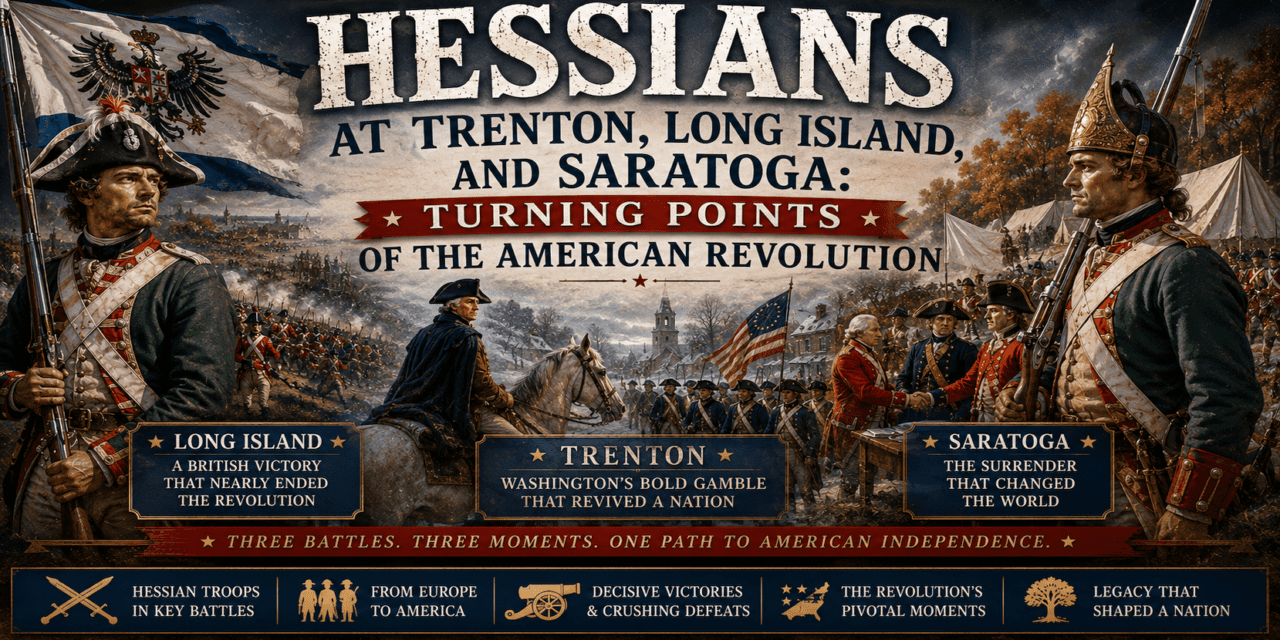
The story of the Hessians at Trenton is one of the most dramatic and important chapters of the American Revolution. From the crushing British victory at Long Island to George Washington’s daring attack at Trenton and the world-changing surrender at Saratoga, Hessian soldiers stood at the center of several decisive moments that shaped the future of the United States.
This article explores how German auxiliary troops fighting for the British Crown became deeply connected to the military, political, and psychological turning points of the Revolutionary War. Their battlefield discipline, combat experience, and role in key campaigns made them some of the most feared soldiers in North America during 1776 and 1777.
- The Second Article in the RetireCoast Hessians Series
- Why These Battles Mattered
- Continue the Full Hessians Series
- The Battle of Long Island and the Road to Trenton
- Hessian Camp Followers and Daily Military Life
- Hessians at Trenton and Washington’s Gamble
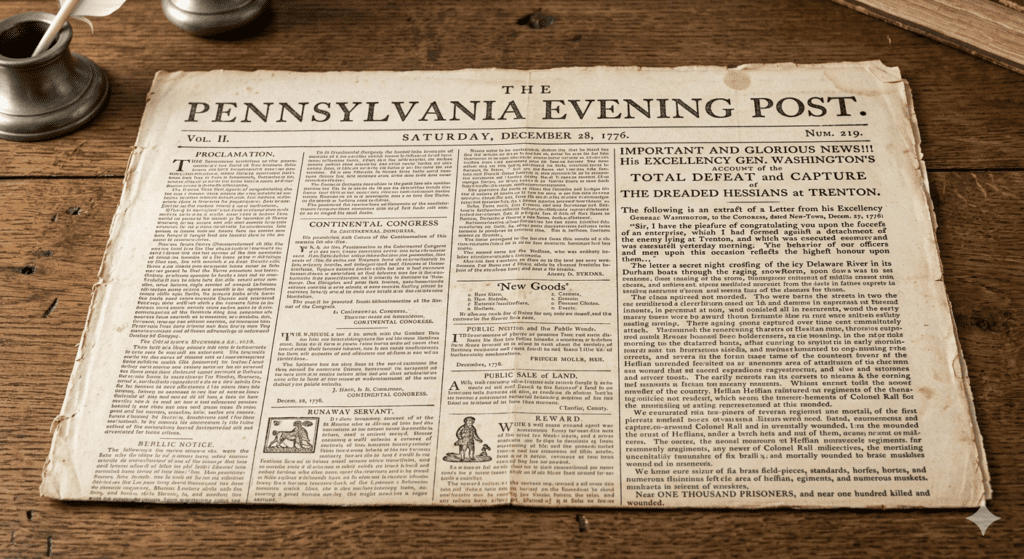
- Video presentation Pennsylvania Newspaper Account of Battle of Trenton
- The Other Side of the German Military Legacy: Baron von Steuben
- The Prussian Officer Who Helped Transform the Continental Army
- Benjamin Franklin’s Unusual Recruitment
- Valley Forge and the Rebirth of the Continental Army
- Bayonet Training and Battlefield Discipline
- Disease, Sanitation, and the “Blue Book”
- The Irony of German Military Influence
- Von Steuben Became an American
- Saratoga and the Collapse of Britain’s Northern Strategy
- The Battles of Saratoga
- The Hessian Prisoners of the “Convention Army”
- From Hessian Soldiers to Future Americans
- Refrences
- QUIZ
- FAQ
The Second Article in the RetireCoast Hessians Series
This article is the second installment in the RetireCoast 10-part series examining the Hessians in the American Revolution. The series follows the German soldiers who crossed the Atlantic as part of Britain’s war effort and eventually became connected to some of the most important events in early American history.
The complete series explores:
- The arrival of Hessian troops in America
- The Battle of Long Island
- The Hessians at Trenton
- Saratoga and Burgoyne’s campaign
- The elite Jägers
- Camp followers and military families
- Desertion and settlement in America
- German military culture
- Baron von Steuben and Prussian influence
- The long-term German-American legacy after the Revolution
Throughout this Hessians series, we will occasionally pause to examine where historical reality intersects with myth, legend, patriotic storytelling, and famous artwork. Many scenes from the American Revolution that people recognize today were shaped decades later by artists, writers, engravers, and storytellers who wanted to capture the emotion and meaning of the Revolution rather than produce exact documentary accuracy.
In many cases, the stories contain a core truth wrapped inside dramatic interpretation. The real events were often darker, colder, more chaotic, and far more human than the polished heroic images that later became famous.
Ultimately, however, the deeper purpose of these moments remains important. Whether every detail happened exactly as later paintings portrayed it or not, the American Revolution succeeded. The United States emerged from the conflict as a lasting bastion of freedom and a beacon to much of the world. By looking beyond the artwork and mythology, we can better understand the humanity, sacrifice, fear, courage, and hardship experienced by both Americans and the Hessians who fought during the Revolutionary War.
Why These Battles Mattered
Long Island nearly destroyed the Continental Army before the Revolution had fully begun. Trenton revived the American cause at the moment of near collapse, while Saratoga helped convince France to openly support the United States against Britain.
Together, these battles transformed the direction of the war. The Hessians at Trenton, Long Island, and Saratoga became part of a larger story about military power, survival, morale, immigration, and the creation of a new nation.
Continue the Full Hessians Series
Readers who want to explore the entire project can visit the RetireCoast Hessians series can select the hub or individual articles at the end of this article.
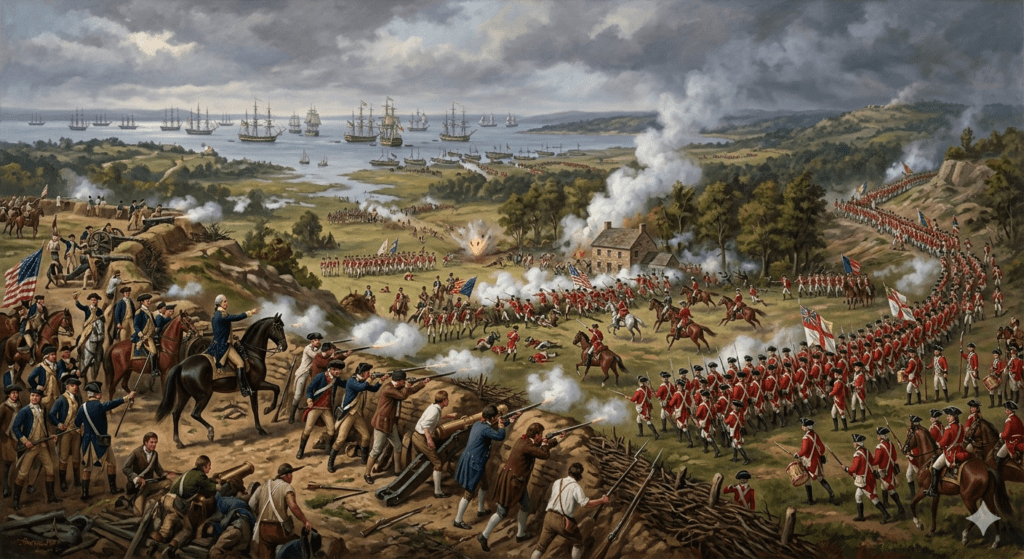
The Battle of Long Island and the Road to Trenton
Only days after the Hessians arrived on Staten Island, they became part of one of the largest military operations of the American Revolutionary War. British commanders, supported by German troops and the powerful British Navy, prepared to seize New York City and destroy George Washington’s Continental Army before the rebellion could gain further strength.
At the center of the British strategy was General William Howe, one of Britain’s most experienced commanders. Howe believed that if the British Army could capture New York and crush Washington’s forces in a decisive battle, the rebellion might collapse entirely.
Why New York Mattered
New York City offered enormous strategic value. Its deep harbor allowed the Royal Navy to operate freely, while the Hudson River created a potential dividing line between New England and the southern colonies.
The British military buildup around New York during the summer of 1776 was massive. Tens of thousands of British soldiers, German troops, artillery crews, sailors, camp followers, and support personnel crowded the harbor and surrounding areas.
One of the Largest Expeditionary Forces Britain Ever Sent
It was one of the largest expeditionary forces Britain had ever sent overseas. For American colonists watching British warships fill the waters around Staten Island and Long Island, the sight demonstrated the immense power of the British Empire.
The Hessian soldiers quickly proved themselves valuable to the British Army. Their discipline, training, and battlefield organization impressed British commanders who considered them reliable professional troops.
Many Hessian regiments had spent years drilling under harsh military systems in Europe. Precision marching, rapid maneuvering, and strict obedience to commanding officers were considered essential to survival.
The Battle of Long Island Begins
The campaign began in late August 1776 with the Battle of Long Island, sometimes called the Battle of Brooklyn. It became the first major engagement after the Declaration of Independence and remains one of the largest battles ever fought on American soil.
Washington positioned the Continental Army on Long Island, hoping to defend New York from British attack. However, British commanders used superior reconnaissance and Loyalist intelligence to identify weaknesses in the American defenses.
Hessian Troops Enter the Fight
British forces, including large numbers of Hessian troops, executed a flanking maneuver through the Jamaica Pass that caught many American forces by surprise. The fighting was fierce and chaotic.
Hessian soldiers advanced alongside British regulars against American positions while artillery thundered across the fields and wooded terrain of Long Island. Many American troops fought bravely, but the Continental Army lacked the battlefield experience of the British and German professional soldiers opposing them.
During the battle, Hessian troops gained a reputation among Americans for aggressive fighting and strict battlefield discipline. Patriot newspapers later exaggerated many stories about Hessian brutality, but the appearance of disciplined foreign soldiers deeply frightened many colonial civilians and militia forces.
Washington’s Entire Army Was Nearly Captured
The British victory at Long Island nearly trapped Washington’s entire army. Only a daring nighttime evacuation across the East River saved the Continental Army from destruction.
Under the cover of darkness, fog, and remarkable organization, Washington successfully withdrew thousands of soldiers, horses, cannons, and supplies to Manhattan. Although the Continental Army escaped, the campaign for New York had only begun.
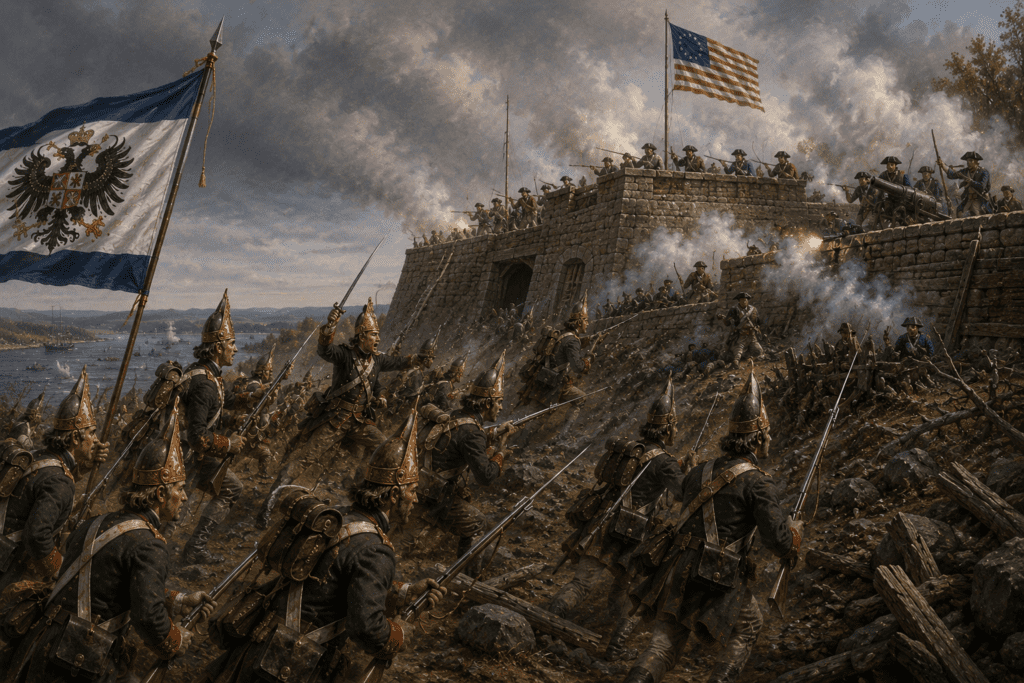
The British Capture New York
British forces soon occupied New York City, which would remain under British control for most of the war. The city became the military and political center of British operations in North America.
For the Hessians, the victory confirmed their importance within the British war effort. They had crossed an ocean to fight in a foreign land and had immediately participated in one of the most important military campaigns of the eighteenth century.
Yet despite their battlefield success, the war in America would soon prove far more difficult than many British commanders or German officers had expected. The Continental Army continued to retreat northward through Manhattan and into Westchester County.
New York City was captured by British forces early in the American Revolution and became one of the last major cities liberated at the end of the war. The Hessians played an extremely important role in the capture of New York and remained deeply tied to the city throughout nearly the entire conflict.
Because the British relied so heavily on German auxiliary troops, Hessian regiments made up a massive portion of New York City's occupying force from 1776 until Evacuation Day in November 1783. Hessian soldiers guarded fortifications, patrolled supply lines, manned defensive positions, and helped secure British control over Manhattan and the surrounding region.
After Hessian forces led the brutal and successful assault on Fort Washington in northern Manhattan during November 1776, the British renamed the captured position Fort Knyphausen in honor of Hessian General Wilhelm von Knyphausen. Hessian garrisons occupied the fort and surrounding defensive lines near modern-day Washington Heights for years, helping guard New York City against possible attacks by George Washington’s army advancing south from Westchester County.
The Road Toward Hessians at Trenton
Additional battles at Harlem Heights and White Plains further tested both the American forces and the German troops serving the British Crown. These campaigns would eventually set the stage for one of the most famous moments of the Revolution: the dramatic defeat of the Hessians at Trenton.
Hessian Camp Followers and Daily Military Life
A wide-angle, detailed historical recreation photograph of a bustling, muddy Hessian military encampment during the American Revolutionary War. Numerous women in eighteenth-century work clothes perform domestic tasks like washing and cooking in the foreground, interspersed with children and off-duty blue-coated soldiers.
In the background, rows of canvas tents, a large commander’s marquee, and covered wagons with horses fill the field. The ground is deeply churned and wet.
Behind every marching Hessian regiment stood a hidden army of wives, children, servants, laundresses, cooks, laborers, and support workers struggling to survive the hardships of the Revolutionary War.
Non-combatants and soldiers performed the essential daily labor needed to keep Hessian forces functioning in the field. The reality of military life included hand-stirred cauldrons, muddy encampments, wet laundry hanging beside tents, sickness, exhaustion, and endless logistical work.
These same camp systems followed Hessian troops through the New York campaign and eventually into New Jersey before the famous defeat of the Hessians at Trenton.
The complete story of Hessian camp followers, religion, military music, survival, battlefield families, Christmas traditions, disease, food preparation, and daily life during the American Revolution is explored in:
Hessians at Trenton and Washington’s Gamble
By December 1776, the American Revolution stood on the edge of disaster. Only months earlier, the Declaration of Independence had been celebrated across the colonies, but now the Continental Army was collapsing under defeat, exhaustion, disease, and expiring enlistments.
British forces had driven George Washington’s army out of New York, across New Jersey, and toward Pennsylvania. Many believed the rebellion was nearly finished.
The Hessians Played a Major Role in British Victories
German troops had helped secure New York City, participated in the campaigns across Manhattan and Westchester County, and fought in numerous engagements that steadily weakened American resistance. Their reputation as disciplined professional soldiers spread fear throughout the colonies.
Patriot newspapers often portrayed them as nearly unstoppable. The victories leading up to Hessians at Trenton made many Americans fear the Revolution itself might collapse.
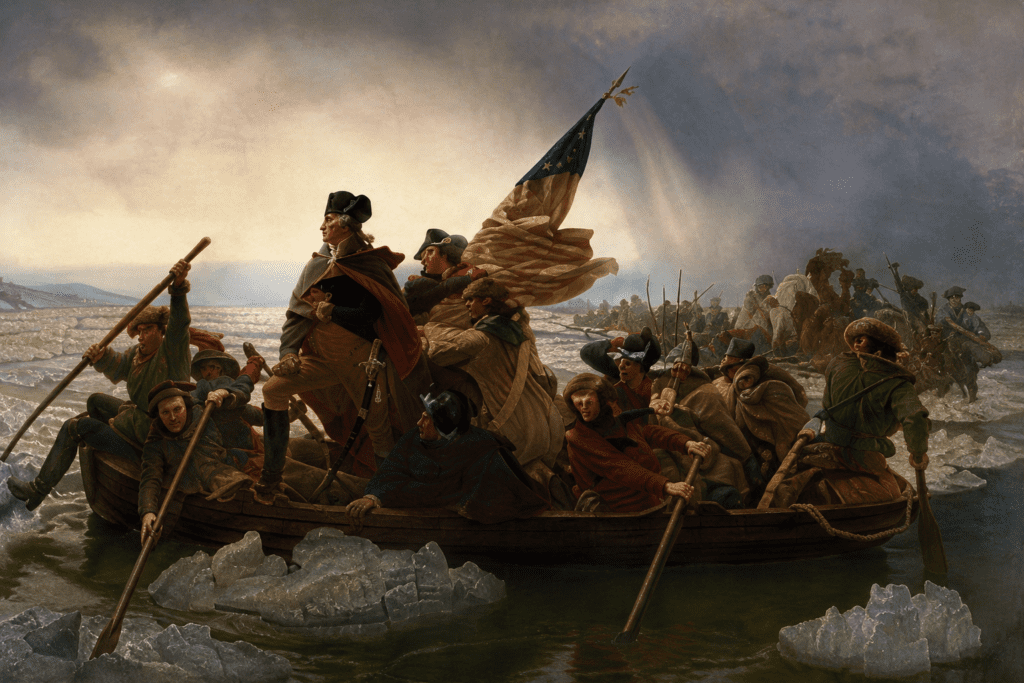
```htmlIf you are picturing Emanuel Leutze’s famous 1851 painting Washington Crossing the Delaware, now hanging in the Metropolitan Museum of Art, you are probably imagining a small boat crowded with exactly thirteen men, including George Washington himself.
However, Leutze was taking major artistic liberties. In reality, Washington was not dramatically posing in a tiny rowboat. The actual crossing that preceded the attack on the Hessians at Trenton was a massive military logistics operation carried out under brutal winter conditions.
Washington’s army crossed the Delaware River using enormous Durham boats, not small rowboats. These heavy-duty wooden cargo vessels normally hauled iron ore, timber, and freight downriver to Philadelphia.
- Length: Approximately 40 to 60 feet long
- Width: About 8 feet wide
- Design: Flat-bottomed with straight sides for cargo transport
- Capacity: 30 to 40 fully equipped soldiers plus crew
The Durham boats were operated by experienced New England watermen from Colonel John Glover’s 14th Continental Regiment of Marblehead, Massachusetts.
Using heavy oars and long “setting poles,” these skilled fishermen and sailors guided the overloaded boats through darkness, floating ice, and violent currents during the crossing that led to the attack on the Hessians at Trenton.
While Emanuel Leutze’s famous painting creates one of the most recognizable images in American history, the real crossing before the attack on the Hessians at Trenton likely looked far darker and more chaotic. Instead of a heroic pose in a small artistic boat, the actual scene involved massive cargo vessels packed with dozens of exhausted, shivering soldiers standing shoulder-to-shoulder while experienced New England mariners forced the heavy hulls through an ice-filled river during a violent winter storm.
The Hessian Garrison at Trenton
As winter approached, British commanders believed the campaign season had effectively ended. Rather than aggressively pursuing Washington across the Delaware River into Pennsylvania, British forces established a chain of winter outposts across New Jersey.
One of the most important of these garrisons sat at Trenton under the command of Colonel Johann Rall and consisted largely of Hessian soldiers. The Hessians at Trenton were not inexperienced troops.
Many had already fought in multiple engagements during the New York campaign and were considered capable professional soldiers. Yet the rapid pace of operations, poor weather, constant patrols, and widespread confusion across New Jersey created difficult conditions for everyone involved in the war.
Video presentation Pennsylvania Newspaper Account of Battle of Trenton
Watch this video to learn what was actually printed for distribution by a major newspaper at the time. The description is fascinating.
Surrender at Trenton
A wide-angle historical photograph of the surrender of Hessian troops at the Battle of Trenton in a snow-covered New Jersey town street. On the right, a large group of defeated Hessian soldiers in green coats and distinctive pointed brass hats kneel on the snow with hands raised.
They are being guarded by Continental Army soldiers in blue and brown coats with tricorn hats. On the left, American officers, including General Washington on horseback, supervise the disarming and collection of weapons.
Discarded hats, rifles, and equipment litter the snowy ground while a field cannon stands near a burning house in the background.
The Capture of the Hessians at Trenton
General George Washington supervised the dramatic surrender of nearly 900 Hessian auxiliary troops on the morning of December 26, 1776. After a surprise crossing of the Delaware River, the Continental Army overwhelmed the Hessians at Trenton in the snow-covered streets of New Jersey.
In this scene, Hessian soldiers kneel with hands raised while American officers direct the collection of muskets stacked in the foreground. The battlefield is littered with discarded gear and the smoke of conflict.
This decisive victory provided a critical boost to the morale of the American Revolution.
For Washington, however, the situation was desperate. The Continental Army was shrinking daily as enlistments expired.
Many famous nineteenth-century paintings show Colonel Johann Rall dramatically handing his sword to George Washington after the defeat of the Hessians at Trenton.
The historical reality was far more chaotic, violent, and tragic. Colonel Rall was actually shot from his horse and mortally wounded during the fighting in the streets of Trenton, leaving other officers to organize the surrender.
After Colonel Rall fell wounded, the remaining Hessian regiments became leaderless and were gradually surrounded by Continental Army forces.
The Hessians retreated into an orchard on the southeastern edge of Trenton. There, realizing they were trapped by American artillery and infantry while freezing rain caused many flintlock muskets to misfire, the officers ordered a surrender.
- Hessian colors were lowered
- Hats were placed on bayonets as signals of surrender
- Weapons were laid down in the orchard
- Colonel Josiah Parker received the surrendered swords and colors
While the Hessians at Trenton surrendered in the orchard, the dying Colonel Rall was carried away from the battlefield to the home of local merchant Stacy Potts.
Later that day, George Washington and General Nathanael Greene visited the wounded Hessian commander in his bedroom.
Rather than staging a dramatic battlefield surrender, Rall formally requested mercy and humane treatment for his captured soldiers. Washington agreed, and Rall died from his wounds the following night.
Much of the confusion comes from nineteenth-century romantic artwork. Painters and engravers loved the dramatic symbolism of a defeated commander personally surrendering his sword to George Washington. These scenes created emotional patriotic imagery rather than exact historical documentation.
Artist John Trumbull’s famous painting The Capture of the Hessians at Trenton presents a compromise between history and dramatic storytelling. The artwork shows Colonel Rall being carried by his men while Colonel Josiah Parker stands nearby holding the surrendered Hessian sword. Although the timing and details were compressed for artistic effect, the painting captures the emotional truth of the moment even if it was not an exact recreation of events.
Washington Faced Disaster
Morale had collapsed after months of retreat. Supplies were dangerously low, and many soldiers lacked adequate shoes, blankets, or winter clothing.
Without a dramatic victory, the Revolution itself might fail before the new year arrived.
Washington Planned One of the Boldest Attacks in American History
On the night of December 25, 1776, during a violent winter storm of snow, sleet, ice, and freezing rain, Washington led the Continental Army across the Delaware River into New Jersey. The crossing itself became legendary.
Soldiers struggled through darkness and brutal weather while transporting artillery, horses, wagons, and supplies across ice-filled waters. The march toward the Hessians at Trenton was equally punishing.
Many soldiers left bloody footprints in the snow due to worn-out shoes or bare feet wrapped in rags. Yet despite the conditions, the Continental Army pressed forward toward the Hessian garrison.
The Surprise Attack on the Hessians at Trenton
At dawn on December 26, American forces attacked. The surprise was devastating.
Although popular mythology long claimed the Hessians at Trenton were drunk from Christmas celebrations, modern historians largely reject this exaggeration. Colonel Rall and his men were likely exhausted rather than intoxicated.
Hessian troops had been conducting patrols, responding to militia activity, and operating under constant pressure for weeks.
Washington Achieved Complete Tactical Surprise
American forces quickly entered Trenton from multiple directions while artillery fired into the town streets. Hessian soldiers attempted to organize resistance, but confusion spread rapidly as Continental troops seized key positions.
Colonel Rall was mortally wounded during the fighting while trying to rally his men. Within a short time, the battle ended in a major American victory.
Roughly 900 Hessian soldiers were captured while others were killed or wounded. American casualties remained remarkably light.
Why Hessians at Trenton Changed the Revolution
Most importantly, the victory electrified the colonies and revived support for independence at the exact moment the Revolution appeared close to collapse. The Battle of Trenton became far more than a military victory.
It transformed the psychological course of the war. For the first time, many Americans realized that British forces and the Hessians at Trenton could be defeated in open combat.
Washington’s daring attack restored confidence in the Continental Army and encouraged new enlistments that helped keep the Revolution alive.
The Captured Hessians Encounter America
The Battle of Trenton also deeply affected the Hessians themselves. Many captured soldiers were marched into Pennsylvania where they encountered the large German-speaking communities that already existed throughout the colonies.
For some Hessian prisoners, Trenton became the beginning not merely of captivity, but of an entirely new life in America. Ironically, one of the greatest American victories of the Revolutionary War would eventually help many German soldiers decide that the colonies they had been sent to suppress might actually offer a better future than the rigid military societies they had left behind in Europe.
```html
The Hessians at Trenton were experienced German professional soldiers hired by Britain to help suppress the American Revolution. Their defeat by George Washington on December 26, 1776, shocked both the British and the colonies because the Hessians had gained a reputation as disciplined and highly effective troops during the New York campaign.
Yes. Hessian soldiers played a major role in the British capture and occupation of New York City during 1776. German regiments fought in key battles including Long Island and the assault on Fort Washington, while Hessian garrisons remained throughout New York for most of the Revolutionary War until Evacuation Day in 1783.
The victory over the Hessians at Trenton revived the collapsing American war effort after months of defeat and retreat. Washington’s successful surprise attack restored morale, encouraged new enlistments in the Continental Army, and proved that British and German professional soldiers could be defeated in battle.
The Other Side of the German Military Legacy: Baron von Steuben
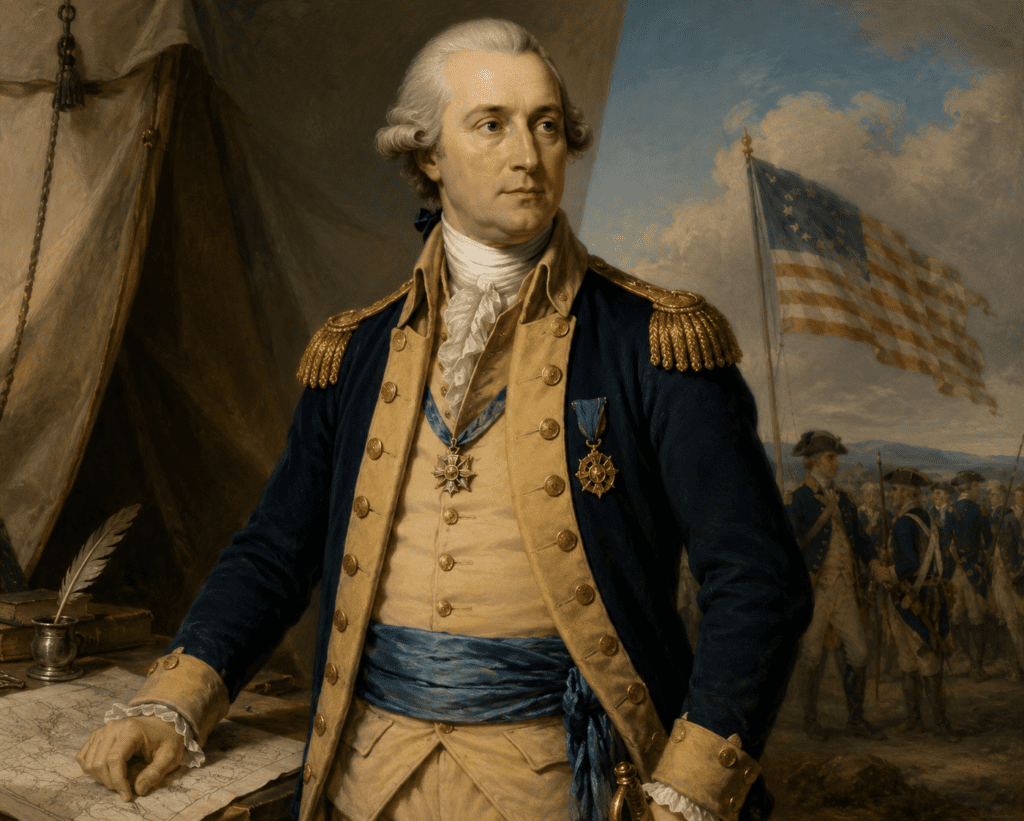
Portrait-style illustration of Baron Friedrich Wilhelm von Steuben wearing an eighteenth-century Continental Army uniform during the American Revolutionary War. The Prussian military officer stands beside campaign maps while American soldiers and an early American flag appear in the background.
The Prussian Officer Who Helped Transform the Continental Army
Baron Friedrich Wilhelm von Steuben brought Prussian military discipline and organization to the Continental Army at Valley Forge in 1778. His training methods, battlefield drills, sanitation reforms, and famous “Blue Book” transformed Washington’s struggling army into a more professional fighting force capable of challenging British and Hessian troops in open battle.
The American victory over the Hessians at Trenton demonstrated that British forces and German auxiliaries could be defeated. However, it also revealed something else to American leaders: the disciplined military systems of the German states possessed enormous value.
The British were not the only ones who recognized the effectiveness of Prussian and German military training.
Benjamin Franklin’s Unusual Recruitment
One of the most fascinating figures of the American Revolutionary War was Friedrich Wilhelm von Steuben. Although commonly remembered as a Prussian general who helped save the Continental Army, the truth is both more complicated and more remarkable.
Von Steuben had served under Frederick the Great in the Prussian army and gained deep knowledge of military organization, logistics, battlefield tactics, and discipline. By the time he met Benjamin Franklin in Paris, he was struggling financially and searching for opportunity.
Franklin recognized that the Continental Army desperately needed someone with formal European military training. Yet Franklin also understood Congress might ignore an unemployed former Prussian captain.
Franklin Enhanced Von Steuben’s Reputation
In one of the most ironic episodes connected to the Hessians at Trenton and the broader Revolutionary War, Franklin and his associates dramatically enhanced von Steuben’s credentials. They presented him to George Washington as a distinguished “Lieutenant General in the King of Prussia’s service.”
The embellishment introduction worked.
Valley Forge and the Rebirth of the Continental Army
When von Steuben arrived at Valley Forge in February 1778, the Continental Army faced conditions nearly as desperate as the dark days before the victory over the Hessians at Trenton.
Soldiers lacked proper clothing, discipline, organization, and consistent training. Disease spread throughout the camps while morale remained dangerously low.
Von Steuben immediately set to work transforming the army.
The “Model Company”
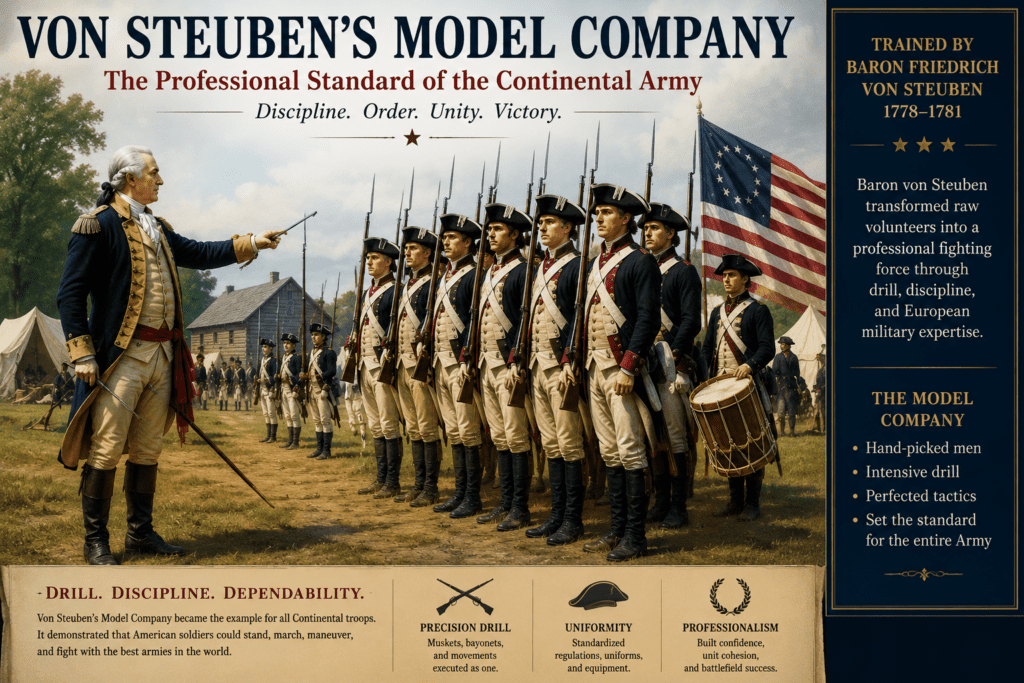
Instead of attempting to train thousands of men at once, he created what became known as the “Model Company.” He personally selected roughly one hundred soldiers and drilled them intensively until they mastered proper European military techniques.
Those men then spread throughout the army teaching the same methods to their regiments.
His approach shocked many Americans. In eighteenth-century Europe, aristocratic officers normally kept considerable social distance from ordinary soldiers.
Von Steuben ignored such traditions.
Training Alongside the Soldiers
He marched directly among the men, demonstrated drills personally, shouted commands in a mixture of German and French, and worked directly in the mud alongside common soldiers.
American troops quickly respected him because they could see that he understood military discipline at the highest level.
Bayonet Training and Battlefield Discipline
One of his most important contributions involved bayonet training. Before von Steuben’s arrival, many Continental soldiers viewed bayonets mainly as tools for cooking meat over campfires rather than battlefield weapons.
European armies treated bayonet attacks as devastating shock tactics capable of breaking enemy formations.
Von Steuben taught the Continental Army how to maneuver aggressively with bayonets, reload more efficiently, form battle lines rapidly, and maintain discipline under pressure.
These techniques dramatically improved American battlefield performance.
The Battle of Stony Point
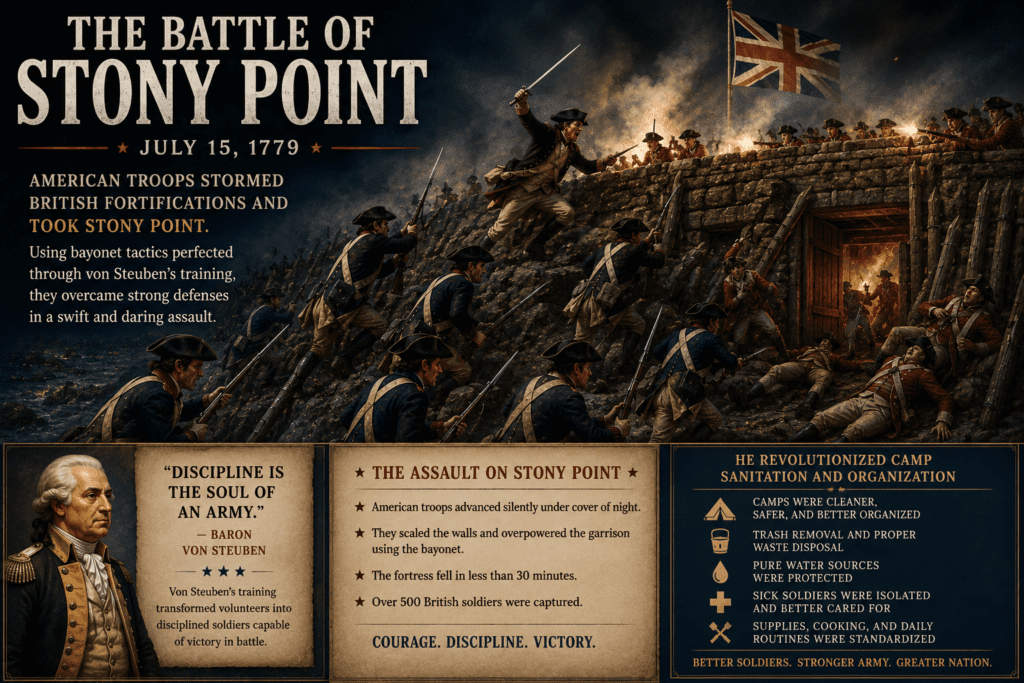
At the Battle of Stony Point in 1779, American troops successfully stormed British fortifications using bayonet tactics heavily influenced by von Steuben’s training.
He also revolutionized camp sanitation and organization.
Disease, Sanitation, and the “Blue Book”
Disease had become one of the deadliest enemies facing the Continental Army. Von Steuben reorganized military camps so kitchens, waste areas, and latrines were separated properly from living quarters and water supplies.
These seemingly simple changes sharply reduced deaths from disease and improved overall army health.
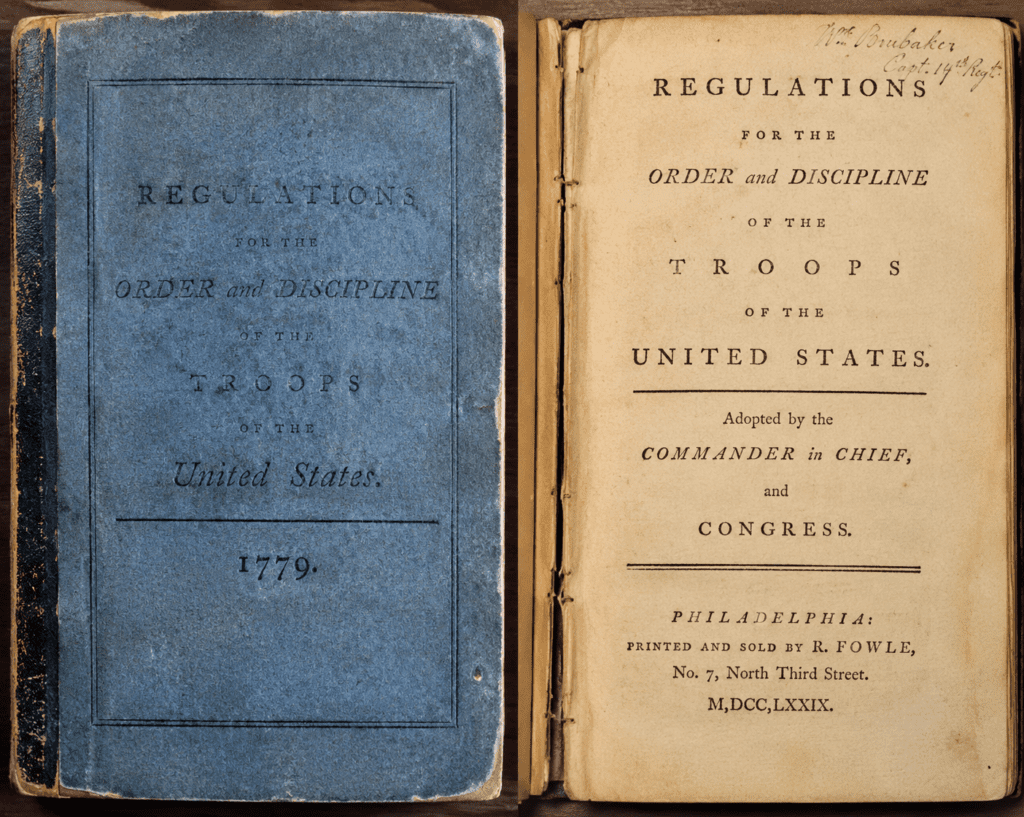
To preserve these reforms, von Steuben wrote the Regulations for the Order and Discipline of the Troops of the United States, commonly called the “Blue Book.”
Because he spoke little English, the manual passed through multiple translations before publication. Yet it became the foundational drill manual of the United States Army for decades.
The Irony of German Military Influence
At the exact moment the British Army relied heavily upon German military professionalism through Hessian auxiliaries, the Continental Army was simultaneously transformed by a Prussian officer applying many of the same European military principles to American troops.
In many ways, both sides of the Revolutionary War depended heavily upon German military culture.
The Hessians represented the old European system of monarchies leasing disciplined standing armies to allied powers. Von Steuben, meanwhile, helped adapt that same discipline into something entirely new: a professional American army capable of defending an independent republic.
Von Steuben Became an American
Unlike many foreign officers who returned to Europe after the war, von Steuben remained in the United States permanently. He became an American citizen, developed close friendships with revolutionary leaders, and spent his final years in New York.
Today he is remembered as one of the most important architects of the United States Army. It remains a remarkable legacy for a man whose original résumé had been partially invented in a Paris drawing room by Benjamin Franklin.
Saratoga and the Collapse of Britain’s Northern Strategy
If Hessians at Trenton helped revive the American Revolution, the Saratoga campaign of 1777 changed the entire course of the war.
The British government developed an ambitious strategy designed to divide the American colonies geographically and crush the rebellion in stages. British commanders believed New England represented the true center of revolutionary resistance.
If the colonies could be physically separated from one another, patriot coordination might collapse.
During the disastrous Saratoga campaign, General John Burgoyne publicly attempted to project confidence and maintain support for Britain’s northern strategy. Privately, however, his letters revealed growing frustration, fear, and concern about the worsening military situation surrounding his army.
On the same day he sent his official dispatches, Burgoyne wrote a second confidential letter to Lord Germain marked “Private.” In this communication, Burgoyne openly criticized the reliability and determination of many of the foreign troops serving under his command — specifically the Hessian and Brunswick German auxiliaries that formed a major portion of his army.
...[The Americans] are disciplined not only to fire with efficacy, but to stand regular engagements... their measures are executed with a secrecy and dispatch that are not to be equalled.
Wherever the King's forces point, militia, to the amount of three or four thousand, assemble in twenty-four hours... they hang like a gathering storm upon my left.”
The most remarkable part of the letter was not simply Burgoyne’s criticism of the Hessians and Brunswick troops. It was his reluctant admiration for the American forces fighting against him.
Burgoyne acknowledged that the Continental Army and militia had evolved into a far more capable military force than many British leaders expected. He specifically praised the Americans for their discipline, secrecy, speed of movement, and ability to rapidly mobilize thousands of militia fighters against British operations.
When Burgoyne returned to England on parole in 1778, Parliament refused to grant him a formal hearing to defend his actions during the Saratoga campaign.
In response, Burgoyne published these dispatches word-for-word in his 1780 defense titled A State of the Expedition from Canada. The publication exposed both the internal failures of Britain’s strategy and the growing realization among British commanders that the American rebellion had become a far more dangerous war than London originally believed.
Britain’s Plan to Control the Hudson River
The plan focused on controlling the Hudson River corridor.
General John Burgoyne would lead a powerful British army southward from Canada through New York while other British forces moved north from New York City. Together they would isolate New England from the middle and southern colonies.
A major portion of Burgoyne’s army consisted of German troops from Brunswick and other Hessian contingents.
Hessian and Brunswick Troops in Burgoyne’s Army
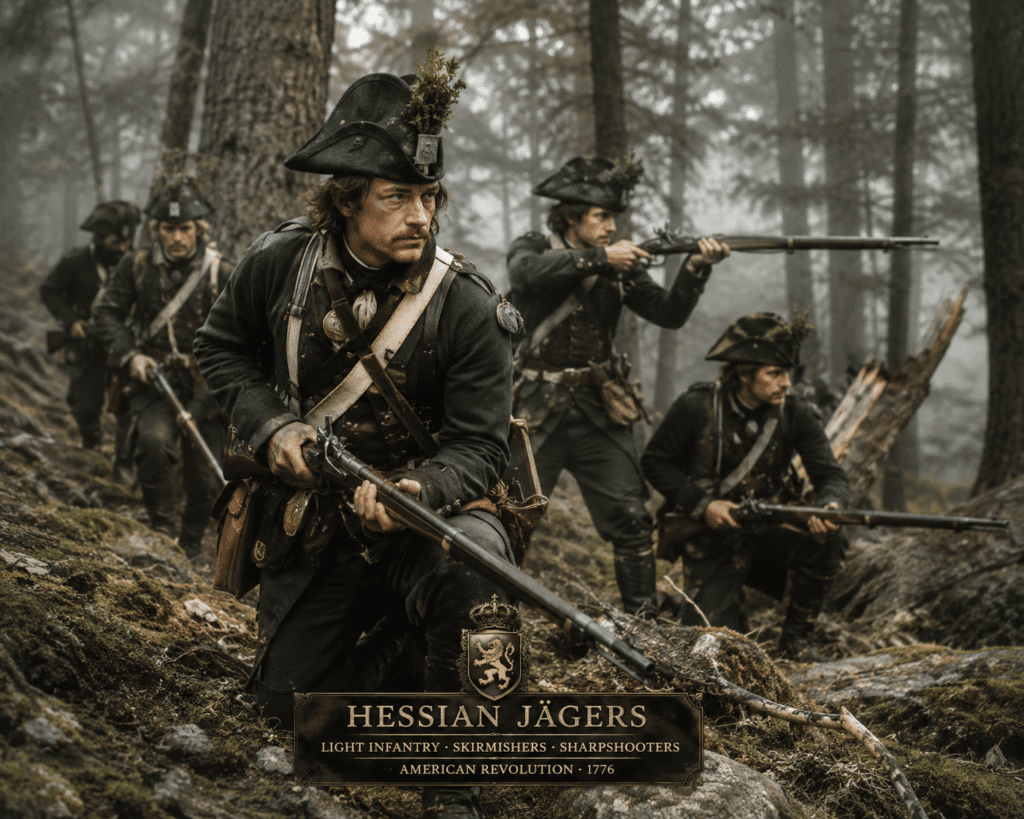
These soldiers represented some of the most disciplined units in the expedition. They included infantry regiments, artillery crews, engineers, and specialized Jäger troops trained for reconnaissance and woodland combat.
British commanders trusted the Germans heavily because of their professionalism and battlefield reliability.
At first, the campaign appeared successful.
The Capture of Fort Ticonderoga
Burgoyne’s army captured Fort Ticonderoga during the summer of 1777, shocking many Americans who believed the fortress nearly impregnable.
Yet as the British and Hessian forces pushed deeper into the wilderness of upstate New York, problems rapidly multiplied.
The American frontier proved brutally difficult for European armies.
Wilderness Warfare Challenges European Armies
Dense forests, rough roads, swamps, rivers, and long supply lines slowed the British advance to a crawl. American militia units constantly harassed the army, cutting off supplies, ambushing patrols, and destroying transportation routes.
Every mile southward became more dangerous.
German troops found themselves operating in terrain completely unlike the formal battlefields of Europe.
The Jägers Adapted Better Than Many Troops
The Jägers (German for “Hunter”)adapted better than many regular troops because they were trained for skirmishing and irregular warfare. Wearing green uniforms rather than the bright blue coats of line infantry, these elite German riflemen often served as scouts, sharpshooters, and screening forces ahead of the main army.
Nevertheless, Burgoyne’s overall situation deteriorated steadily.
Disaster at the Battle of Bennington
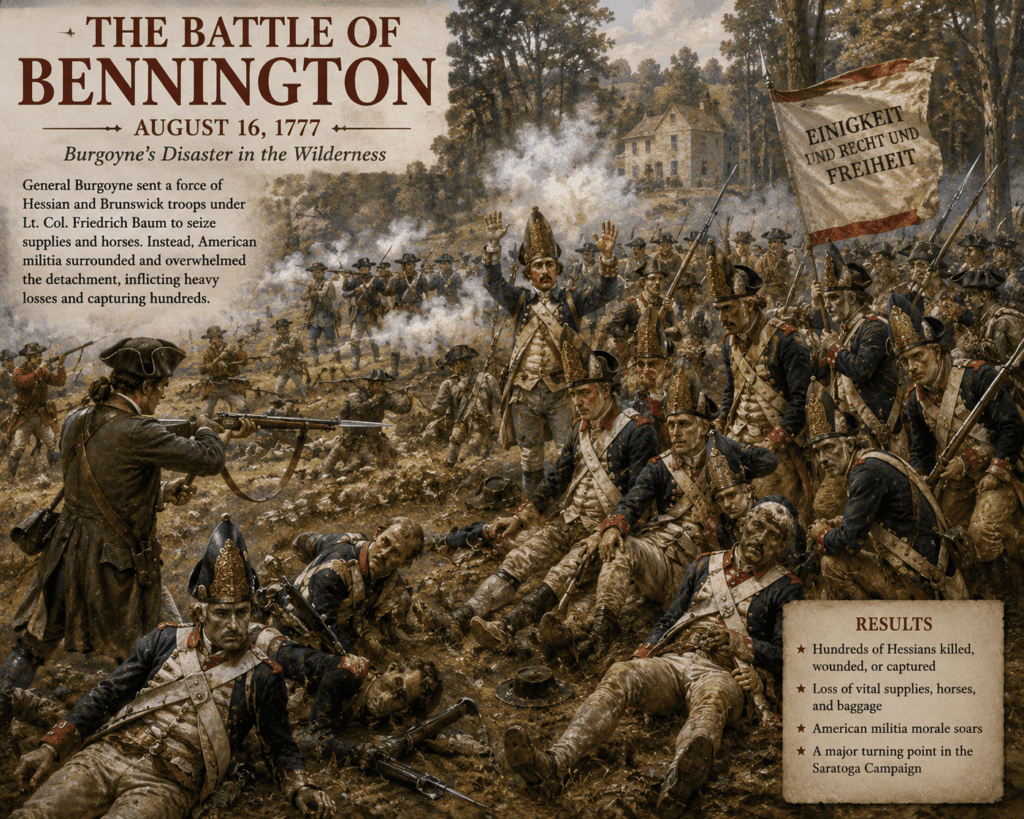
One of the campaign’s most disastrous moments occurred at the Battle of Bennington during August 1777.
Burgoyne sent a force heavily composed of Hessian and Brunswick troops under Lieutenant Colonel Friedrich Baum to seize supplies and horses in present-day Vermont.
Instead, American militia forces surrounded and overwhelmed the detachment.
The Defeat Shocked Burgoyne’s Army
The defeat at Bennington proved devastating. Hundreds of German troops were killed, wounded, or captured while Burgoyne lost desperately needed supplies, transportation animals, and manpower.
The battle also energized American militia recruitment across New England.
As Burgoyne continued southward, American forces under General Horatio Gates and Benedict Arnold gathered near Saratoga along the Hudson River.
There the campaign culminated in two major engagements collectively known as the Battles of Saratoga.
The Battles of Saratoga
The fighting was intense and costly.
German artillery units fought effectively throughout the campaign while Hessian infantry repeatedly held difficult positions under heavy American attack.
Yet Burgoyne’s army was increasingly exhausted, isolated, and surrounded by growing numbers of Continental and militia forces.
Burgoyne Finally Surrenders
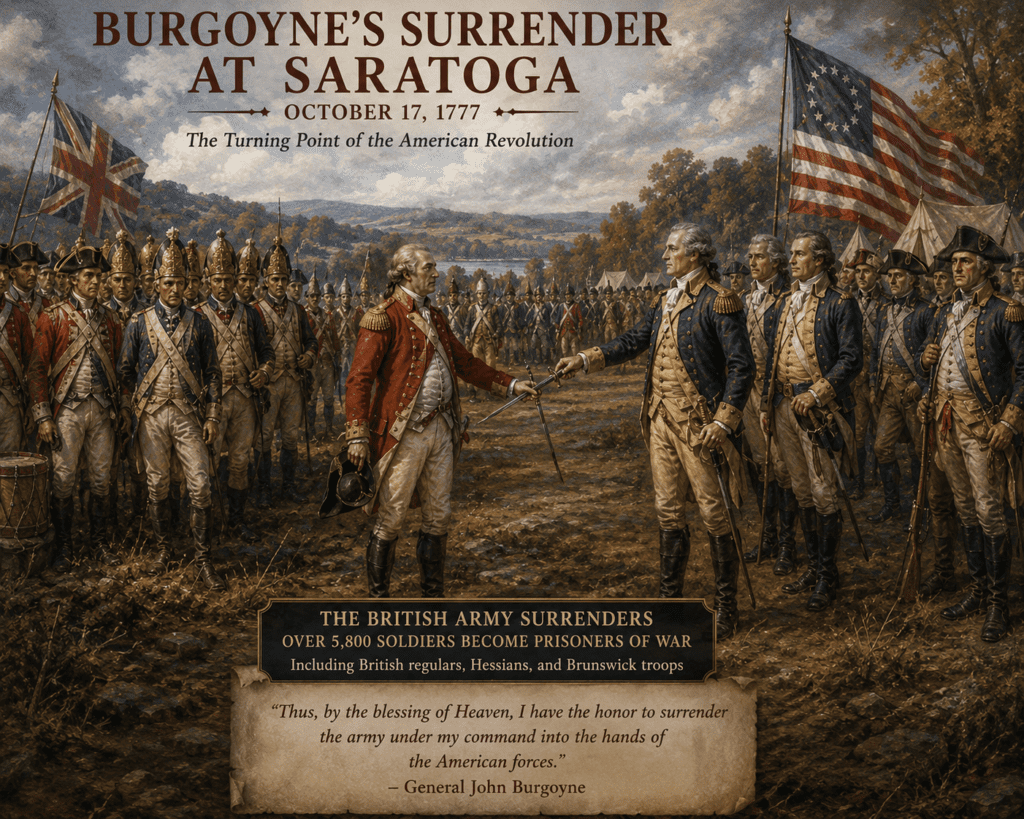
Finally, during October 1777, Burgoyne surrendered his army.
The surrender at Saratoga became one of the most important turning points of the entire American Revolutionary War.
For the first time, a major British field army had been forced to capitulate completely.
Thousands of British and German soldiers became prisoners of war.
Saratoga Changed the Entire War
The defeat stunned Europe and convinced France that the American rebellion had a genuine chance of success.
French entry into the war transformed the Revolution from a colonial rebellion into a global conflict involving multiple European powers.
If Hessians at Trenton restored American hope, Saratoga convinced foreign powers that Britain could actually lose the war.
The Hessian Prisoners of the “Convention Army”
For the Hessian and Brunswick soldiers captured at Saratoga, however, the surrender marked the beginning of an entirely different ordeal.
These prisoners became part of what was known as the “Convention Army.”
Over the next several years, thousands of German troops were marched through Massachusetts, Pennsylvania, Maryland, and eventually Virginia under difficult conditions.
Hessian Prisoners Encounter German-America
During these long movements, many Hessians encountered the thriving German-American communities that already existed throughout the colonies.
For some prisoners, the experience changed their lives forever.
Instead of returning to the rigid military systems of Europe, many Hessians began imagining a future in America.
A New Future in America
They discovered German-speaking towns, opportunities for land ownership, and communities where they could disappear into civilian life almost unnoticed.
Hundreds deserted during these years of captivity and relocation.
Some slipped quietly into the forests surrounding prison camps. Others accepted work from German-American farmers desperate for labor.
Many simply blended into Pennsylvania German communities where their language, religion, and customs already felt familiar.
From Hessian Soldiers to Future Americans
Ironically, one of Britain’s greatest military disasters also accelerated the transformation of many Hessian soldiers into future Americans.
The same German troops who fought Britain’s battles at Long Island, Saratoga, and other campaigns increasingly found themselves drawn toward permanent life in the colonies.
For many captured soldiers, America eventually became more than a battlefield.
It became home.
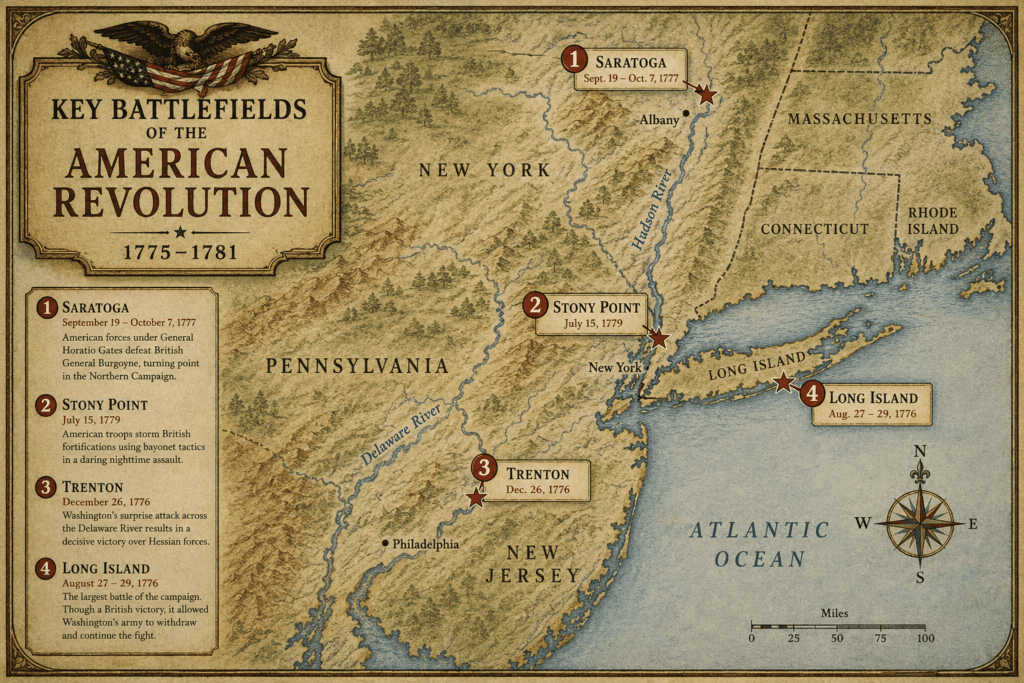
The battles of Long Island, Trenton, Saratoga, and Stony Point reveal how deeply the Hessians became connected to the turning points of the American Revolution. Yet these famous campaigns are only part of the larger story.
The complete RetireCoast 10-part series explores the German soldiers who fought for Britain, the elite Hessian Jägers, battlefield tactics, camp followers, military life, immigration into America, and the long-term German-American legacy created by the Revolutionary War.
Article three explores the feared Hessian Jägers — the elite German light infantry often compared to the special forces of the eighteenth century. Discover their rifles, woodland tactics, reconnaissance missions, battlefield effectiveness, and why American soldiers respected and feared them throughout the Revolutionary War.
Refrences
The RetireCoast Hessians in the American Revolution series draws from battlefield organizations, museum resources, genealogy collections, military archives, and historical research focused on German soldiers, prisoners, settlers, and families connected to the Revolutionary War.
- FamilySearch — Hessian Soldiers
- Franklin & Marshall College Archives — Johannes Schwalm Historical Association Collection
- FamilySearch Catalog — Journal of the Johannes Schwalm Historical Association
- Journal of the American Revolution — The Hessians: Journal of the Johannes Schwalm Historical Association
QUIZ
Test your knowledge about the Hessians at Trenton, the Battle of Long Island, Saratoga, Baron von Steuben, and the turning points of the American Revolution.
A. It ended the Revolutionary War immediately
B. It revived American morale and support for the Revolution
C. It captured New York City
D. It forced Britain to surrender
A. Saratoga
B. Bennington
C. Long Island
D. Yorktown
A. Naval warfare
B. Cavalry charges
C. Woodland scouting and sharpshooting
D. Operating siege cannons
A. Trenton
B. Saratoga
C. Lexington
D. Bunker Hill
A. Canoes
B. Small fishing skiffs
C. Durham cargo boats
D. British naval barges
A. Wilhelm von Knyphausen
B. Friedrich Baum
C. Johann Rall
D. Baron von Steuben
A. They were immediately exchanged back to Britain
B. They joined the Royal Navy
C. Many eventually settled in America
D. They were transported to Canada
A. A Hessian artillery unit
B. A hand-picked Continental Army training unit
C. A British engineering corps
D. A Loyalist militia regiment
1-B |
2-C |
3-C |
4-B
5-C |
6-C |
7-C |
8-B
FAQ
Why were the Hessians at Trenton?
The Hessians at Trenton were German auxiliary troops hired by Britain to help fight the American Revolution. The Trenton garrison consisted primarily of Hessian regiments under Colonel Johann Rall and formed part of Britain’s winter defensive line across New Jersey during late 1776.
Were the Hessians really drunk during the Battle of Trenton?
Probably not. Modern historians generally reject the popular myth that the Hessians at Trenton were heavily intoxicated from Christmas celebrations. Most evidence suggests the soldiers were exhausted from constant patrols, poor weather, militia attacks, and operational stress rather than drunkenness.
Why was Saratoga considered a turning point in the American Revolution?
The American victory at Saratoga convinced France that the United States had a realistic chance of defeating Britain. French military and naval support transformed the Revolution into an international war and became one of the most important factors leading to eventual American independence.
What happened to the Hessian prisoners after Saratoga?
Thousands of captured German troops became part of the “Convention Army” and were marched through several American colonies under guard. During these years, many Hessians encountered German-speaking communities and eventually decided to remain in America rather than return to Europe after the war.
Who were the Hessian Jägers?
The Hessian Jägers were elite German light infantry soldiers trained in scouting, sharpshooting, woodland combat, and reconnaissance. Wearing green uniforms instead of traditional blue Hessian coats, they were among the most respected and feared troops serving Britain during the Revolutionary War.
How did Baron von Steuben help the Continental Army?
Baron von Steuben introduced European military discipline, battlefield drills, sanitation reforms, and bayonet tactics to Washington’s army at Valley Forge. His training system helped transform the Continental Army into a more professional fighting force capable of confronting British and Hessian troops in open battle.
Did many Hessians stay in America after the Revolutionary War?
Yes. Thousands of Hessian soldiers eventually remained in North America after the war. Some deserted during the conflict while others settled permanently after peace was declared, especially within German-speaking communities in Pennsylvania and surrounding colonies.
Why did Britain hire German troops during the American Revolution?
Britain lacked enough soldiers to fight a large overseas war against the American colonies and therefore hired auxiliary troops from several German states, especially Hesse-Kassel. These troops, commonly called “Hessians,” provided experienced infantry, artillery crews, and specialized units that became a major part of Britain’s war effort in America.
The Complete RetireCoast Historical Series
Discover more from RetireCoast.com
Subscribe to get the latest posts sent to your email.