Last updated on June 1st, 2026 at 03:41 am
Colonial Economy Simulator: Exploring the Hidden Economy of the American Revolution
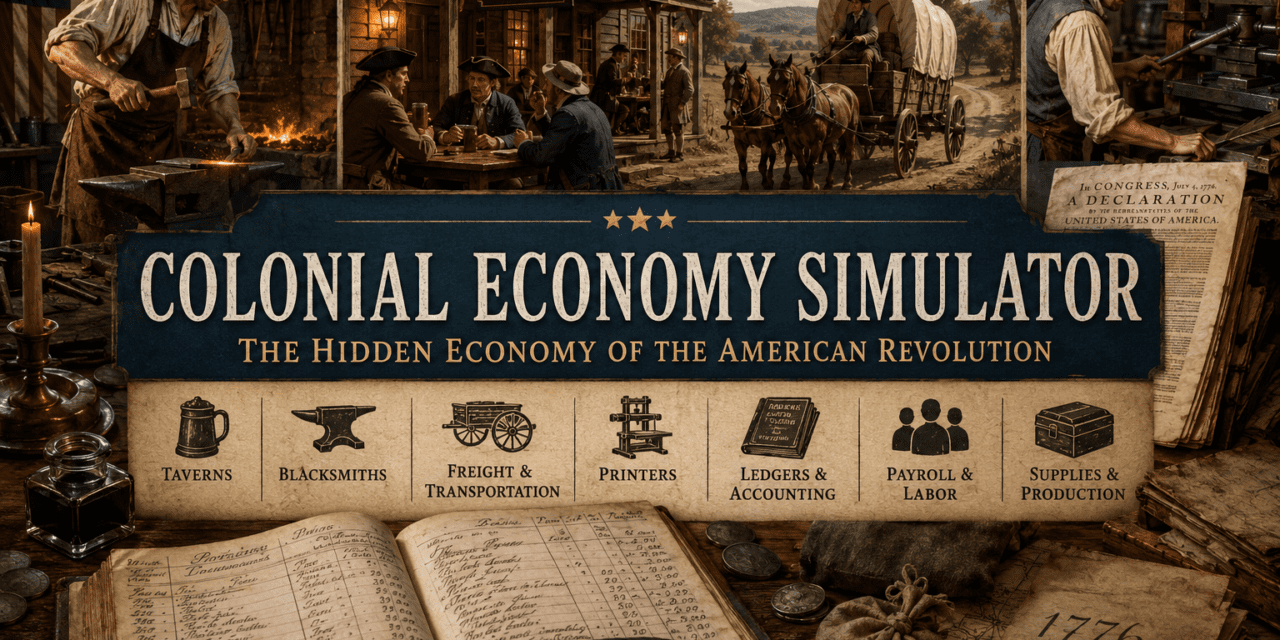
As part of the ongoing RetireCoast United States Semiquincentennial series commemorating America’s 250th Anniversary, we are pleased to announce the launch of our new Colonial Economy Simulator Hub — a growing ecosystem of educational tools designed to help readers explore the hidden business and economic systems that helped support the American Revolution.
Much of Revolutionary War history focuses on battles, generals, muskets, and political speeches. Those subjects are critically important, but behind every military victory stood an enormous economic machine powered by ordinary colonists struggling to survive during one of the most unstable periods in American history.
The Revolution depended upon:
- blacksmiths forging tools and military hardware,
- tavern owners housing travelers and militia,
- printers producing newspapers and revolutionary pamphlets,
- freight operators hauling supplies across muddy colonial roads,
- merchants extending risky credit,
- laborers working in ironworks and workshops,
- and businessmen maintaining handwritten ledgers to track costs, inventory, payroll, transportation, and debt.
Without this hidden economy, the Revolution may not have succeeded.
That reality inspired the creation of the Colonial Economy Simulator ecosystem.

- Colonial Economy Simulator: Exploring the Hidden Economy of the American Revolution
- The American Revolution Was Also an Economic Crisis
- Why Colonial Ledgers Were So Important
- The Colonial Economy Simulator Ecosystem
- Colonial Wagon Freight Estimator
- Colonial Tavern Profit Ledger
- Colonial Blacksmith Production Estimator
- Musket Production Cost Tool
- Colonial Printer’s Ink & Ledger Calculator
- 1776 Currency Equivalent Calculator
- Colonial Payroll Ledger
- Colonial Economy Simulator Video Presentation
- The Revolution Depended on Supply Chains
- Inflation and Financial Chaos During the Revolution
- Ordinary Workers Helped Win Independence
- The Economy of Independence
- Hidden Risks of Running a Colonial Business
- Lessons for Modern Readers
- Historical Education Through Interactive Tools
- America’s Entrepreneurial Spirit Began Early
- The Hidden Economy Behind Liberty
- Explore the Colonial Economy Simulator Ecosystem
- Video presentation: Starting a business in 1776
- Historical Sources Behind the Colonial Economy
- QUIZ
- FAQ
Rather than simply reading about colonial commerce, visitors can now interact with tools that demonstrate how businesses may have operated in 1776. These simulations help modern readers better understand the complexity of transportation, accounting, labor management, manufacturing, and supply chains during the Revolutionary period.
The Colonial Economy Simulator Hub includes tools such as:
- wagon freight estimators,
- tavern profit ledgers,
- blacksmith production estimators,
- musket production cost tools,
- colonial printing calculators,
- payroll ledgers,
- and 1776 currency conversion systems.
These tools are inspired by the types of handwritten records, journals, ledgers, and accounting systems used throughout colonial America.
The purpose is not to create a perfect digital recreation of every colonial bookkeeping practice, but rather to help readers place themselves into the shoes of a 1776 business owner attempting to survive inflation, shortages, transportation delays, war disruption, labor challenges, and economic uncertainty.
This new simulator ecosystem expands the educational mission of the RetireCoast America’s 250th Anniversary series by exploring a part of the Revolution that is often overlooked — the economic infrastructure that helped hold the colonies together during wartime.
[hessian_series_directory]
As America approaches the 250th Anniversary of independence, understanding the economic realities behind the Revolution helps provide a deeper appreciation for the resilience, innovation, and determination of the people who built the foundations of the United States.
The Colonial Economy Simulator Hub invites readers to step into that world and experience the practical side of Revolutionary America through interactive exploration and historical business simulations.
The simulator ecosystem allows modern readers to explore the economy of 1776 through the eyes of:
- blacksmiths,
- printers,
- tavern owners,
- merchants,
- freight operators,
- payroll managers,
- military suppliers,
- and colonial businessmen.
These tools are inspired by the kinds of handwritten ledgers, journals, inventory books, and transaction records that existed throughout colonial America.
The result is a fascinating educational system that helps modern readers better understand the true complexity of the Revolutionary period.
The American Revolution Was Also an Economic Crisis
The colonies in 1776 faced enormous economic disruption.
Trade routes were unstable. British blockades threatened ports and shipping lanes. Imported goods became difficult to obtain. Currency systems were chaotic. Inflation surged. Credit markets became unreliable. Entire communities were forced to improvise solutions simply to survive.
Many colonial businesses operated in an environment of constant uncertainty.
Colonial Merchants Faced Daily Risks
A blacksmith might not know when iron shipments would arrive.
A printer might struggle to obtain paper or ink.
A tavern owner could suddenly find themselves housing militia groups or military officers without guaranteed payment.
A merchant extending credit risked losing everything if customers fled, died in war, or defaulted due to economic collapse.
Even simple transportation became dangerous and expensive.
Transportation Was Primitive
Roads were narrow, muddy, and poorly maintained. Freight wagons frequently broke down. Horses became exhausted or injured. Banditry and wartime disruption increased the danger of travel.
Weather alone could delay deliveries for weeks.
Every transaction carried uncertainty.
In many ways, the Revolutionary economy resembled a modern emergency economy operating under wartime conditions.
Why Colonial Ledgers Were So Important
Today, businesses rely on:
- accounting software,
- cloud storage,
- digital banking,
- spreadsheets,
- and automated inventory systems.
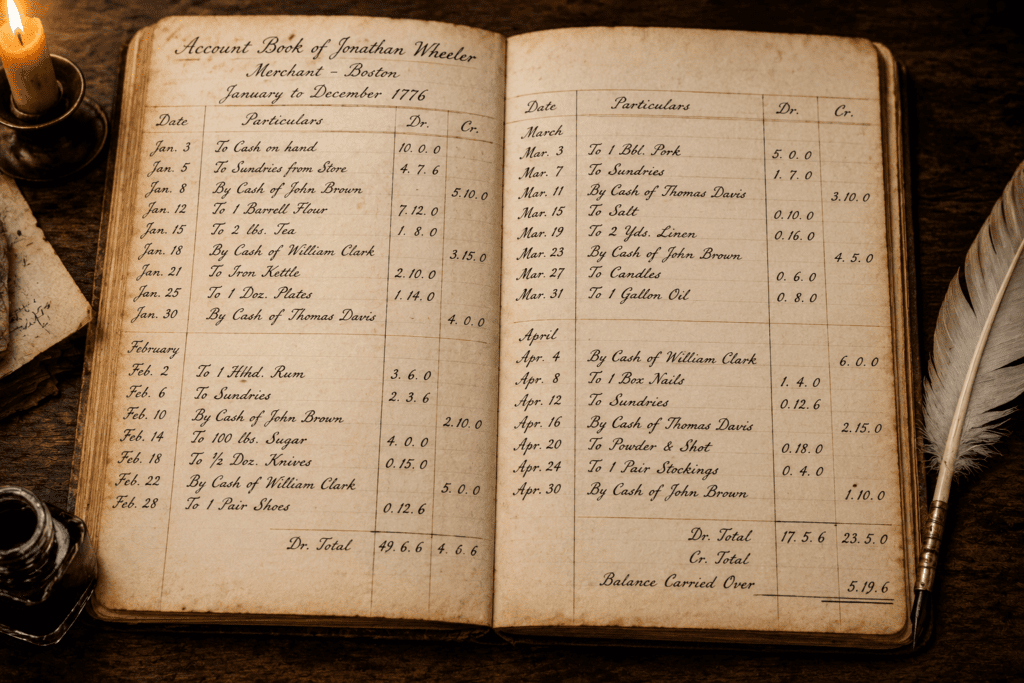
In 1776, nearly everything depended upon handwritten records.
Ledgers were essential to survival.
What Colonial Businesses Tracked
Colonial businessmen tracked:
- inventory,
- labor,
- wages,
- transportation costs,
- military contracts,
- food supplies,
- customer balances,
- debts,
- taxes,
- barter exchanges,
- commodity prices,
- and foreign currencies.
These records were often maintained manually by candlelight using quill pens and ink.
Errors could be disastrous.
One Mistake Could Cause Major Problems
A missing shipment of gunpowder or food might cripple a militia operation. A payroll mistake could create unrest among workers or soldiers. A transportation error might prevent desperately needed supplies from reaching military units.
The Colonial Economy Simulator ecosystem helps modern readers understand how dependent the Revolution truly was upon logistics and recordkeeping.
The Colonial Economy Simulator Ecosystem
The ecosystem consists of several specialized tools, each exploring a different sector of the colonial economy.
Together they create a broader picture of how Revolutionary America actually functioned behind the scenes.
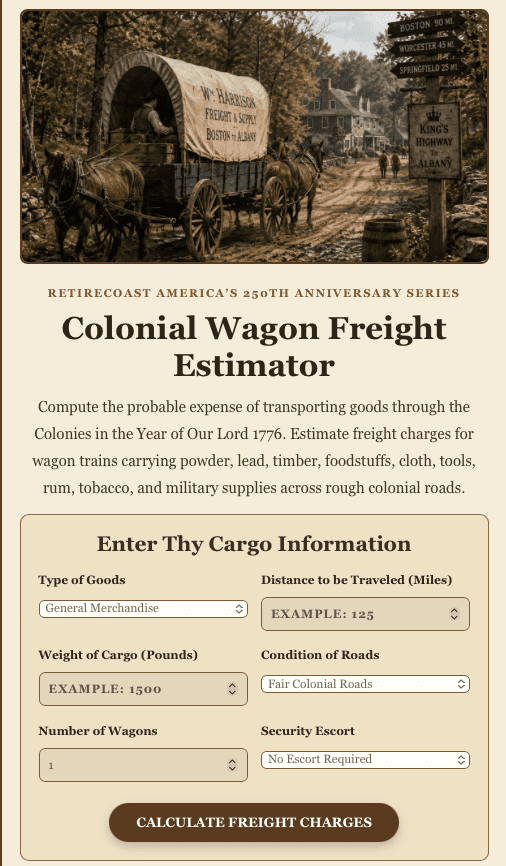
Colonial Wagon Freight Estimator
Transportation was one of the greatest challenges of the Revolutionary era.
Colonial roads were often muddy, narrow, poorly maintained, and dangerous. Freight wagons became the lifeline of the economy, carrying everything from flour and rum to cannon parts and gunpowder.
The Colonial Wagon Freight Estimator demonstrates the immense logistical burden of moving goods across early America.
What the Tool Demonstrates
The tool explores factors such as:
- distance,
- wagon capacity,
- horse requirements,
- terrain,
- labor,
- weather conditions,
- and supply costs.
A shipment that might take a few hours today could require days or weeks in 1776.
Why Local Production Became Critical
This helps modern readers understand why local production mattered so much during the Revolution. Colonists often could not depend upon long-distance imports.
Communities needed local blacksmiths, local printers, local mills, and local merchants because transportation was expensive, slow, and unreliable.
Related tool:
Colonial Tavern Profit Ledger
Taverns played a much larger role in colonial America than most people realize.
They were not merely places to drink ale.
Taverns Served Multiple Purposes
Taverns served as:
- inns,
- restaurants,
- meeting halls,
- recruiting stations,
- political discussion centers,
- mail stops,
- and business hubs.
Many revolutionary discussions occurred inside taverns.
Travelers exchanged information. Merchants negotiated contracts. Military officers arranged logistics. Political organizers spread revolutionary ideas.
Understanding Tavern Economics
The Tavern Profit Ledger explores the economics of running a colonial tavern.
The tool estimates revenues from:
- food,
- ale,
- lodging,
- travelers,
- and events,
while also accounting for:
- shortages,
- taxes,
- labor,
- spoilage,
- and supply costs.
Wartime Business Challenges
The simulation reveals how difficult it could be to maintain profitability during wartime disruption.
Tavern owners were often balancing patriotism against financial survival.
Related tool:
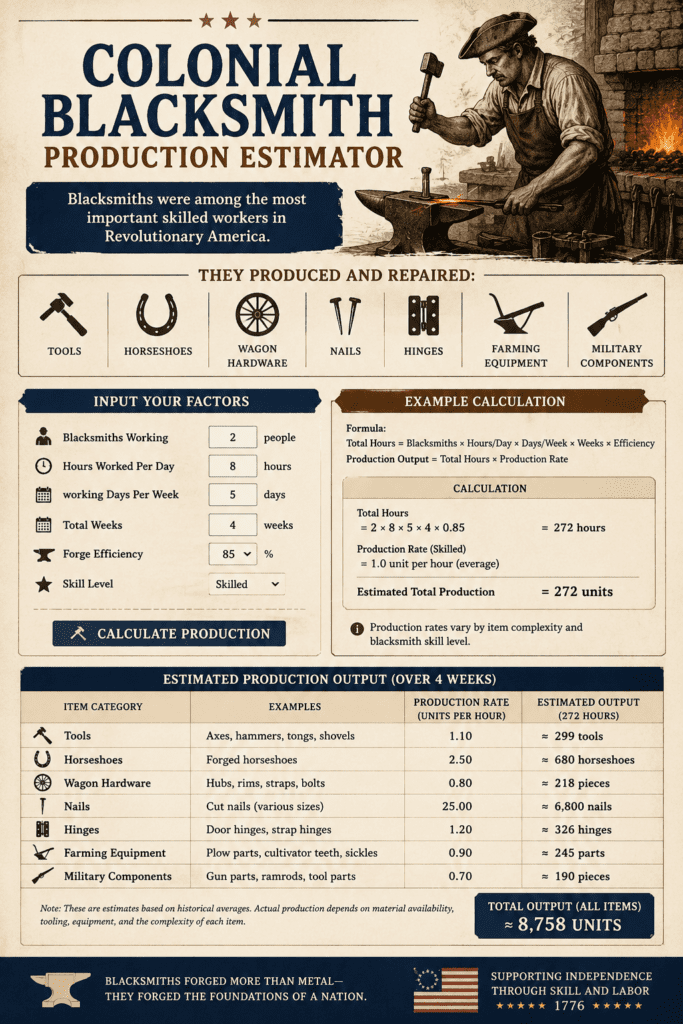
Colonial Blacksmith Production Estimator
Blacksmiths were among the most important skilled workers in Revolutionary America.
They produced and repaired:
- tools,
- horseshoes,
- wagon hardware,
- nails,
- hinges,
- farming equipment,
- and military components.
Without blacksmiths, the economy would have stalled.
Iron Production Was Difficult
The Colonial Blacksmith Production Estimator demonstrates the enormous labor and material requirements involved in colonial metalworking.
Forges required:
- charcoal,
- skilled labor,
- transportation,
- water power,
- and constant maintenance.
Some major facilities employed hundreds of workers.
James Hunter’s Rappahannock Forge
One example was James Hunter and his famous Rappahannock Forge in Virginia, which became an important supplier of military materials during the war.
The simulation demonstrates how difficult it was to maintain consistent production in an unstable wartime environment.
Related tool:
Musket Production Cost Tool
Firearms manufacturing represented one of the greatest industrial challenges of the Revolutionary period.
What Was Required to Build Muskets
Producing muskets required:
- iron,
- hardwood,
- skilled gunsmiths,
- charcoal,
- transportation,
- precision labor,
- and supporting materials.
The Musket Production Cost Tool explores how expensive and labor-intensive weapons production truly was.
Colonial Weapons Manufacturing Was Complex
Many Americans today assume colonial gunsmithing resembled a small artisan trade.
In reality, wartime musket production became a large-scale industrial effort requiring coordinated labor and material management.
Weapons Were a Strategic Priority
The tool demonstrates why weapons manufacturing became such a major strategic priority during the Revolution.
Related tool:
Related reading:
Colonial Printer’s Ink & Ledger Calculator
Printers were among the most influential economic and political actors of the Revolutionary era.
Printing Helped Spread the Revolution
Printing presses distributed:
- newspapers,
- military notices,
- pamphlets,
- broadsides,
- legal documents,
- and revolutionary propaganda.
Without printers, revolutionary ideas would have spread far more slowly.
Printing Was Expensive
The Colonial Printer’s Ink & Ledger Calculator explores the economics behind colonial printing operations.
Printing required:
- paper,
- ink,
- skilled labor,
- imported materials,
- transportation,
- and expensive equipment.
Printers Faced Political Risk
Publishing revolutionary content could bring retaliation from British authorities or loyalist groups.
The simulation demonstrates how printing became both a business and a revolutionary weapon.
Related tool:
1776 Currency Equivalent Calculator
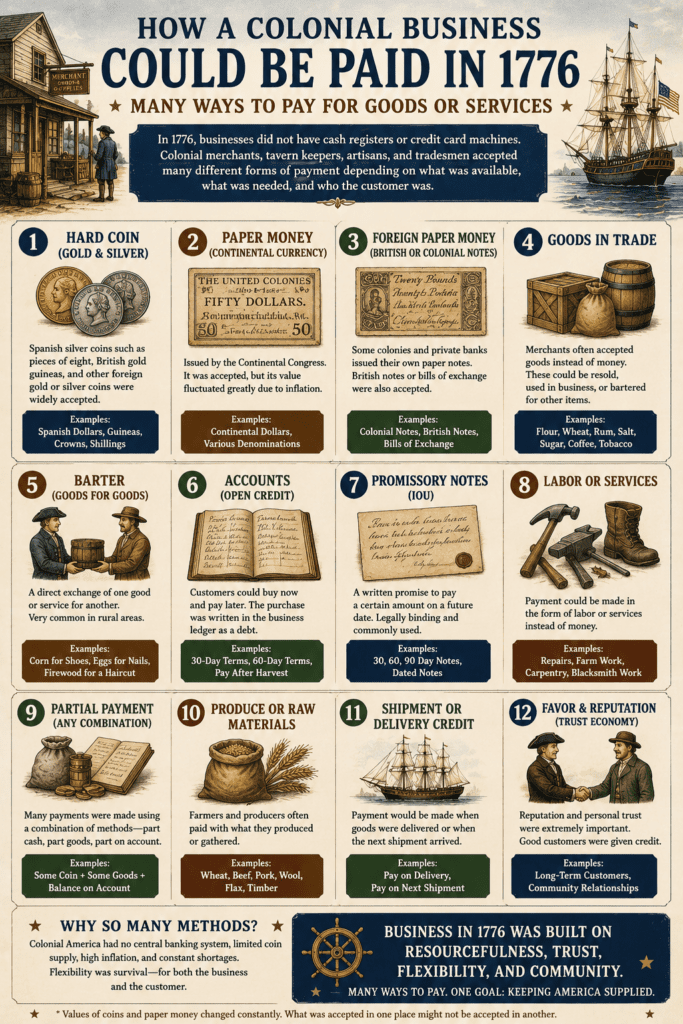
Colonial America did not operate under a single standardized currency system.
Colonists Used Multiple Forms of Payment
People used:
- British pounds,
- Spanish silver,
- Continental dollars,
- barter goods,
- promissory notes,
- tobacco credits,
- and other local exchange systems.
Currency confusion was common.
Inflation Created Serious Problems
Inflation during the Revolution further complicated transactions.
The 1776 Currency Equivalent Calculator explores how colonists attempted to standardize value across multiple forms of payment.
Determining Value Was Difficult
A transaction might involve silver, paper notes, goods, or labor credits.
The tool helps modern readers understand how difficult financial accounting could become during wartime instability.
Related tool:
Colonial Payroll Ledger
Managing labor was a major challenge during the Revolution.
Colonial Businesses Needed Workers
Colonial businesses and military suppliers depended upon:
- apprentices,
- laborers,
- dock workers,
- craftsmen,
- teamsters,
- printers,
- and support staff.
Payroll Was Often Complicated
The Colonial Payroll Ledger demonstrates the complexity of managing wages and labor in an unstable economy.
Workers might be paid in:
- currency,
- goods,
- housing,
- food,
- or credit.
Inflation Affected Everyone
Payroll systems had to adapt constantly to shortages and inflation.
This tool helps illustrate how deeply labor management affected the colonial economy.
Related tool:
Colonial Economy Simulator Video Presentation
Watch our RetireCoast America’s 250th Anniversary video exploring the hidden business systems, ledgers, freight networks, blacksmith operations, taverns, and colonial supply chains that helped support the American Revolution.
The Revolution Depended on Supply Chains
Modern people often underestimate how difficult supply chains were in 1776.
Today, businesses depend upon:
- highways,
- railroads,
- cargo aircraft,
- shipping containers,
- warehouses,
- and digital inventory systems.
Colonial America had none of these advantages.
A Fragile Logistics Network
Every item moved slowly through fragile transportation systems.
A single missing shipment could disrupt entire operations.
Gunpowder shortages became a constant concern during the Revolution.
Food supplies regularly became unstable.
Military forces often struggled to obtain:
- shoes,
- blankets,
- ammunition,
- and basic equipment.
Logistics Were Essential to Victory
The colonial economy operated under continuous stress.
The simulator ecosystem demonstrates how deeply interconnected these systems really were.
Inflation and Financial Chaos During the Revolution
One of the least understood aspects of the Revolutionary War was inflation.
Continental Currency Lost Value
The Continental Congress printed large amounts of paper currency to finance the war effort.
Over time, confidence in Continental dollars weakened.
This led to the famous phrase:
“Not worth a Continental.”
Prices Rose Rapidly
Merchants became hesitant to accept paper currency.
Communities increasingly relied upon barter systems or precious metals.
Economic uncertainty spread throughout the colonies.
Financial Instability Was Everywhere
The 1776 Currency Equivalent Calculator helps modern readers understand how difficult it became to determine real value during this period.

Ordinary Workers Helped Win Independence
The Revolution was not won solely by generals and politicians.
Ordinary workers played a massive role.
The Hidden Workforce of the Revolution
The war effort depended upon:
- blacksmiths,
- printers,
- wagon operators,
- farmers,
- rope makers,
- coopers,
- mill operators,
- shipbuilders,
- merchants,
- and tavern owners.
Many risked bankruptcy or economic ruin.
Economic Sacrifice Was Common
Some supplied the military without guaranteed payment.
Others endured shortages and inflation while trying to keep businesses alive.
The Colonial Economy Simulator ecosystem helps restore attention to these forgotten contributors.
The Economy of Independence
Economic independence became closely tied to political independence.
Colonial Manufacturing Expanded
Colonists increasingly recognized that dependence upon British manufacturing and trade created vulnerability.
This encouraged local production.
Communities expanded domestic manufacturing capabilities.
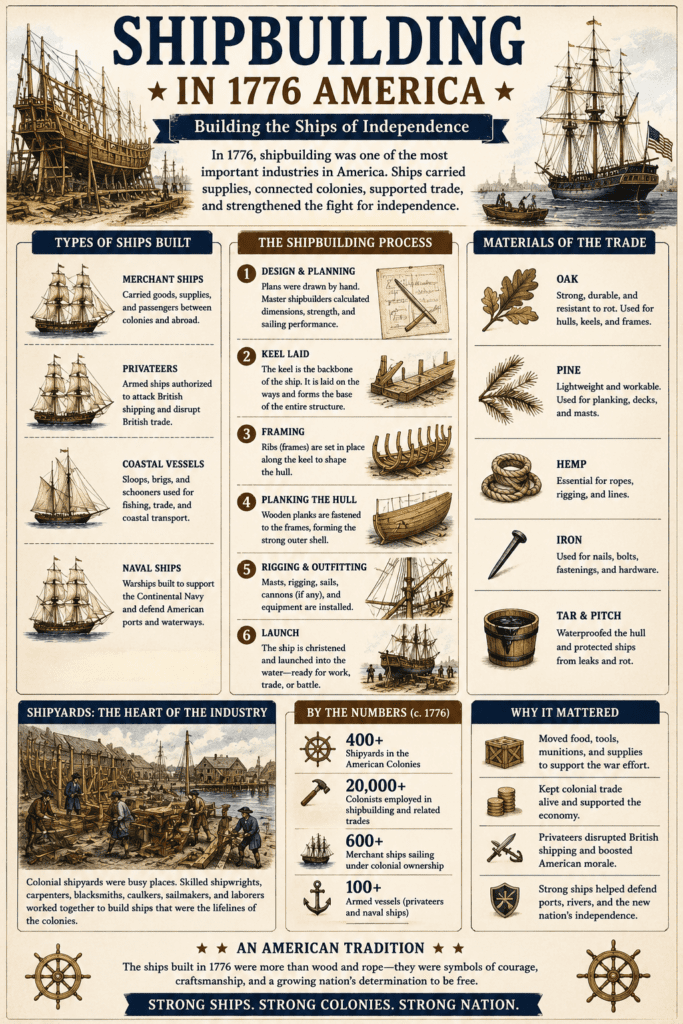
Colonial industries began growing in areas such as:
- iron production,
- shipbuilding,
- textiles,
- printing,
- and agriculture.
The Revolution Accelerated Economic Growth
In many ways, the Revolution accelerated early American industrial development.
The simulator ecosystem demonstrates how economic self-sufficiency became a strategic advantage.
Hidden Risks of Running a Colonial Business
Running a business in 1776 involved enormous risk.
Colonial Business Owners Faced Constant Threats
Owners faced:
- war disruption,
- inflation,
- supply shortages,
- transportation failures,
- political instability,
- labor shortages,
- and military requisitions.
Insurance systems were primitive.
Legal protections were limited.
Bankruptcy Could Destroy Families
Yet despite these risks, businesses continued operating.
That resilience became one of the foundations of American economic culture.
Lessons for Modern Readers
One reason the Colonial Economy Simulator ecosystem resonates with readers is that many modern economic pressures feel surprisingly familiar.
Modern Businesses Face Similar Pressures
Today, businesses still face:
- supply chain disruptions,
- inflation,
- labor shortages,
- transportation issues,
- political uncertainty,
- and economic volatility.
The Revolutionary era reminds us that economic resilience has always mattered.
Colonists Adapted Constantly
Colonial Americans improvised solutions.
They built local networks.
They diversified skills.
They learned how to survive uncertainty.
These lessons remain relevant today.
Historical Education Through Interactive Tools
Traditional history education often emphasizes dates and battles.
Interactive tools create a different experience.
History Becomes More Practical
They allow readers to explore practical historical realities.
The Colonial Economy Simulator ecosystem transforms history into something more tangible.
Readers can better understand:
- How much labor did a musket require?
- why wagon transportation was expensive,
- how taverns generated revenue,
- why printers mattered,
- and how fragile colonial supply systems truly were.
Interactive Learning Improves Understanding
This approach makes history more accessible and memorable.
America’s Entrepreneurial Spirit Began Early
One fascinating lesson from the Revolutionary economy is how entrepreneurial colonial society already was.
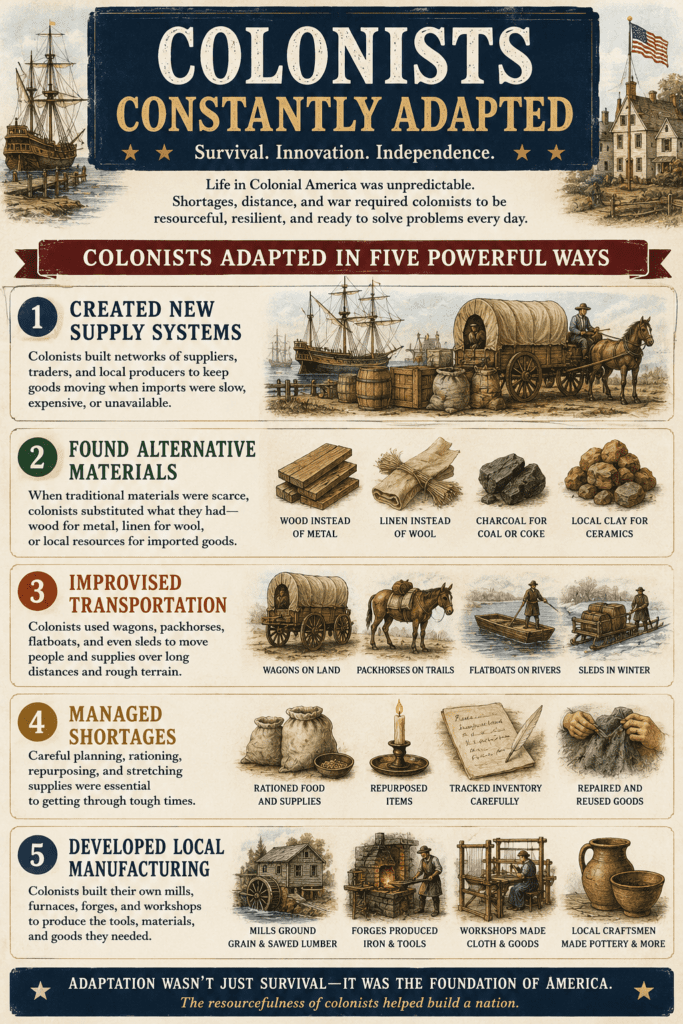
Colonists Constantly Adapted
Colonists:
- created new supply systems,
- found alternative materials,
- improvised transportation,
- managed shortages,
- and developed local manufacturing.
This entrepreneurial culture helped shape the future United States.
The Same Traits Still Matter Today
Many of the same traits that helped colonists survive the Revolution still define American business culture:
- adaptability,
- innovation,
- local problem solving,
- risk-taking,
- and resilience.
The Hidden Economy Behind Liberty
The Revolution could not have survived on ideals alone.
It required:
- food,
- iron,
- transportation,
- labor,
- accounting,
- manufacturing,
- and supply chains.
Independence Required Economic Strength
The Colonial Economy Simulator ecosystem highlights this hidden economy.
It reminds us that independence was not achieved solely through military victories.
It was also built through:
- ledgers,
- workshops,
- freight wagons,
- taverns,
- printing presses,
- and small businesses struggling to survive.
The Economic Story Matters
That hidden economic world deserves recognition.
Explore the Colonial Economy Simulator Ecosystem
You can explore the full Colonial Economy Simulator ecosystem and related historical tools through the RetireCoast America’s 250th Anniversary series.
Featured Colonial Economy Tools
- Colonial Wagon Freight Estimator
- Colonial Tavern Profit Ledger
- Colonial Blacksmith Production Estimator
- Musket Production Cost Tool
- Colonial Printer’s Ink & Ledger Calculator
- 1776 Currency Equivalent Calculator
- America’s 250th Anniversary Hub
Final Thoughts
The story of the American Revolution is not complete without understanding the hidden economy that supported it.
Behind every famous battle stood thousands of workers, craftsmen, merchants, printers, transporters, and laborers whose efforts helped create a new nation.
Video presentation: Starting a business in 1776
This video was created from the article on this site of the same title and goes into a comparison of how businesses were started in 1776 vs 2026.
Historical Sources Behind the Colonial Economy
The following sources are excellent to provide background to this article. Some were used in the development of the tools and this article.
Colonial Ledgers and Business Records
Many surviving colonial ledgers and business journals demonstrate how deeply accounting and logistics shaped daily life during the Revolutionary era.
Historical examples include:
- Merchant account books from colonial ports such as Boston, Philadelphia, Charleston, and Williamsburg.
- Tavern ledgers documenting food, lodging, ale, and traveler expenses.
- Military supply records maintained by the Continental Army.
- Iron forge production records from Revolutionary War suppliers.
- Colonial shipping manifests and freight invoices.
- Printer account books showing paper, ink, and publication costs.
These surviving documents reveal that colonial America depended heavily upon handwritten accounting systems to manage commerce, labor, transportation, and wartime logistics.
The Library of Congress
The Library of Congress contains extensive Revolutionary War business records, merchant correspondence, payroll records, and supply documents showing how colonial commerce operated during wartime.
National Archives
The National Archives and Records Administration preserves military supply records, payroll documents, transportation contracts, and financial records connected to the Revolutionary period.
Colonial Williamsburg Foundation
Colonial Williamsburg Foundation maintains detailed educational materials about colonial trades, taverns, printing operations, blacksmithing, and commerce.
Mount Vernon and George Washington’s Business Operations
Mount Vernon provides excellent insight into the large-scale agricultural and business management systems
QUIZ
FAQ
1. What is the Colonial Economy Simulator?
2. Were these types of business ledgers really used in 1776?
3. Why were taverns important during the American Revolution?
4. Why was transportation so difficult in colonial America?
5. How did blacksmiths support the Revolution?
6. Why was colonial printing important?
7. Did the colonies use a single form of currency?
8. How did inflation affect the Revolutionary War economy?
9. Were ordinary workers important to the Revolution?
10. Where can I explore the Colonial Economy Simulator tools?
Visit the Colonial Economy Simulator Hub
Discover more from RetireCoast.com
Subscribe to get the latest posts sent to your email.